St Mary's Churchyard
Why is it significant?
St Mary's Churchyard in London is a former medieval archery ground and parish burial site that was converted into a public park after its historic church was demolished in 1876. The site takes its nearby street name, Newington Butts, from medieval archery mounds ordered by King Edward III. Notable burials include Jacobean playwright Thomas Middleton, who died in 1627, and local figure George Powell, buried in 1704.
Key Facts
| Place | St Mary's Churchyard |
|---|---|
| Address | 105 Newington Butts, London SE1 6SF |
| Geo Coordinates | 51.49279, -0.10175 |
| Audio Duration | ~3 min |
| Part of Walk | Elephant & Castle to Kennington: Stories Along Stane Street |
| Generated | Generated |
What to look for?
- King Edward III banned football on Sundays to force men to practice archery at the medieval Southwark butts.
- A structural wall failure during a 1715 Sunday service panicked the congregation, forcing St Mary's Church to be rebuilt.
- Jacobean dramatist Thomas Middleton, a collaborator of William Shakespeare, was buried at St Mary's Churchyard in 1627.
- In 1876, St Mary's Church was demolished to widen the road, leaving the churchyard as a public garden.
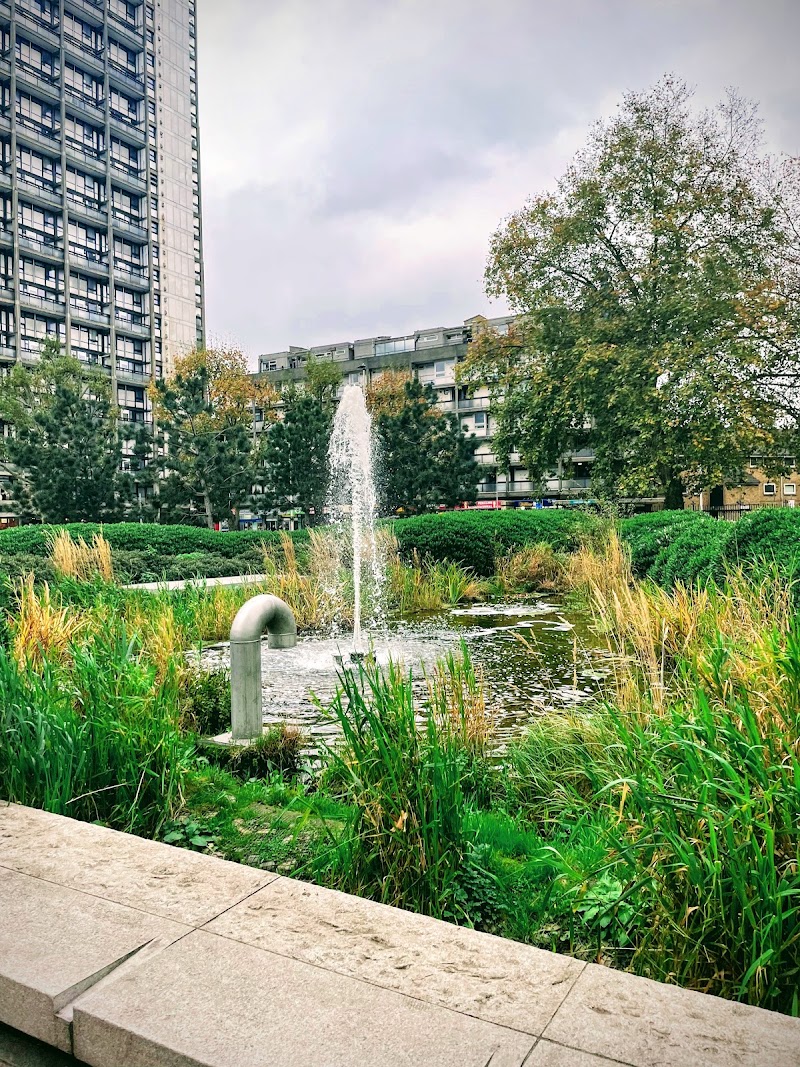
Photo: Google
Why was St Mary's Church in London demolished in 1876?
Step back from the roar of the Elephant and Castle traffic and step into this peaceful island of green. Today, St Mary's Churchyard feels like a quiet local park, but beneath your feet lies nearly a thousand years of London history, packed with medieval archers, theatrical giants, and extraordinary public panics. Have you ever wondered why the main road running past this park is called Newington Butts? The story goes back to the middle ages, when longbow archery was the ultimate weapon of the English crown. Kings like Edward the Third banned football and handball on Sundays, commanding every able-bodied man to practice archery instead. Earth mounds, called butts, were raised in the open fields right where you are standing, providing target practice for generations of Southwark bowmen. By the Tudor era, a parish church dedicated to Saint Mary rose above these fields. It was a modest building of brick and river stone, but as London grew, it became notorious for near-disasters. In the spring of seventeen fifteen, right in the middle of a Sunday service, a terrifying crack rang out through the nave. Part of the church wall began to split open. The congregation panicked and stampeded for the exit, bowling each other over and trampling neighbours in their desperate bid to escape. The building was deemed entirely unsafe and had to be rebuilt. Even in death, the characters buried in this soil refused to stay quiet. Among the thousands resting here is Thomas Middleton, the famous Jacobean dramatist who wrote fierce satires and collaborated with William Shakespeare before his death in sixteen twenty-seven. Nearby lies George Powell, a colourful character known in local legend as the King of the Gypsies, buried in seventeen hundred and four. And then there was the unforgettable Sunday in June eighteen thirty. A large funeral procession arrived at the gates with the coffin of a man named Mahony. Finding that the parish clergyman was running late, the furious mourners refused to wait. They wrestled the spades away from the official gravediggers, dug the grave themselves, and buried their friend without waiting for a holy blessing! By the late Victorian era, the relentless tide of London traffic caught up with Saint Mary's. In eighteen seventy-six, the church was completely demolished to allow the road to be widened, and the parish church was moved further south. All that remains on this original medieval site is the churchyard itself, transformed into a quiet public garden. Take a moment to wander among the ancient trees and scattered gravestones, enjoying a brief pause in the heart of Southwark before you continue your journey toward Kennington.