Guinness Trust Estate
Why is it significant?
The Guinness Trust Estate on Kennington Park Road in London is a historic social housing complex constructed in 1921 as the Trust's first government-assisted development featuring self-contained private bathrooms in every flat. Originated from Sir Edward Cecil Guinness's 1890 donation of 200,000 pounds, the Lambeth site was delayed by World War I until architect Charles Joseph redesigned the planned five-story tenements into four-story courtyard blocks.
Key Facts
| Place | Guinness Trust Estate |
|---|---|
| Address | Guinness Trust Buildings, Kennington Park Road, London SE11 4JF |
| Geo Coordinates | 51.49002, -0.10383 |
| Audio Duration | ~3 min |
| Part of Walk | Elephant & Castle to Kennington: Stories Along Stane Street |
| Generated | Generated |
What to look for?
- In 1890, Sir Edward Cecil Guinness donated 200,000 pounds to establish affordable housing for London's working poor.
- Architect Charles Joseph originally designed five-story tenement blocks for the Guinness Trust Estate in Lambeth in 1913.
- World War I delayed construction of the Guinness Trust Estate for seven years, turning the land into allotments.
- Built in 1921, the Guinness Trust Estate was the organization's first project to receive British government funding.
- Redesigned post-war plans reduced the Guinness Trust Estate to four stories while giving all flats private bathrooms.
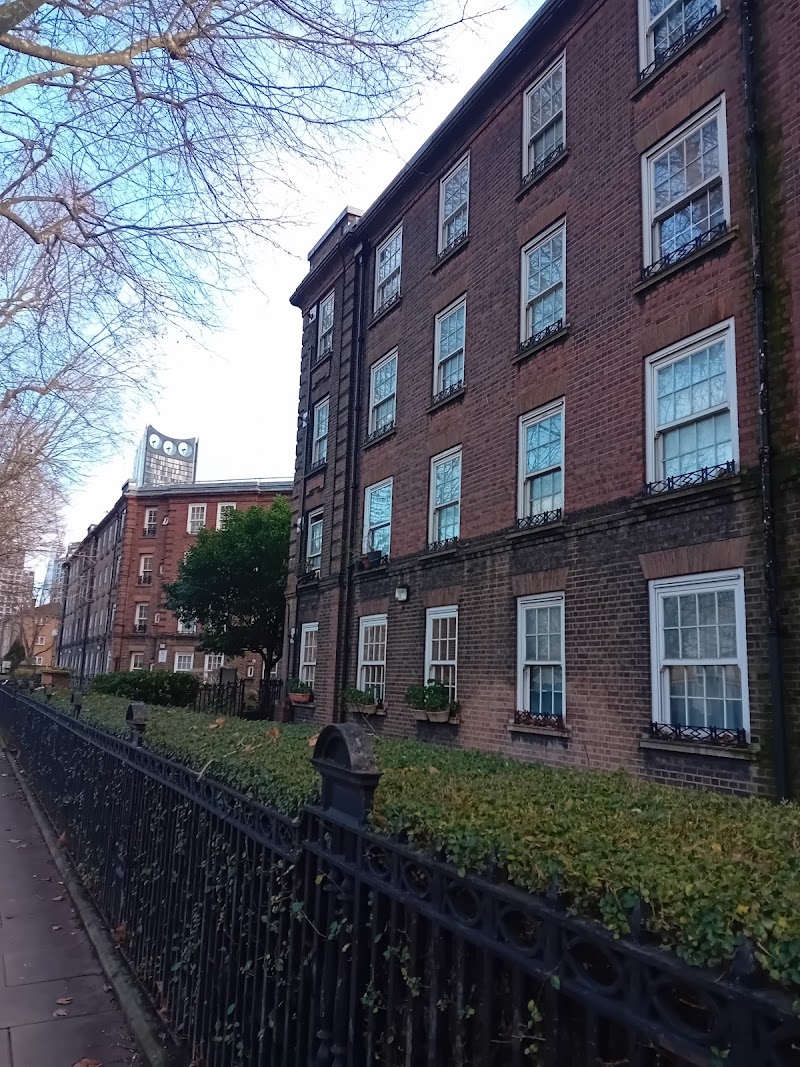
Photo: Google
What made the 1921 Guinness Trust Estate in Lambeth a historic milestone for London social housing?
Standing along Kennington Park Road, you are looking at a quiet revolution in British social housing. To understand why these sturdy red-brick buildings stand here today, we have to travel back to eighteen ninety. That was the year Sir Edward Cecil Guinness, the great-grandson of the famous Irish brewery founder, donated two hundred thousand pounds—a staggering fortune worth around twenty-five million pounds today—to create affordable, hygienic homes for London's working poor. By nineteen thirteen, the Guinness Trust acquired this parcel of land in Lambeth and commissioned architect Charles Joseph to draft plans for a massive new complex. But almost immediately, disaster struck. First, a major strike across the London building trade brought construction to a complete standstill. Then, in nineteen fourteen, the First World War broke out, freezing all non-essential development. For seven long years, instead of bricklayers and scaffolders, this soil was carved into wartime allotments, where local families grew cabbages and potatoes to feed their households during severe food shortages. When peace returned, Britain launched a fierce national campaign promising homes fit for heroes. In nineteen twenty-one, work on Kennington Park Road finally began. This project marked a historic milestone for the Trust: it was their very first estate built with financial assistance from the British government. But that state funding came tied to strict new modern standards. Before the war, the approved blueprints called for five-story tenement blocks containing one hundred and sixty traditional flats. Residents would have shared communal toilets located off dark stairwells and queued for public bathhouses down the street. But after four years of war, working-class Londoners refused to accept the old Victorian slum conditions. Public expectations had shifted completely, forcing the architect to discard his pre-war blueprints. He reduced the height of the buildings to four stories, introducing cottage-style layouts centered around open courtyards that let in fresh air and sunlight. Most revolutionary of all, every single flat was built with its own private, self-contained bathroom. For working-class families moving in during nineteen twenty-one, having a private bathtub inside their own home felt like moving into a mansion. Until this estate was built, indoor plumbing and private baths were luxuries strictly reserved for the affluent middle and upper classes. Building self-contained flats cost significantly more per unit, but the Trust and the government insisted that privacy, light, and proper sanitation were essential human rights rather than elite privileges. As you take in the warm brickwork and quiet courtyards today, imagine what that transformation felt like to a young family in nineteen twenty-one, stepping across their own threshold, closing their front door, and turning on the bath tap in complete privacy for the very first time.