Barrow Hill Reservoir
Why is it significant?
The Barrow Hill Reservoir in London is a hidden subterranean brick engineering marvel beside Primrose Hill that still holds over four million gallons of drinking water. Built in 1825 by the West Middlesex Waterworks Company at 47 meters above sea level, it originally functioned as an open-air basin. Following the Metropolis Water Act of 1852, engineers encased the reservoir beneath brick arches to protect the water supply from pollution and cholera.
Key Facts
| Place | Barrow Hill Reservoir |
|---|---|
| Address | St Edmund's Terrace, London NW8 7ED |
| Geo Coordinates | 51.53696, -0.16155 |
| Audio Duration | ~3 min |
| Part of Walk | Regent's Canal Towpath: Little Venice to Camden Lock |
| Generated | Generated |
What to look for?
- Built in 1825 by the West Middlesex Waterworks Company, Barrow Hill Reservoir sits 47 meters above sea level.
- Steam engines at Hammersmith pumped River Thames water straight uphill into the Barrow Hill Reservoir.
- The Metropolis Water Act of 1852 forced engineers to cover the open Barrow Hill Reservoir with brick arches.
- Today, the subterranean Barrow Hill Reservoir safely stores more than four million gallons of London's drinking water.
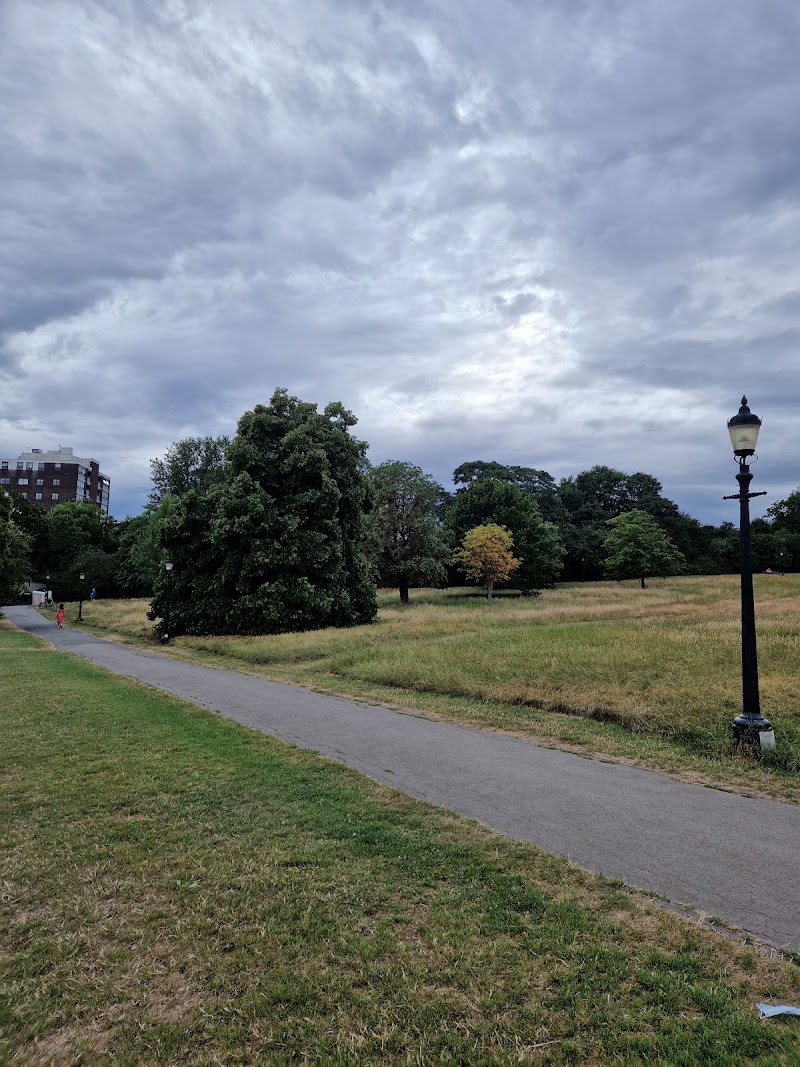
Photo: Google
Why was London's open-air Barrow Hill Reservoir covered with brick arches in the 1850s?
Look closely behind the elegant red-brick facades of St Edmund's Terrace. Hidden completely from view, tucked into the gentle slope beside Primrose Hill, sits one of Victorian London's most remarkable hidden engineering marvels: the Barrow Hill Reservoir. If you stood here two hundred years ago, in the early eighteen twenties, you would not see luxury townhouses or quiet streets. You would see a wind-swept hill overlooking a rapidly sprawling metropolis. London was expanding at a staggering pace, and its appetite for clean water was insatiable. The shallow wells and crumbling wooden pipes of the Georgian era were hopelessly inadequate for the booming capital. Enter the West Middlesex Waterworks Company. In eighteen twenty-five, their engineers selected this high elevation to build a massive open reservoir. Powerful steam engines down on the River Thames at Hammersmith pumped water miles inland, forcing it straight uphill into this high basin. Sitting at forty-seven meters above sea level, gravity did the rest, driving high-pressure water into the upper floors of grand townhouses across Marylebone and Mayfair. But why call this elevated site Barrow Hill? The name hints at ancient myth. For centuries, Londoners believed a prehistoric burial mound, or barrow, lay beneath the soil. Though nineteenth-century excavators found no ancient chieftains buried here, the mysterious name endured. What the Victorians did uncover was a deadly public health hazard! Open to the sky, the water gathered soot and coal smoke from the heavy London air. Far worse, unfiltered Thames water carried deadly cholera bacteria. After Doctor John Snow proved contaminated water spread the disease, Parliament passed the Metropolis Water Act of eighteen fifty-two, banning open-air drinking reservoirs near the city center. Engineers responded by transforming the site. They encased the reservoir beneath a vast subterranean maze of brick arches, topped with a thick blanket of earth and grass. Today, this underground brick cathedral still holds over four million gallons of drinking water, silently serving London from directly beneath your feet.