Macclesfield Bridge
Why is it significant?
Macclesfield Bridge, spanning Regent's Canal in London, is famous for surviving a catastrophic gunpowder explosion on October 2, 1874, which earned it the nickname Blow Up Bridge. Five tons of gunpowder aboard the barge Tilbury detonated beneath the bridge, killing four people and destroying the brick arches. Engineers rebuilt Macclesfield Bridge using the original cast-iron columns, simply flipping them around to hide grooves worn by canal horse towropes.
Key Facts
| Place | Macclesfield Bridge |
|---|---|
| Address | Avenue Road / Prince Albert Road, London NW8 7PU / NW8 7PY |
| Geo Coordinates | 51.53458, -0.16322 |
| Audio Duration | ~4 min |
| Part of Walk | Regent's Canal Towpath: Little Venice to Camden Lock |
| Generated | Generated |
What to look for?
- On October 2, 1874, five tons of gunpowder detonated beneath Macclesfield Bridge in London, killing four people.
- The explosion beneath Macclesfield Bridge destroyed its brickwork and was heard over 20 miles away.
- Workers cleared the canal in five days and rebuilt Macclesfield Bridge using its original surviving cast-iron pillars.
- The 1874 Macclesfield Bridge explosion led directly to the passage of the Explosives Act of 1875.
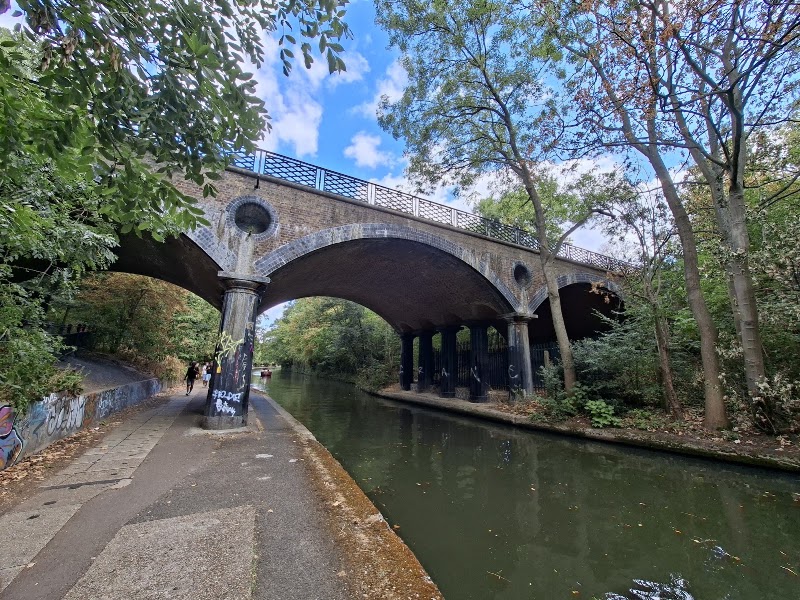
Photo: Google
Why is Macclesfield Bridge in London nicknamed the Blow Up Bridge?
Take a moment to look at the elegant, three arched bridge standing before you, spanning the quiet water of Regent's Canal. On a peaceful afternoon, with narrowboats drifting by and trees framing the water, it seems like the epitome of Victorian tranquility. Yet this structure hides one of the most explosive chapters in London's industrial history, earning it a permanent nickname among locals: the Blow Up Bridge. Early in the morning of October second, eighteen seventy-four, just before five o'clock, a train of five barges was being towed west along this stretch of the canal toward Paddington. The steam tug pulling them left a soft trail of smoke in the pre-dawn darkness. Near the middle of the convoy floated a wooden barge named the Tilbury. Inside its hold was an extraordinary and perilous mixture: sugar, coffee, nuts, several barrels of volatile petroleum, and five tons of gunpowder destined for quarry blasting in the Midlands. As the Tilbury glided directly beneath Macclesfield Bridge, disaster struck. It is believed that one of the crewmen lit a match, perhaps to ignite his morning pipe or boil a kettle of tea. A single flame ignited the petrol vapors lingering in the air, which instantly set off the tons of gunpowder. The resulting blast shattered the silence of North London with terrifying force. The brickwork of Macclesfield Bridge was blown to pieces, disintegrating into a shower of rubble that choked the canal. The explosion was heard over twenty miles away, and shockwaves blew out windows for miles around, waking panicked residents in their nightclothes who rushed into the streets thinking an earthquake had struck. Nearby at the London Zoo, frightened animals let out deafening roars, while bizarre reports claimed dead fish rained down from the sky over the West End. Tragically, three crewmen aboard the Tilbury lost their lives instantly, and a fourth person nearby died from the sheer shock of the detonation. Remarkably, despite the total destruction of the brick arches, the heavy cast iron columns supporting the bridge actually survived the blast. Within just five days, workers cleared the canal of debris so boat traffic could resume. When engineers set about rebuilding the bridge, they decided to reuse those original iron pillars. If you step closer and look carefully at the cast iron columns today, you can spot a fascinating piece of history. Over decades of Victorian canal traffic, heavy ropes from towpath horses pulling barges had carved deep, smooth grooves into the iron facing the water. When the workers reconstructed the bridge after the explosion, they flipped every single column around, so the unworn, smooth side faced the towpath to take future wear, while the rope grooved side was turned out of sight. That clever bit of Victorian recycling means you are looking at the exact same iron that survived five tons of exploding gunpowder over a century and a half ago. The catastrophe sent shockwaves far beyond Regent's Park. Public outrage over the hazardous transport of dangerous cargo through densely populated areas forced Parliament to act, leading directly to the Explosives Act of eighteen seventy-five, which established strict safety laws still reflected in modern transport regulations today. So as you continue along the towpath, pause for a second beneath these sturdy iron pillars. They carry not just the weight of Avenue Road above, but the extraordinary memory of the morning North London shook to its core.