The Lambeth Palace Gates — Where Thomas More Was Summoned
Why is it significant?
Morton’s Tower, built in 1490 at Lambeth Palace in London, is a red brick Tudor gatehouse where Sir Thomas More served as a page in 1490 and later refused the Oath of Supremacy in 1534. He became the first person to refuse the oath acknowledging King Henry VIII as head of the Church of England, leading to his execution in 1535. The gatehouse also distributed the Lambeth Dole charity to the poor until 1842.
Key Facts
| Place | The Lambeth Palace Gates — Where Thomas More Was Summoned |
|---|---|
| Address | Lambeth Palace Gate, Lambeth Palace Road, London SE1 7JU |
| Geo Coordinates | 51.49544, -0.12015 |
| Audio Duration | ~4 min |
| Part of Walk | Bones, Gardens & Gates: The Lambeth Riverside |
| Generated | Generated |
What to look for?
- Cardinal John Morton built Morton's Tower at Lambeth Palace in 1490 as an audience chamber and formal entrance.
- Sir Thomas More served as a twelve-year-old page to Cardinal Morton at Lambeth Palace starting in 1490.
- On April 13, 1534, Sir Thomas More became the first person to refuse the Oath of Supremacy at Lambeth Palace.
- Following his refusal at Lambeth Palace, Sir Thomas More was executed on Tower Hill on July 6, 1535.
- Archbishop Winchelsea instituted the Lambeth Dole charity at the gates, which distributed aid to the poor until 1842.
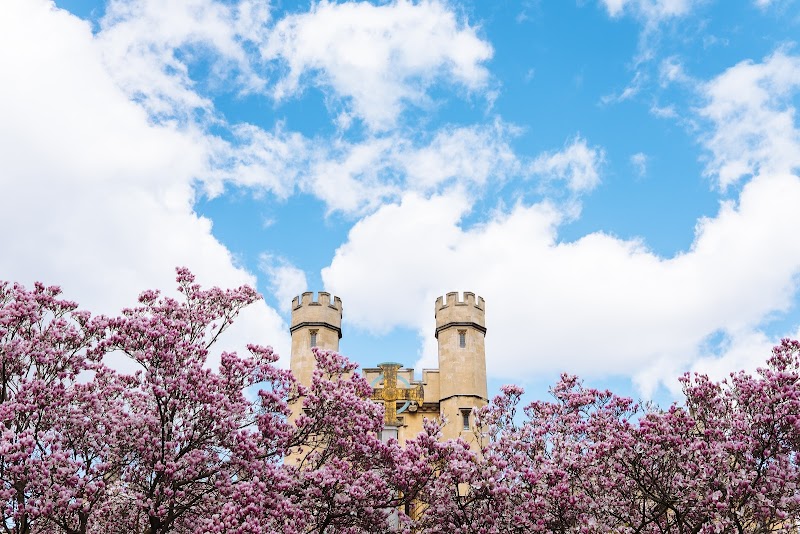
Photo: Google
What happened to Sir Thomas More at Morton's Tower in Lambeth Palace in 1534?
Look at this red brick gatehouse... five centuries old, and it has barely changed. This is Morton's Tower, an impressive Tudor gatehouse that serves as the formal entrance to Lambeth Palace. It was built in fourteen ninety by Cardinal John Morton, who lived in the tower for a short time and used the great room above the gates as his personal audience chamber. Now here's where the story gets remarkable. In fourteen ninety, a twelve-year-old boy named Thomas more was sent right here to Lambeth, to be educated in a gentleman's household. He served as one of Cardinal Morton's pages and took part in household entertainments. Imagine this clever child, waiting on tables for the most powerful churchman in England... and Morton noticed him. At Christmastime, young more would suddenly step in among the players and improvise a part of his own. The Cardinal, delighting in the boy's wit, would say to the nobles dining with him: "This child here waiting at the table, whosoever shall live to see it, will prove a marvelous man."
And what a prophecy that turned out to be. Fast forward forty-four years. On April twelfth, fifteen thirty-four, soon after leaving church at Saint Paul's Cathedral with his son-in-law William Roper, more was handed a summons to appear at Lambeth Palace the next day. He returned to Chelsea to spend with his family what he probably knew would be his last night as a free man. The next morning, he boarded a boat for Lambeth. As they set off down the river, more, at peace with his decision, told his son-in-law: "Son Roper, I thank our Lord the field is won."
He walked through these very gates... and into the Guard Room where, as a boy, he had once served dinner. It was in this room that he was summoned by Thomas Cromwell to swear an Oath declaring Henry the Eighth as head of the Church in England. More asked to read the oath carefully. Then he quietly said his conscience would not allow him to sign. The commissioners sent him out to reflect on the fact that he was the first man to refuse. While he waited, he saw others pass through... most signed, even those known to dislike it. But more would not bend. Summoned back, he refused a second time, even after much cajoling and threats of imprisonment. The frustrated commissioners turned more over to the Abbot of Westminster, who kept him for four days before he was transferred to a cell in the Tower of London. He would never walk free again. On the sixth of July, fifteen thirty-five, Sir Thomas more was beheaded on Tower Hill. Now, one more detail most people miss. Look at the base of the tower. Right here, the "Lambeth Dole," a daily offering of bread, broth, and money, was first begun by Archbishop Winchelsea in the thirteenth century. This ritual of charitable giving was offered from Morton's Tower until eighteen forty-two... over five hundred years of feeding the poor, right at these gates. The ground floor of the south tower still contains a small cell that was used for imprisonment in the sixteenth century. Two iron rings can still be found fixed to the wall. So this one gatehouse held charity and a prison cell, a boy's education and a man's condemnation. Few doorways in London carry so much history in their stones.
Unlocked for everyone by someone who walked here