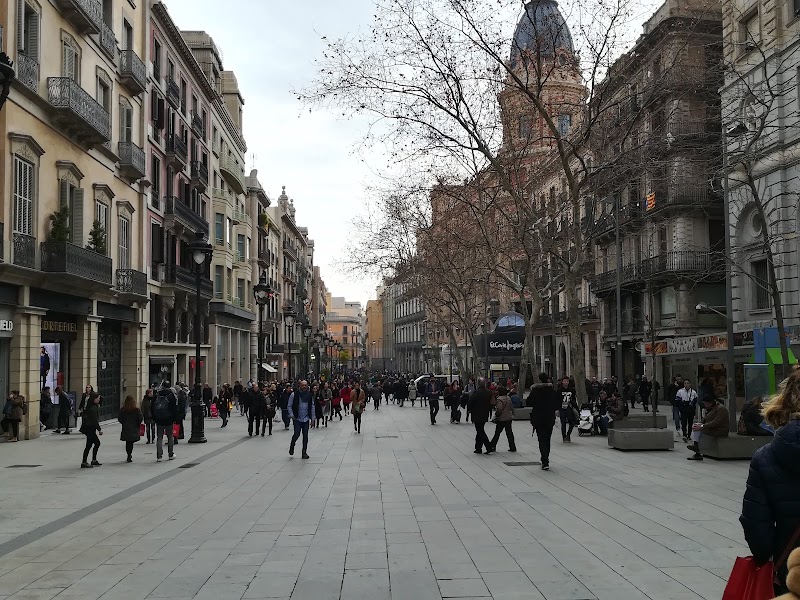
Stones & Secrets: Hidden Courtyards of the Barri Gòtic
Two thousand years of layers — Romans, kings, rebels, and forgotten Jews — all within 500 metres of each other
Barcelona · 38 stops · 4.7 km · ~3.2 h · 122 min audio · Generated
-
1. Roman Necropolis at Plaça de la Vila de Madrid
Plaça de la Vila de Madrid, Barcelona
Look at this square. Cafés on one side, boutique shops on the other, children playing nearby. And right here, sunk below street level... eighty-five graves from nearly two thousand years ago.
Welcome to the Via Sepulcral Romana, the Roman funeral road of Barcino. Why is there an ancient cemetery sitting in the middle of a city square?
The answer begins around fifteen B.C., when the Romans founded a small colony here called Julia Augusta Faventia Paterna Barcino. Roman law was very clear... the dead could not be buried inside the city walls. So cemeteries were placed along the roads leading out of town. This particular road connected Barcino to the outlying district of Sarrià, and on both sides of that five-meter-wide path, the dead were laid to rest.
Now look closely at the stone markers. Most of them are Cupae... barrel-shaped funeral monuments, half-cylinders carved from solid rock. These were the graves of ordinary people. Slaves. Freedmen. The working poor. This was a Secondary cemetery, far from the main walls, reserved for those who could not afford a grander resting place. One inscription still reads: "Faustianus, of Tertullina and Tertiola."
Here is something remarkable. Of twenty-eight monolithic Cupae ever found in all of Barcelona, only six were discovered here in their original positions. Everywhere else, the Romans themselves recycled gravestone after gravestone, building them into the city walls during the fourth century expansion.
So how did these survive? A lucky accident of nature! After the cemetery fell out of use in the third century, streams flowing down from Collserola buried the entire site under layers of river sediment. The mud preserved everything... for over sixteen hundred years.
Then came fifteen eighty-eight, when a Carmelite convent was built right on top. That convent was destroyed during the Spanish Civil War in nineteen thirty-six. And when workers began clearing the rubble in nineteen fifty-six to create this new plaza... they struck ancient stone. The dead of Barcino had been waiting all along, just beneath the surface, protected by centuries of earth and silence.
-
2. Granja La Pallaresa — 1947 Hot Chocolate Ritual
Carrer de Petritxol 11, Barcelona
Take a deep breath... and inhale. Can you smell it? That thick, warm, bittersweet perfume drifting through the air? You are standing on Carrer de Petritxol... Barcelona's famous Chocolate Street. And right here, at number eleven, is Granja La Pallaresa.
Now, what exactly IS a granja? The word means "farm" in Spanish, but nobody is milking cows in here. A granja is a traditional name for a small family-run Spanish café that specializes in chocolate and pastries — and this one has been doing exactly that since nineteen forty-seven. Before it became a chocolate café, this space was a lechería... a milk shop, for many decades.
But the real star here is the suís. That's a classic thick cup of drinking chocolate, crowned with unsweetened whipped cream on top. Not the watery cocoa you might be used to. This is chocolate so thick you could practically stand your spoon in it. And it's served to you by waiters in white shirts and bow ties, as if time stopped somewhere in the nineteen fifties.
And here's what most visitors don't realize. This street's love affair with chocolate goes back centuries. Since the seventeenth century, different chocolate shops began to be installed here, and it became a tradition to enjoy drinking chocolate. And Barcelona itself was ground zero for chocolate in Europe. The port of Barcelona was the entrance to markets for everything coming from the New World... and cacao entered the Iberian peninsula through Barcelona in the sixteenth century. Spain kept chocolate a closely guarded secret for about a century after its arrival.
But Carrer de Petritxol is not only about sweets. Just steps away, at number five, sits Sala Parés. The first time Pablo Picasso exhibited in an art gallery, he did it right here, in nineteen oh one, when the artist was only twenty years old. An already consolidated Ramon Casas offered a section of his exhibition space to the young Picasso, who exhibited four paintings there... and didn't sell a single one.
And here's a lovely detail. There is a plaque on this street in memory of Montserrat Caballé, the legendary opera singer, who worked in nineteen fifty for the scarf factory that was right here — and years later, she used to prepare for her performances next to the famous Granja Pallaresa.
This was actually the first pedestrian street in all of Barcelona. In nineteen fifty-nine, sidewalks were removed and vehicle access was forbidden. So as you stand here, surrounded by the aroma of melted chocolate and the echo of centuries of footsteps... you are walking a street that Barcelona chose to protect for people, not cars, long before it was fashionable.
Now. If you have time... step inside. Order the suís. Dip a melindro into that dark, velvety cup. And do exactly what Barcelonins have been doing here for almost eighty years.
-
3. Carrer de Petritxol — The Chocolate Street
Carrer de Petritxol, Barcelona
Take a breath. You are standing on Carrer de Petritxol... Barcelona's sweetest secret. Just one hundred and twenty nine meters long and barely three meters wide, this tiny lane packs more history per square centimeter than almost anywhere else in the Gothic Quarter.
How old is this path beneath your feet? Its origins stretch back to the fourteenth century, when it was known as Carrero dels Orfebres... Goldsmith's Alley. A century later, a house belonging to a man named Petritxol sat right in the Middle of the street, blocking passage entirely. The city eventually split the house in two just to let people walk through. That's how the street got its name.
Now look around at the walls. You'll notice beautiful blue ceramic plaques adorning the buildings. These aren't just decoration... they tell stories of the people who lived and worked here across the centuries, written in Catalan verse.
But here's the real secret of this street. Barcelona was one of the first places in Europe where cacao arrived from the New World in the sixteenth century. The port of Barcelona was the gateway for goods from the Americas, and Spain actually kept chocolate a closely guarded secret for nearly a hundred years! The Spanish nobility treated it almost like... medicine. The royal physician to King Felipe the Second even claimed chocolate was an aphrodisiac.
By the seventeenth century, chocolate shops began appearing on this very street, and the tradition never stopped. The word "granja" on those signs means "farm"... these cafés started as humble dairies selling milk products, then transformed into the chocolate temples you see today. Granja Dulcinea has been pouring thick hot chocolate since nineteen forty one, and none other than Salvador Dali himself used to sit on its wooden benches! Across the way, Granja la Pallaresa opened in nineteen forty seven and still serves its legendary Suizo... a cup of impossibly thick hot chocolate crowned with homemade whipped cream.
And then there's the art! At number five, you'll find Sala Pares, the oldest art gallery in Barcelona, founded in eighteen forty. It became the headquarters of the Catalan Modernist painters... Santiago Rusinyol, Ramon Casas. And in nineteen oh one, a young, unknown artist exhibited his pastel drawings here for the very first time in a gallery setting. His name? Pablo Picasso. He didn't sell a single piece.
One more thing... in eighteen eighty one, this became the first street in Barcelona to receive electric lighting. And in nineteen fifty nine, it became the city's first pedestrian street, long before anyone was talking about car-free cities. Carrer de Petritxol was ahead of its time... in every way.
-
4. La Sala Parés — Oldest Art Gallery in Barcelona
Carrer de Petritxol 5, Barcelona
You're standing on Carrer de Petritxol... a narrow lane barely three meters wide, known to locals as Barcelona's Chocolate Street. But long before the scent of hot cocoa filled this alley, it was the scent of oil paint and turpentine that drew people here. Because right at number five... is Sala Pares, the oldest art gallery in Barcelona, and the first ever founded in all of Spain.
The story begins in eighteen forty, when Joan Pares opened a modest shop selling engravings, frames, and artists' supplies. His son, Joan Baptista Pares, inherited the business and had a grander vision. He transformed the back room into an exhibition space and, in eighteen seventy-seven, formally inaugurated it as a gallery. At a time when Barcelona had NO public art museums, this was the only place in the city where ordinary people could come to see and buy real art.
And what art it was! By eighteen ninety, three painters became so closely associated with the gallery that they earned a nickname... the "Triad of Can Pares." Their names? Santiago Rusinyol, Ramon Casas, and Enric Claraso. These were the founders of Catalan Modernisme, and these walls were their launching pad.
But here's a fact most people don't know. In nineteen oh one, during the third exhibition dedicated to Ramon Casas, organized by the magazine Pel and Ploma, several pastel drawings by a twenty-year-old unknown were quietly included. That young artist... was Pablo Picasso. It was the first time Picasso's work had ever been shown in a commercial art gallery. Anywhere.
And then there's the Dali scandal. In nineteen twenty-eight, a young Salvador Dali submitted a painting to the gallery's Autumn Salon that the director, Joan Maragall, deemed too sexually provocative for the public. Dali was outraged. Rather than withdraw quietly, he delivered a furious lecture right here at Sala Pares, attacking the entire Catalan art establishment. He called the art on these very walls... putrefaction! The audience erupted. It was pure Dali chaos... and from that moment on, Barcelona expected scandal from him every single time.
So next time you sip hot chocolate on this famous little street, remember... you are standing where Picasso debuted, where Modernisme was born, and where Dali set fire to tradition. All within these one hundred and twenty-nine meters of cobblestone.
-
5. Plaça del Pi — The Pine Tree Square
Plaça del Pi, Barcelona
Look at this cobblestone square... and that lone pine tree standing right in the center. Welcome to Plaça del PI... the Square of the Pine. And believe it or not, everything here... the square, the church, even the neighborhood... all take their name from a single tree.
But why would an entire parish be named after a pine?
Well, according to legend, centuries ago, a fisherman was about to chop down a pine tree to build a boat... when he discovered an image of the Virgin Mary hidden in its branches. He was so shaken that instead of building a boat, he built a chapel. And that chapel eventually became the magnificent Gothic basilica you see before you now.
The first documented reference to a church on this spot dates back to nine eighty-seven. But the current structure was built between thirteen nineteen and thirteen ninety-one... delayed, like so much in medieval Barcelona, by the Black Death.
Now, look up at that enormous circular window on the façade. That is the largest rose window in all of Catalunya... ten meters across! But here's what most visitors don't realize... it's not the original. In nineteen thirty-six, anticlerical militants set fire to the church, destroying the organ just below the window. The heat shattered it completely. The replica you see today was designed by Josep Maria Jujol... the brilliant right-hand man of Antoni Gaudi himself.
And the ground beneath your feet? Until the sixteenth century, this wasn't a public square at all. It was the church's cemetery.
As for the pine tree... the first documented one was planted in fifteen sixty-eight. It grew so tall its crown rose above the surrounding buildings. Then, during Napoleon's invasion, a French soldier drove his bayonet through its trunk... killing it. Another was planted. Then another. The current pine dates from nineteen eighty-five... the latest in an unbroken chain stretching back over four centuries.
Before you leave this square, glance at the building on the corner with Carrer Petritxol. That's the former headquarters of Barcelona's retailers' guild, bearing the oldest Sgraffito decoration in the city, from the seventeenth century. And just inside the church entrance, look for the glass cabinet displaying the Gegants del PI... enormous festival giants whose origins trace back to the sixteenth century, and who still parade through these streets during Catalan celebrations today.
-
6. Basílica de Santa Maria del Pi
Plaça del Pi 7, Barcelona
Look up at the facade in front of you. That enormous circle of stone and glass... that is the largest rose window in all of Catalunya. Ten meters across, twelve-sided, a wheel of light that has been shattered and reborn more times than anyone should have to count.
But let's start at the beginning. The name of this church, Santa Maria del Pi, holds a clue. "Pi" means pine tree in Catalan. And according to legend, a fisherman once came to this very spot, intending to cut down a pine tree to build a boat. But hidden among the branches... he found an image of the Virgin Mary. Struck by the vision, he built a chapel instead.
That was back around the fifth century. The Gothic basilica you see now was started in thirteen nineteen, but its construction was slowed by the Black Death... and it wasn't finally consecrated until thirteen ninety-one. Seventy years of building!
Step inside, and you'll notice something strange. It's almost... empty. No columns breaking the space. Just one single, vast nave, nearly seventeen meters wide, with a ribbed vault soaring overhead. This austerity is not accidental. It is the essence of Catalan Gothic... simplicity as power.
Now, here's a connection most visitors miss. The architect who restored this church between eighteen sixty-three and eighteen eighty-four was Francisco de Paula del Villar y Lozano. That name might not mean much... until you learn that he was the original architect of the Sagrada Familia! He resigned from that project in eighteen eighty-three, and a young man named Antoni Gaudi took over. So the hands that shaped the Pi also set the foundation stone for Barcelona's most famous church.
And the rose window you see today? It's not the medieval original. That was destroyed during the Spanish Civil War, when anarchists set fire to the interior in nineteen thirty-six. The reconstruction was entrusted to Josep Maria Jujol... Gaudí's own right-hand man. So once again, the Pi and the Sagrada Família are quietly, invisibly linked.
One more story. On the wall around the corner, you can find the oldest known piece of graffiti in Barcelona. Painted in nineteen thirty-seven, it reads "Plaça del Milicia Desconegut"... Square of the Unknown Militia Fighter. During Franco's dictatorship, it was hidden behind a wooden board. It wasn't rediscovered until two thousand and four, when the board was finally removed. A ghost of resistance, hiding in plain sight for over sixty years.
-
7. Plaça de Sant Josep Oriol — Painters' Square
Plaça de Sant Josep Oriol, Barcelona
Welcome to Plaça de Sant Josep Oriol... or as the locals simply call it, Painters' Square. Take a look around. Easels, canvases, the smell of oil paint mingling with coffee from the terrace bars. It feels like it's been this way forever. But here's the thing... you're standing on a graveyard.
The main cemetery of the Basílica de Santa María del Pi was located right here, in the space now occupied by this square, running along the lateral facade of the church. Despite protests from the clergy, it was eventually paved over to avoid the health problems that plagued all church cemeteries at the time. So beneath your feet... centuries of bones, quietly resting under cobblestone.
Now, the man this square is named after. Josep Oriol was born on the twenty third of November, sixteen fifty, right here in Barcelona. He was the only one among eight siblings not to die during childhood. Think about that. Seven brothers and sisters, all gone. It shaped him profoundly. He lived a life of such extreme austerity that he was known as "Doctor Bread and Water"... because that was literally his only sustenance. He gave away everything else to the sick and the poor.
And then there are the miracles. Legend has it that during a journey in sixteen ninety eight, when he couldn't pay for a meal at a roadside hostel, he took a simple radish... cut it into slices... and the slices turned into coins. To this day, chocolate coins with his face are made for the annual Festa Major del Pi.
But here's the detail that truly sealed his sainthood. On April sixth, eighteen oh six, a priest named José Mestres fell from a high walkway on the outside of the church's apse... and rose completely unscathed, attributing his survival to Josep Oriol. That little posthumous miracle led to his canonization, and a plaque was installed right on the corner of the church to commemorate the blessed fall.
Now look across the square. During the Spanish Civil War, this square was renamed... "Plaza of the Unknown Militia," to honor those who died fighting fascism. When Franco's troops took Barcelona in nineteen thirty nine, the painted letters were covered by a wooden board... and remained hidden for decades. The original sign was rediscovered by pure chance in two thousand four when the board was finally removed.
And those painters you see on weekends? Around forty local artists set up stalls in an open air art market called the Mostra d'Art dels Pintors del Pi. It gives the square a bohemian atmosphere often compared to the Place du Tertre in Montmartre, Paris... although on a much smaller, more intimate scale.
So take a moment. Grab a seat at the Bar del Pi... housed in a building dating back to the end of the eighteenth century. Sip something cold. And remember... this little square holds bones beneath its stones, a saint who ate only bread, a revolution hidden behind a plank of wood, and art that refuses to leave.
-
8. Plaça Reial — Gaudí's First Commission
Plaça Reial, Barcelona
Look around you. Palm trees, café terraces, the buzz of conversation and clinking glasses. This is Plaça Reial... one of Barcelona's most elegant squares. But I want you to look past the crowd, past the fountain in the center, and find the two ornate lampposts standing on either side of it. Six arms each, reaching upward like iron trees. Those lampposts? They were designed by none other than Antoni Gaudí.
And here's the twist... he wasn't even officially an architect when he got the job.
The commission was dated February fifteenth, eighteen seventy-eight. The city council's paperwork called him a "young and proficient architect," but in reality, Gaudí had only passed his final exam one month before. His actual title of architect wasn't issued until March fifteenth! So technically, Barcelona's most famous architect began his career... before he was an architect at all.
Now look UP at the top of those lampposts. You'll see a winged helmet and two serpents coiled around a staff. That's a Caduceus, the symbol of the Roman god mercury, patron of commerce. Gaudí chose it deliberately, writing in his project memoir that the design should "synthesize the tradition of the history of Barcelona" as a great trading city. The polychrome originally included gold, blue, and red. And in the center of each shaft, you can still spot the painted coat of arms of Barcelona.
But did you know the square itself hides an even older story? Before the neoclassical buildings rose here, this was the site of a Capuchin convent, demolished in eighteen thirty-five during Spain's seizure of Church properties. The architect Francesc Daniel Molina designed this square starting in eighteen forty-eight, and there was even a plan to place an equestrian statue of King Ferdinand the Seventh right where that fountain stands now. That plan was quietly abandoned, and instead the cast iron Fountain of the Three Graces arrived... shipped all the way from the workshops of Durenne in Paris.
And one more detail most people miss. Gaudí originally designed these lampposts to run on town gas! They were later electrified, making them one of the earliest examples of what some call sustainable design... functional for over a hundred and forty years with minimal maintenance. Not bad for a young man's first commission.
So next time someone tells you Gaudí only built churches and fantastical houses... point them to these lampposts. This is where it all began.
-
9. Carrer d'Avinyó — Picasso's Dangerous Street
Carrer d'Avinyó, Barcelona
Take a good look at this narrow medieval street. Carrer d'Avinyó. It looks quiet now... boutiques, tapas bars, young people sipping wine. But in the late eighteen hundreds, this was one of Barcelona's most notorious streets. And right here, at number forty-four, behind a heavy wooden door, stood the brothel of Madame Mercé... one of the most flourishing in the entire city.
A teenage boy used to walk these very cobblestones. His name was Pablo Ruiz... though soon enough, Barcelona would teach him to go by his mother's surname instead. Picasso. He arrived in this city in eighteen ninety-five, just thirteen years old. His father rented him a studio nearby on Carrer de la Plata, which he shared with his friend Manuel Pallarés. And it was Pallarés, according to accounts, who first introduced the precocious young artist to the brothels of this quarter.
Picasso didn't just visit once. He reportedly came here week after week, year after year, claiming he truly got to know the women intimately. And those memories... they followed him to Paris.
In nineteen oh six, now twenty-five years old and working in his cramped studio at the bateau-Lavoir in Montmartre, Picasso began obsessively sketching... hundreds of preparatory drawings... for a painting that would take nine months to complete. He originally included two male figures, a sailor and a medical student holding a skull. But he stripped them away, leaving only the five women... staring directly at you, the viewer, with angular, fractured bodies and faces borrowed from ancient Iberian sculpture and African masks.
He called it "Le Bordel d'Avinyón"... My Brothel. But when it was finally shown publicly in nineteen sixteen, the poet André Salmon quietly changed the title to the more polite "Les Demoiselles d'Avignon," the Young Ladies of Avinyón. Picasso hated that title. He would have preferred simply "Las chicas de Avignon"... The Girls.
And here's what most people get wrong. They hear "Avignon" and think of the French city, with its famous bridge and papal palace. But no... it was always this street. This narrow lane in Barcelona's Gothic Quarter. The painting that shattered five hundred years of European artistic tradition, that launched Cubism, that made Matisse furious and left Braque speechless... was born from memories of number forty-four, Carrer d'Avinyó. The door is still there. Take a look.
-
10. Plaça de la Mercè — Barcelona's Hidden Patron Saint
Plaça de la Mercè, Barcelona
Welcome to Plaça de la Mercè... a square that most visitors walk right past without a second glance. And yet, this quiet corner of the Gothic Quarter holds the church of Barcelona's true patron saint.
You see, most people assume Santa Eulàlia is the city's patron. She's famous, she's ancient, and her relics lie in the grand cathedral. But here's the twist. The Real patron saint of Barcelona... is La Mercè. The Virgin of Mercy. And her story begins not with prayer, but with Insects.
In sixteen eighty-seven, Barcelona was devastated by a plague of locusts. Crops were ruined, famine loomed. The city council, known as the Consell de Cent, was desperate. They turned to the Virgin of Mercy and begged for deliverance. And when the plague lifted... they named her patron saint of the city, replacing Santa Eulàlia.
But here's what most people don't know. The Pope didn't actually approve this decision until almost two centuries later, in eighteen sixty-eight! For nearly two hundred years, Barcelona's patron saint was... unofficial.
And there's a lovely legend about the rivalry that lingers between the two saints. Every September, during the festival of La Mercè, it often rains. The locals say those raindrops are the tears of Santa Eulàlia... some say she weeps out of sadness, others say she's deliberately Spoiling her rival's party.
Now look at this building. The first church here was built in twelve forty-nine for the Mercedarian Order, founded after the Virgin supposedly appeared to King Jaume the First, Saint Pere Nolasc, and Saint Ramon de Penyafort... all on the same night in twelve eighteen... asking them to create an order to rescue Christians held captive by the Saracens.
The present baroque structure was designed by Josep Mas i Dordal and built between seventeen sixty-five and seventeen seventy-five. And if you look at the side facing Carrer Ample, you'll notice something strange. That Gothic façade doesn't match the rest of the building. That's because in eighteen seventy, when Barcelona's city hall was being expanded, they demolished the old church of Sant Miquel nearby. But they saved its fifteenth-century flamboyant Gothic façade... and moved it here, stone by stone.
And during the Spanish Civil War, this basilica was gutted by fire. The bronze statue of La Mercè on the dome? It was melted down to make munitions for the Republican army. Yet somehow, the precious fourteenth-century Gothic carving of the Virgin inside... survived. Today it still rests upstairs on a silver throne, gazing down through glass at the congregation below. Eight hundred years of devotion, condensed into one quiet, golden room.
-
11. Bar La Plata — The Last Honest Bar
Carrer de la Mercè 28, Barcelona
Stop right here. Take a breath. And look at this tiny corner bar at number twenty eight, Carrer de la Mersè.
This is Bar La Plata... and in a city drowning in reinvention, this place hasn't changed its menu since nineteen forty five. Not once. Four tapas. That's it. Tomato salad with onions and arbequina olives. Botifarra, the classic Catalan sausage. Fresh anchovies. And their legendary Pescadito frito... tiny fried fish so good that Taste Atlas ranked them the Second best fried anchovies in the world.
But who would be stubborn enough to open a bar with only four dishes and never add a fifth?
That would be Josep Marjanet and Joaquima Planas... known to everyone simply as Pepito and Quimeta. They opened this place in nineteen forty five, right after the Civil War, and they actually lived in the attic above the bar. They would wake at four in the morning to prepare breakfast for the dockworkers coming off the nearby port.
Their daughter Anna Marjanet grew up squeezing through crowds just to kiss her parents hello after school. She spent thirty three years cooking in that tiny kitchen before passing the secret of the perfect fried fish to the next cook in two thousand nine. And the secret? An extra dose of love. Her words, not mine.
Now look at those three huge barrels behind the counter. Tinto, blanco, rosado... wine poured into small glasses or, if you're brave, into a Porrón, the traditional Catalan glass pitcher with a pointed spout. You tilt your head back and pour a thin stream of wine directly into your mouth... without your lips ever touching the glass. George Orwell himself wrote about encountering the porrón during the Spanish Civil War, calling it, shall we say, a rather dreadful experience.
And the waiter you might see behind that marble counter? That could be Pepe Gómez. He started working here in nineteen seventy two... over fifty years ago. The founder Pepito taught him a motto he still lives by: the more I give, the more I have.
Oh, and one more thing. Ferrán Adriá, the legendary chef of El Bulli, widely considered the greatest restaurant in the world... he calls this standing room only, four dish bar... "a magical place." Jamie Oliver came here to film his Mediterranean cooking show. Bono from U two has squeezed in for a glass. All of them, hunting for a spot at one of just six tables.
In a city that reinvents itself every decade, Bar La Plata remains the most stubborn, most honest, most delicious act of resistance on the block.
-
12. Plaça dels Traginers — Roman Tower Square
Plaça dels Traginers, Barcelona
Stop here. Take a breath... and listen.
Do you hear that? Almost nothing. Maybe a guitar drifting from somewhere above, maybe the clink of a coffee cup. This is Plaça dels Traginers — the Square of the Muleteers — and it is one of the quietest, most overlooked corners of Barcelona's Gothic Quarter.
But look at the stone right beside you. That curved wall rising from the pavement... that is not medieval. It is Roman. You are standing next to a circular watchtower that once defended the eastern corner of an ancient city called Barcino. It has been here for over seventeen hundred years.
Here's the story. Around fifteen B.C., Emperor Augustus founded a small colony on a hilltop facing the sea. They called it Colonia Iulia Augusta Faventia Paterna Barcino. Its first wall was modest — just a few towers at the gates — because Rome was at peace. But in two sixty-five A.D., Frankish and Alamanni warriors swept down and sacked the city. That attack changed everything. By the fourth century, Barcino rebuilt its defenses with a massive double wall, up to eight meters thick, bristling with around seventy-seven towers, each standing roughly eighteen meters high. The sheer density of towers along a perimeter of barely one and a half kilometers earned Barcelona a nickname... "the Crowned City."
This tower right here was part of that fearsome ring. And what makes it special? It is the only surviving circular tower from Barcino's Roman wall. Most of the others were rectangular.
Now, the name of this square. During the medieval era, this spot sat near one of the old city gates — the Porta Decumana — making it a natural gathering point for the Traginers, the muleteers who hauled goods in and out of the walled city. They formed a powerful guild, and every January seventeenth, on the feast of Sant Antoni Abàd, patron saint of animals, they would parade their horses, mules, and donkeys through the streets for a blessing. That tradition — called the Tres Tombs, or "Three Rounds" — is still alive today! It has been celebrated in Barcelona since at least eighteen twenty-five, making it the city's oldest continuous parade.
Above the Roman stonework, a medieval house was once built directly on top of the tower. It was later demolished, which is actually why you can see these ruins at all. Sometimes destruction reveals what centuries of construction had hidden.
Take a moment. Sit if you like. Let the silence do what it does best in a place like this — carry you back through time.
-
13. Baixada de Viladecols — Roman Wall Ramp
Baixada de Viladecols, Barcelona
Stop and look around you. This narrow, sloping lane... Baixada de Viladecols... is one of Barcelona's best-kept secrets. You are standing directly beside the ancient Roman defensive wall of Barcino, and almost nobody knows it's here.
Can you feel the ground slanting beneath your feet? That slope is not accidental. You are walking along the original outer face of the wall that once protected this entire city... a wall that has stood here for over seventeen hundred years.
Here's the story. Around fifteen B.C., Emperor Augusto founded a small colony on this spot. Its full name was Colonia Iulia Augusta Faventia Paterna Barcino. It was modest... maybe two thousand people... a retirement settlement for veteran soldiers. But then, in the middle of the third century, everything changed. Germanic tribes, the Franks and the Alemani, began raiding deep into Roman territory. Barcino's original low wall was no longer enough.
So in the fourth century, the Romans built something massive. A double wall, up to nine meters high and four meters thick, reinforced with seventy six towers rising eighteen meters into the sky. Look up... those towers looming above you are survivors from that very construction.
But here's what most people miss. If you look closely at the lower stones, you'll notice something strange. Some of them don't match. That's because the Romans were in a Hurry. They grabbed whatever stone they could find... columns from temples, carved blocks from public buildings, even old headstones from cemeteries... and jammed them into the wall. This practice is called Spolia, and it means these stones have lived two lives. One as decoration or memorial, another as defense.
The wall you see ran for about one thousand three hundred fifty meters around the entire colony, and this lane follows its southeastern stretch, heading toward where the Porta Decumanus once stood... the main sea gate, down by what is now Carrer de Regomir. Travelers arriving by ship would have passed through that gate, and some historians believe there were public baths right outside it... so that sailors could wash off weeks at sea before being allowed into the city!
After the Roman Empire fell, the Visigoths took over Barcino and made it their capital. The wall endured. Medieval palaces were built right on top of it. And here on Baixada de Viladecols, the ancient stones simply became part of the neighborhood... absorbed into homes, courtyards, and cafés. Two thousand years of history, hiding in plain sight, five minutes from the cathedral... and you are one of the very few who stopped to notice.
-
14. Plaça de Sant Just — Oldest Fountain in Barcelona
Plaça de Sant Just, Barcelona
Welcome to Plaça de Sant just... one of the most hidden and ancient corners of Barcelona's Gothic Quarter. Take a moment. Listen to how quiet it is here. Most tourists walk right past this square without ever knowing it exists.
Now, look at the stone fountain in front of you. This is the Font de Sant just, dated from thirteen sixty-seven... making it over six hundred and fifty years old. There IS an even older fountain in Barcelona, the Font de Santa Ana, dating to thirteen fifty-six, but this one has a far more dramatic story behind it.
You see those three carved stone faces staring back at you? They once spouted water directly from their mouths. The fountain originally had three taps inserted in those faces, but after later remodelings, it now has two taps located between them.
So who built this, and why? The fountain was created to pay tribute to Joan Fiveller, Counselor of the city of Barcelona, who during a hunt discovered a very important source of water in the Collserola hills and promoted the project of its canalization. That discovery happened in fourteen twenty-seven. Imagine... a politician out hunting with falcons stumbles upon a spring, and suddenly medieval Barcelona gets fresh water piped into its walls! On the side facing Carrer de la Palma de Sant just, there is actually a relief of a falcon catching a partridge, an homage to the Fiveller family.
Now turn around and look at the church behind you. The Basilica of Saints Justus and Pastor may be the oldest church in Barcelona. The current Gothic structure was built around thirteen forty-two, but it's believed that a Christian church has sat on this site since three hundred C.E. And here's where it gets truly strange. It's believed this ancient church may have originally been a shrine to Castor and Pollux, twin figures of Greco-Roman mythology. As Barcelona became a Catholic city, the twins may have evolved into or been conflated with Justus and Pastor. Pagan twins... becoming Christian saints. Layers upon layers.
During a twenty thirteen restoration, numerous archaeological remains were discovered, including the base of a Roman column from the first century A.D., a baptismal font from the sixth century, and a mass grave of around one hundred and twenty people who died during the Black Death in the fourteenth century.
And one last detail most people never hear. After retaking Barcelona from the Moors in eight oh one, King Louis the Pious declared that a last will and testament made inside this church was a legally binding document. This privilege was later extended to anyone... and was not repealed until nineteen ninety-one. Think about that. For nearly twelve hundred years, you could walk into this church, declare your final wishes, and it held the force of law. No notary required.
This quiet little square has seen Roman temples, medieval plagues, and centuries of whispered last wills. Stand here long enough... and you can almost feel the weight of it all.
-
15. Plaça de Sant Jaume — The Ancient Forum
Plaça de Sant Jaume, Barcelona
You are standing on ground that has held power for over two thousand years. This is Plaça de Sant Jaume... the ancient heart of Barcelona.
Take a breath and look around. On one side, the Palau de la Generalitat, seat of the Catalan government. On the other, the Casa de la Ciutat, Barcelona's City Hall. Two institutions of power, staring each other down across an open square. But this arrangement is no accident. It echoes something far older.
You see, you're standing on top of a hill. You might not feel it, but this is Mont Tàber... a gentle rise just sixteen point nine meters above sea level. When Roman soldiers arrived between fifteen and thirteen B.C., they chose this tiny summit to found their colony. They called it Iulia Augusta Faventia Paterna Barcino. And right here, at the crossroads of the two main Roman streets, the Cardus and the Decumanus, they built their forum... the civic heart where citizens debated, merchants traded, and justice was delivered.
A temple dedicated to Emperor Augustus once towered over this spot. And if you slip down the narrow Carrer del Paradís, just steps from here, you can still see four of its original columns... nine meters tall, hidden inside a medieval courtyard! They stood forgotten for centuries, absorbed into the walls of later buildings, until they were rediscovered in the nineteenth century.
Now look at City Hall. Flanking its entrance are two statues. On the left, King Jaume the First, who in twelve forty-nine granted Barcelona the right to elect its own city council. On the right stands Joan Fiveller... a fifteenth-century councillor who became a legend. In fourteen sixteen, when King Ferdinand of Antequera refused to pay the city's meat tax, Fiveller marched before the royal court and demanded the king pay up... like any other citizen. He won. The king paid. And Fiveller became a symbol of civic defiance that Catalans celebrate to this day.
And here's something most visitors never hear. For decades, scholars believed the Roman forum was oriented one way... aligned with the Cardus, right beneath where you're standing now. But in twenty twenty-three, during routine renovation work at the Gran Hotel Barcino nearby, workers uncovered a monumental stone pavement... massive slabs of Montjuïc stone, some nearly a meter and a half long, laid down between fifteen and ten B.C. That pavement revealed the forum was actually rotated ninety degrees from what everyone had assumed. Two thousand years of history... and Barcelona is still rewriting the map of its own origins.
-
16. El Paraigua — The Umbrella Bar
Carrer del Pas de l'Ensenyança 2, Barcelona
You're standing in front of a small, unassuming doorway on one of the Gothic Quarter's quietest lanes. But look closely at that entrance. Do you notice the carved wooden panels above the door? Those are not just decoration. They are the original shop sign from an umbrella store called Gallés... and if you squint, you can still make out the old street number etched into the wood.
Here's the story. The Gallés shop was founded in nineteen oh two, selling umbrellas and fans, and it stood at Carrer dels Arcs number five, just a short walk from here. For over sixty years it served the people of Barcelona. Then, in nineteen sixty-seven... the wrecking ball came. The building was condemned for demolition.
But what happened next is extraordinary. In nineteen sixty-six, the shop owner sold the entire interior to a decorator and theatrical set designer named Josep Maria Espada. Espada dismantled every ornamental element, piece by piece, and used them to create a completely new design, fitting it all into this smaller space near Plaça Sant Jaume. Like saving a soul from a dying body and giving it a new one.
On the fifth of April, nineteen sixty-eight, El Paraigua was born.
Now, look around you if you step inside. The lower part of the bar was made from the wooden panels that once topped the umbrella display cabinets. The ceiling? Decorated with the sliding doors that covered the display shelves for the fans. On the glass partitions, you'll see a repeated motif: two umbrellas and a fan, a quiet reminder of this place's origins.
And there's more beneath your feet. In the nineteen eighties, the owners extended into a basement with medieval stone vaults... believed to be the old cellar of a former monastery. That underground space now hosts live music, from flamenco to blues and jazz, with sound bouncing off arches that are centuries old.
The bar eventually came under the sole ownership of a man named Sánchez, an Andalusian from Cádiz who had arrived in Barcelona just three years before the bar opened. He started as a worker here in nineteen sixty-nine, became a partner by seventy-two, and from nineteen ninety-five has been the sole owner, together with his wife Sebastiana Guerrero.
So next time it rains in Barcelona... remember: the best place to shelter under an umbrella is not a shop that sells them, but a bar that was built from one.
-
17. Passatge del Crèdit — Miró's Birthplace Alley
Passatge del Crèdit 4, Barcelona
Stop here. Look around you. You're standing in one of Barcelona's best-kept secrets... the Passatge del Crèdit. A narrow passageway, tucked just off the busy Carrer Ferran, hidden in plain sight from the thousands of tourists who walk past its entrance every single day.
This elegant corridor was built between eighteen seventy-five and eighteen seventy-nine by architect Magi Rius i Mulet, right on the grounds of a demolished Capuchin convent. The passage takes its name from the Societat Catalana General del Crèdit, the building society that financed the residential blocks lining both sides. Notice the cast-iron pilasters, the reddish stone facades, the medallions above the arched entrance depicting mercury and an allegory of America. This was aspirational nineteenth-century living... a private street for the rising bourgeoisie.
But the real reason we're here? Look for the small plaque on the wall at number four. This is where Joan Miró was born on the twentieth of April, eighteen ninety-three. The man who would become one of the greatest artists of the twentieth century took his first breath right here... in this quiet alley.
His father, Miquel Miró, was a goldsmith and watchmaker. His grandfather, a blacksmith from Cornudella. His mother, Dolors Ferrà, was the daughter of a cabinet maker from Palma de Mallorca. A family of craftsmen, working with their hands for generations. And young Joan? He was a poor student at school but began drawing obsessively at the age of seven.
Now here's where it gets dramatic. His father refused to let him become an artist. So at fourteen, Miró was forced into business school while sneaking into art classes at La Llotja on the side. Eventually he took a job as an accounts clerk... and it nearly destroyed him. Can you imagine? The future inventor of surrealist dreamscapes, hunched over a ledger, adding columns of numbers? He suffered a complete nervous breakdown, followed by typhus. His parents finally relented and let him study art.
And yet even then, success didn't come easy. His first solo exhibition in nineteen eighteen, at the Galeries Dalmau here in Barcelona, was a catastrophe. Not a single painting sold. Visitors actually Defaced his work to show their contempt.
But Miró kept painting. He kept returning to this very address, living and working here at number four until nineteen fifty-six. And decades later, the boy from this hidden alley would donate a giant pavement mosaic to La Rambla, just steps from where you stand now... a gift to the city that once mocked his art. That mosaic, inaugurated in nineteen seventy-six, sits right at the Pla de l'ÓS, where millions of feet walk over it every year, most without even knowing the artist was born in this little passage around the corner.
-
18. La Manual Alpargatera — Handmade Espadrilles Since 1941
Carrer d'Avinyó 7, Barcelona
Look at this narrow shopfront at number seven, Carrer d'Avinyó. Behind that modest facade is La Manual Alpargatera... one of the most quietly extraordinary places in all of Barcelona.
Now, the street you're standing on has a scandalous past. Back in the early nineteen hundreds, there was a brothel at number forty-four... a place called Ca la Mercè. A young painter named Pablo Picasso used to frequent this very street. And in nineteen oh seven, working from memory in Paris, he painted those women into what became "Les Demoiselles d'Avignon"... one of the first cubist paintings ever created. His French friends heard "Avinyó" and assumed it meant the city of Avignon in France. But no. It was this street.
And right here, at the quieter end of that same street, a woman named Emilia Martínez had a revolutionary idea. In nineteen forty, she and her husband Joan Olivé founded this shop. But here's the twist... under Franco's regime, Joan had to register his name as "Juan" because Catalan names were forbidden. And although it was really Emilia's business, a woman couldn't officially run a shop, so his name went on the sign instead.
What Emilia did was transform the espadrille. For centuries, these rope-soled shoes had been humble peasant footwear... worn by farmers in the Pyrenees since the thirteenth century, and even by soldiers of the King of Aragón. Nobody considered them fashionable. Emilia changed all that. She created the very first "fashion espadrilles," introducing heels and wedges a full thirty years before Yves Saint Laurant made them famous on Parisian runways.
By nineteen forty-two, her designs were already appearing in fashion shows by legendary Spanish couturiers like Pertegaz. And the client list? Salvaore Dalí, Pope John Paul the Second, Penélope Cruz, Jack Nicholson, the Queen of Sweden, and even Jean-Paul Gaultier.
Today, this is the last traditional espadrille workshop still operating in Barcelona. They still make the ceremonial espadrilles for the Mossos d'Esquadra... the Catalan police force's dress uniform. The workshop table at the back of the store? It's the same one where the very first pair was stitched over eighty years ago.
And perhaps the most astonishing detail of all? A pair of their Taverner espadrilles from nineteen fifty-five sits in the permanent collection of the Metropolitan Museum of Art in New York... a humble rope-soled shoe, displayed alongside works by the greatest artists in history.
-
19. Carrer de l'Arc de Sant Ramon del Call — Street Art in the Medieval City
Carrer de l'Arc de Sant Ramon del Call, Barcelona
Look around you. Narrow stone walls lean in from both sides, barely wide enough for two people to pass. This is Carrer de l'Arc de Sant Ramon del Call... and every inch of it is layered with history.
This street follows the inner line of the ancient Roman wall. It was not connected to Carrer del Call but was directly linked, by way of an elevated bridge, to the Castell Nou, a medieval fortress built over the Roman gate. Imagine that... a Bridge, right above your head, connecting this alley to a fortress. The stones beneath your feet have been walked on for over two thousand years.
Now, the name. This street is named in honor of Sant Ramon de Penyafort, a thirteenth century Dominican friar. And what a character he was. Ramon served as confessor to King Jaume the First of Aragon. While on the island of Majorca, the king brought his mistress along. Ramon scolded him repeatedly, but the king refused to send her away. When Ramon tried to leave, the king forbade any ship captain from taking him. So what did Ramon do? According to legend... he took off his long black Dominican cloak, spread it on the water, and rigged one end to his walking staff as a mast. He supposedly sailed across the sea on his Cloak. That's the man this tiny street is named after.
But this alley holds a much deeper story. This quarter was the heart of the city's Jewish community from the seventh to fourteenth centuries and was one of the most important Jewish quarters on the Iberian Peninsula during the Middle Ages. The word "Call" itself? It means "little street" or "alley" in Catalan.
Now look closely at the doorways. See those small rectangular holes carved into the stone frames? On streets like Arc de Sant Ramon del Call, you can still see the holes where Jews affixed the Mezuzah, a parchment scroll containing two verses from the Torah, placed at the entrance of a home. Seven hundred years later... the marks are still here. Silent witnesses.
Medieval Barcelona was approximately fifteen percent Jewish during its golden age, with most of the four thousand Jews living in this quarter. El Call was the center of intellectual life in medieval Catalunya, providing the city with its doctors, lawyers, financiers, and translators. But then came August fifth, thirteen ninety one. A mob descended on the Call. By the end of the day, three hundred people were dead, resulting in the effective extinction of the community. The abandoned synagogues were demolished... their stones used to build the royal palace and the new Generalitat building.
And now... look at the walls again. Spray paint on Roman stone. Stencils pressed against medieval doorframes. The street art you see here is not approved or curated. It simply appears, the way expression always has in tight, hidden places where authority doesn't quite reach. Some might call it vandalism. But in a street where Mezuzah carvings still whisper of erased identities... perhaps every mark on these walls is just another generation saying, "We were here."
-
20. Carrer de Marlet — Oldest Alley Inscription
Carrer de Marlet, Barcelona
Look at the wall right here on your left... at number one, Carrer de Marlet. Do you see that stone tablet with carved Hebrew letters? Those letters have been watching over this alley for over seven hundred years.
This inscription honors Rabbi Shmuel ben Itshaq ha-Sardi, one of Barcelona's most important rabbis from the thirteenth century. He was a wealthy scholar who wrote an influential legal work called Sefer ha-Terumot in twelve twenty-five... but he also put his fortune to work for others. He founded a charitable institution right here — a hospital for the poor, a school, and a reception center, all in one. The stone reads: "Pious Foundation of Rabbi Shmuel ha-Sardi... he who is generous thrives." A quote from Proverbs.
Now, what you're actually looking at is a replica. The original was discovered in eighteen twenty during construction work on the surrounding buildings. Workers broke through a wall and found it buried among ruins. A Spanish translation was added in eighteen twenty-six... but here's the twist — that translation contained a significant Error, including a mysterious date of six ninety-two that scholars still debate. The original stone kept getting vandalized, so it was eventually moved to the Barcelona History Museum for safekeeping.
But why was this stone hidden inside a wall in the first place? Because on August fifth, thirteen ninety-one — Saint Dominic's Day — a furious mob stormed into El Call. By nightfall, three hundred people lay dead. The survivors faced an impossible choice: convert to Christianity... or flee. The abandoned synagogues were torn apart, their stones recycled to build the royal palace and the Generalitat building. If you visit Plaça de Sant Iu near the cathedral, you can still spot Hebrew-inscribed stones from those demolished synagogues, built right into the walls of the Palau del Lloctinent.
And look more closely as you walk these alleys! On the doorframes along Arc de Sant Ramon del Call, you can find tiny carved notches in the stone — slots where Jewish families once placed their Mezuzah, a small scroll with verses from the Torah. Only six medieval mezuzah holes survive in all of Barcelona. Six... from a community of four thousand people who called this labyrinth home.
-
21. Sinagoga Major de Barcelona
Carrer de Marlet 5, Barcelona
You're standing on Carrer de Marlet, one of the narrowest lanes in Barcelona's Gothic Quarter. And just behind this unassuming doorway lies what is believed to be one of the oldest synagogues in all of Europe... hidden for over six hundred years.
Archaeological investigations show that the original structure of this building dates to the third or fourth century... back when Barcelona was still a Roman colony called Barcino. The street level in Roman times was about six feet lower than it is today, so when you step inside, you literally descend into the past.
But how was something this ancient lost for so long? The bloodiest day in the history of Barcelona's Jewish community was August fifth, thirteen ninety one. On that day, the day of Santo Domingo, the Call was attacked. Over three hundred members of the Jewish community were killed during the massacre, leaving survivors the choice of fleeing or converting to Christianity. The building, along with all the community's belongings, passed into the hands of the king.
And then... the synagogue simply vanished from memory. During the centuries that followed, the space was converted again and again... a laundry, a storage room for electrical materials. Archaeologists even found dying vats from fourteen seventy seven, once used by a family called the d'Arguens. When the family's identity as Crypto-Jews was discovered, the d'Arguens fled to France.
Now here's the remarkable twist. In nineteen eighty seven, a historian named Jaume Riera y Sans began researching the synagogue's location, based on the reconstruction of a route followed by a thirteenth century tax collector. His work led a man named Migel Iaffa to examine the building's exterior, and Iaffa noticed it still complied with Jewish law... the structure faced Jerusalem, with two windows allowing light from the Holy City, breaking with the alignment of every other street in the neighborhood.
In nineteen ninety five, when the owner put the property up for sale... to become a Bar, of all things... Migel Iaffa, a Catalan-Argentinian Jew born in a small village called Marça during the Spanish Civil War, purchased it and saved it from oblivion.
But there's an even deeper story in these walls. On the Shabbat after the famous Disputation of Barcelona in twelve sixty three, King James the First himself entered this very synagogue and addressed the Jewish congregation... a thing unheard of during the Middle Ages. At the end of that disputation, the king awarded the rabbi Nachmanides a prize of three hundred gold coins. Yet under pressure from the Dominicans, Nachmanides was forced to leave Aragon forever. In twelve sixty seven, he settled in the Land of Israel.
Sixty square meters. That's all that remains. The synagogue was never allowed to be taller than the lowest church in the city. Yet this tiny space held the heartbeat of a community that shaped Barcelona for over a thousand years.
-
22. El Call — The Ghost of the Jewish Quarter
Carrer de Sant Domènec del Call, Barcelona
Look around you. These walls are SO close you could almost touch both sides with outstretched arms. This is Carrer de Sant Domenec del Call... and seven hundred years ago, this narrow lane had a very different name. It was called Sinagoga major, the street of the Great Synagogue.
You are standing in the heart of El Call, Barcelona's medieval Jewish quarter. The word "call" comes from an old word meaning "narrow street" or "alley," and it once described an entire world packed into a few tight blocks. From the seventh to the fourteenth century, this was one of the most important Jewish quarters on the entire Iberian Peninsula. At its peak, around four thousand Jews lived here, making up roughly fifteen percent of Barcelona's population. And what a community it was! These alleys produced the city's doctors, its lawyers, its bankers, its ambassadors. Since only Jews could legally lend money, they became the official financiers of Catalonia's kings.
The greatest figure to walk these stones was Salomo ben Adret, known across the Jewish world simply as "The Rabbi of Spain." Born here in twelve thirty-five, he served as rabbi of the Main Synagogue for fifty years, and scholars from as far as Germany, Sicily, and even Asia Minor sent him questions on Jewish law... over three thousand of his responses survive to this day.
But then came thirteen ninety-one. On August fifth, the feast day of Saint Dominic... a mob stormed these streets. Many of the attackers were Castilians who had arrived by boat, having already carried out massacres in Sevilla and Valencia. By nightfall, roughly three hundred people lay dead. The rest were forced to convert to Christianity... or flee north to France.
And here is the detail most visitors never hear. After the killing stopped, the abandoned synagogues were torn apart, stone by stone. Those stones were carried away and used to build the royal palace and the new Generalitat building. But the builders were careless... or perhaps indifferent. If you visit the Plaza de Sant Iu, beside the cathedral, you can still spot Hebrew inscriptions from Jewish gravestones embedded in the sixteenth-century Palau del Lloctinent... silent fragments of a world that was supposed to be erased.
Even this street's name is a ghost. "Sant Domenec" replaced "Sinagoga major" when the Jews were gone. The city didn't just expel a community. It tried to forget one ever existed.
-
23. Baixada de Santa Eulàlia — Street of the Martyr's Descent
Baixada de Santa Eulàlia, Barcelona
Look around you. This narrow, sloping lane in the heart of Barcelona's Gothic Quarter is called the Baixada de Santa Eulalia... the Descent of Saint Eulalia. And it is one of the most haunting streets in the entire city.
According to legend, it was right here... on these very cobblestones... that a thirteen year old girl met one of the most brutal fates imaginable.
The story goes back to around the year three oh three. Eulalia was said to be the daughter of a noble Christian family from Sarria, on the outskirts of Roman Barcino. When the Roman governor Dacian arrived to enforce Emperor Diocletian's persecutions against Christians, this teenager did something extraordinary. She marched into the city and publicly Confronted him, demanding he stop the persecution. She was thirteen years old.
Dacian was furious. He ordered her to renounce her faith. She refused. And so he sentenced her to thirteen tortures... one for each year of her life. She was imprisoned, whipped, torn with iron hooks, branded, doused in boiling oil. But the torture most remembered by Barcelona happened right where you stand. They locked Eulalia inside a barrel filled with broken glass, nails, and knives... and rolled it down this slope. According to the legend... thirteen times.
But here is what most visitors miss. Look up at the corner where this street meets Carrer de Sant Sever. You will see a small chapel with a figure of the saint, sheltered beneath a baldaquin canopy decorated with iron and mosaic. And beneath it, inscribed on ceramic tiles, are verses by the great Catalan poet Jacint Verdaguer, who published his poem about her martyrdom in eighteen ninety nine.
Now... historians will tell you something unsettling. There is no proof that Eulalia of Barcelona even existed before the year six sixty. The city of Merida in western Spain tells an almost identical story about their Eulalia, and that one has far older records. Experts believe Barcelona may have simply... adopted the legend, weaving their own streets and landmarks into the narrative to claim it as their own.
And yet! Her hold on this city is real. Her remains, whether truly hers or not, were hidden in seven thirteen during the Moorish invasion, then dramatically rediscovered in eight seventy eight by Bishop Frodoino near Santa Maria del Mar. In thirteen thirty nine, they were placed in an alabaster sarcophagus in the cathedral crypt, where they remain today. And over at the cathedral cloister, thirteen white geese waddle around a Gothic pond... one for every year of her life, and every torture she endured.
A girl who may never have existed... yet whose story shaped the very stones beneath your feet. That is the power of Baixada de Santa Eulalia.
-
24. Plaça de Sant Felip Neri — Scars of the Civil War
Plaça de Sant Felip Neri, Barcelona
Take a breath. Listen. Can you hear it? The soft trickle of water from that octagonal fountain... the distant laughter of schoolchildren. This is Plaça de Sant Felip Neri, one of the most hauntingly beautiful squares in all of Barcelona. But those walls in front of you... they tell a very different story.
Run your eyes across the façade of the church. See those deep, jagged pockmarks carved into the stone? Those are not decorative. Those are wounds.
On the morning of January thirtieth, nineteen thirty eight, the Italian Legionary Aviation, allied with Franco's Nationalist forces, unleashed a relentless bombing campaign on Barcelona... from nine in the morning until eleven twenty, without pause. The church basement was being used as an air raid shelter, filled with children evacuated from war zones across the Republic. A bomb struck the building directly, burying those who had sought safety below. Twenty children died instantly. And then came the cruelest part. The bombers used a calculated technique... they stopped firing, waited for survivors to emerge thinking it was over, and then struck again. A second bomb hit the square while rescuers were pulling bodies from the rubble. By the end of that morning, forty two people lay dead, and over a hundred were wounded.
But here is something most visitors never learn. For decades under Franco's dictatorship, the regime spread a deliberate lie... claiming those scars on the wall were bullet holes from anarchist firing squads who had executed priests. It was propaganda, designed to cover their own crime with a story that demonized the other side.
And one more extraordinary detail. If you step inside the church, you will find paintings of Saint Philip Neri by the Catalan artist Joan Llimona. Look closely at the saint's face. In nineteen oh two, Llimona used the features of his friend... Antoni Gaudí... as his model. Yes, Barcelona's most famous architect is hidden in plain sight on these walls! Gaudí visited this very church daily for prayer and confession. In fact, on June seventh, nineteen twenty six, he was walking here, to Sant Felip Neri, when he was struck by a tram on Gran Vía. He died three days later. This humble church was his last intended destination.
Today, the children of Escola Sant Felip Neri play in this square during recess, their voices echoing off the same scarred stones. Life persisting exactly where it was once so brutally taken. That is what this square holds... tragedy and tenderness, side by side, carved into the very same wall.
-
25. Pont del Bisbe — The Bridge with a Skull
Carrer del Bisbe, Barcelona
Look up above you. Do you see it? That ornate bridge of marble and stone, draped in gargoyles and gothic tracery, stretching between two ancient buildings? It looks like it's been here since the Middle Ages. But it hasn't. It's less than a hundred years old... and it hides a secret.
This is the Pont del Bisbe, the Bishop's Bridge. It was constructed in nineteen twenty-eight, connecting the Palau de la Generalitat with the Casa dels Canonges. Its designer was Joan Rubió i Bellver, a disciple of Antoni Gaudí himself. And this man was no minor talent. He had collaborated with Gaudí on the Sagrada Família, the Casa Batlló, the Torre Bellesguard, and Park Güell.
But here's where the story gets interesting. In nineteen twenty-seven, Rubió was given the enormous task of remodeling the entire Gothic Quarter for the nineteen twenty-nine International Exposition. His plan was bold... some would say insane. He proposed destroying all non-Gothic buildings surrounding the cathedral and replacing them with neo-Gothic structures to create a uniform medieval fantasy.
The reaction? His project was denied. Worse than that, it was harshly criticized by the inner circles of Barcelona's architects and even mocked in a satirical magazine called L'Esquella de la Torratxa. His grand vision was reduced to the mere realization of this single footbridge.
Now... tilt your head back and look directly at the underside of the bridge. Looking down at passersby is a human skull with a dagger piercing right through it, from the crown down to the mouth. According to legend, the skull could be a symbol of death to his detractors, for denying him the opportunity to realize his vision. Another theory suggests it symbolizes that his project had been, figuratively, killed.
And the legends don't stop there. One says that if the dagger was ever removed from the skull, the city of Barcelona would fall and be destroyed. A more hopeful tale? If you make a wish while walking backwards under the bridge and looking directly at the skull, that wish will come true.
And if you're worried about the curse... there's an antidote. Just steps from here, at the Casa de l'Ardiaca, legend says anyone who touches the turtle on the famous mailbox will immediately be cured of the curse brought by the skull and dagger. That mailbox, by the way, was designed by Domènech i Montaner, another of Catalonia's greatest modernist architects.
As for Joan Rubió... he really did have the last laugh, as this bridge is now one of the most famous and photographed attractions in the entire city! A man given a consolation prize turned it into an icon. Not bad for a little bridge with a bone to pick.
-
26. Temple d'August — Four Columns in a Courtyard
Carrer del Paradís 10, Barcelona
You're standing on the highest point in the ancient Roman city of Barcino. Look down at your feet near the entrance... do you see that old millstone embedded in the ground? That small stone disc marks the very summit of Mont Taber, a humble hill just over sixteen meters high, where the Romans chose to build the most important temple in their colony more than two thousand years ago.
Now step inside. Push through the entrance of this fifteenth century Gothic building, and descend into the courtyard. There they are. Four colossal Corinthian columns, nine meters tall, carved from sandstone quarried on nearby Montjuic hill. They were part of a grand temple dedicated to Emperor Augustus, built in the late first century B.C. The full temple once measured roughly thirty five meters long and seventeen and a half meters wide, surrounded by columns on all sides... six across the front, eleven down each flank. A statue of Augustus himself would have presided inside the inner chamber, the cella, gazing out over the forum of Barcino.
But here is what makes this place truly extraordinary. When the Roman empire crumbled and medieval Barcelona grew on top of the old city, these columns were not torn down. They were simply... swallowed. Absorbed into the walls of newer buildings, sandwiched between floor slabs, hidden in plain sight for centuries. People in the fifteenth century noticed them inside the structure and argued about what they were, but nobody could identify them as Roman.
It was not until eighteen thirty that architect Antoni Celles conducted the first proper study, drawing detailed plans of the temple's foundations. And even then, three columns remained buried inside the building until the late nineteenth century, when they finally emerged during construction work. A Fourth column had crumbled during nearby demolition. It was painstakingly reconstructed from fragments and displayed outdoors at Plaça del Rei starting in eighteen seventy nine. It stood there, alone, for nearly eighty years... until nineteen fifty six, when it was finally reunited with its three siblings right here.
And the name of the street you just walked down? Carrer del Paraadis. Paradise Street. It reportedly takes its name from a beautiful garden that once existed around this very temple in ancient times. Two thousand years later, the paradise is gone... but these columns remain, silent witnesses to a city built in layers, where every century simply stacked itself on top of the last.
-
27. Plaça del Rei — Where Columbus Met the Crown
Plaça del Rei, Barcelona
Look around you. This medieval square, Plaça del Rei... King's Square... is one of the most perfectly preserved Gothic spaces in all of Europe. And it holds a story most visitors walk right past without realizing.
It was here, according to a widely held tradition, that King Ferdinand the Second and Queen Isabella received Christopher Columbus in fourteen ninety-three, after his first voyage to the New World. Picture the scene. Columbus climbing those fan-shaped steps right in front of you, approaching the Saló del Tinell... the grand ceremonial hall built between thirteen fifty-nine and thirteen seventy by the architect Guillem Carbonell. Seven massive Gothic arches soaring overhead. The monarchs seated inside, waiting. And Columbus presenting treasures, maps, and — reportedly — captives from lands no European had ever seen.
But here is what most people never hear. Less than a year before that legendary reception... this very staircase was the site of an assassination attempt. On December seventh, fourteen ninety-two, a man named Joan de Canyamars attacked King Ferdinand with a short sword right on these steps. The blade struck the king's neck. Chroniclers wrote that only a "spider's thread" kept him from being beheaded. Ferdinand survived... barely. The attacker was seized, tortured, and ultimately quartered alive through the streets of medieval Barcelona.
And the story of this square doesn't end there. Did you know that after the royal court left, the Inquisition moved IN? For over two centuries, this palace complex served as a courthouse and prison for the Spanish Inquisition. The infamous Autos de Fe — public sentencings — were held inside that very same hall where Columbus once knelt.
Now look to your left. That building, the Casa Padellàs, wasn't originally here at all. In nineteen thirty-one, it was transported stone by stone from its original location on Carrer dels Mercaders to save it from demolition. And during the excavation for its new foundations... workers stumbled upon the ruins of Roman Barcino, the ancient city buried beneath your feet. Today, over four thousand square meters of those ruins stretch underground, including wine factories, laundries, and fish-salting workshops from nearly two thousand years ago.
So right here, in this one quiet square, you're standing above Roman streets, inside a Gothic palace where a king nearly died, where a New World was announced, and where the Inquisition passed its judgments. Not bad for a plaza most people cross in under thirty seconds.
-
28. "El Món Neix en Cada Besada" Mural
Carrer dels Comtes 10, Barcelona
Stop here. Take a closer look at the wall in front of you. From a distance, it looks like a giant photograph of two people kissing. But step closer... and something extraordinary happens. The image dissolves into thousands of tiny photographs. Faces. Landscapes. Moments of joy. This is "El Món Neix en Cada Besada"... "The World Begins With Every Kiss."
This mural was created in twenty fourteen by Joan Fontcuberta, one of Barcelona's most celebrated photographers. And here's what makes him fascinating... Fontcuberta built his entire career on lies. He once invented a fake Soviet cosmonaut named Ivan Istochnikov, complete with fabricated space mission artifacts, and the Russian authorities actually got furious, saying he'd insulted their glorious past. He created encyclopedias of animals that don't exist. He photographed plants made from electrical cords and rubber hoses. His whole life's work asks one question... can you trust what a photograph shows you?
And yet, for this piece, he did something completely different. He asked the people of Barcelona to show him the truth. The local newspaper El Periódico published a call... send us a photograph of what freedom means to you. Over four thousand people responded, submitting images of their personal moments of liberty.
But here's what most visitors never realize. This isn't just a love story. This mural commemorates one of the darkest days in Catalan history. On September eleventh, seventeen fourteen, after more than a year of siege, Barcelona fell to the Bourbon forces of King Philip the Fifth. The city's commander, Rafael Casanova, was wounded defending the walls. Cataluña lost its laws, its institutions, its autonomy... everything. That date, September eleventh, became the National Day of Cataluña, La Diada.
So three hundred years later, Fontcuberta was asked to mark that anniversary. And instead of building a wall of lamentation... he built a wall of joy. A plaque beside the mural quotes Oliver Wendell Holmes... "The sound of a kiss is not as loud as that of a cannon, but its echo lasts a great deal longer."
And here's one final detail. This was supposed to be temporary! The city council loved it so much they made it permanent. The tiles were crafted using special photoceramic technology by ceramist Toni Cumella, designed to resist rain, sun, and time itself. So this act of collective memory... it's built to outlast us all.
-
29. Museu Frederic Marès — The Collector's Courtyard
Plaça de Sant Iu 5, Barcelona
You are standing in one of Barcelona's best-kept secrets... a place where royal history, obsessive collecting, and a dancing egg all come together in a single courtyard.
This building is part of the Palau Reial major, the Grand Royal Palace. It dates back to the eleventh century, when it served as the residence of the Counts of Barcelona and later the Kings of the Crown of Aragon. In April fourteen ninety-three, just steps from here in the Salo del Tinell, Christopher Columbus was received by King Fernando and Queen Isabel to report on his first voyage to the New World. And after the court moved to Madrid... the palace took on a far darker role. In the sixteenth century, it became the seat of the Spanish Inquisition in Barcelona, a function it held for nearly three centuries.
Now. Into this loaded history walks one man... Frederic Mares Deulovol. Born in Portbou in eighteen ninety-three, he moved to Barcelona at the age of ten. And when did his legendary collecting begin? At just eighteen, when he discovered the world of antiquarians and auctions in Paris. He spent every penny he earned from his sculptures on expanding his collection, storing it all secretly in his workshop. Apart from close friends and family, nobody knew about it.
Over more than eighty years of collecting, Mares amassed over fifty thousand objects. One thousand two hundred and ninety-five packs of cigarette papers! One hundred and eight snuff boxes! Seventy-three bouquets made of seashells in glass cases! Rooms full of scissors, keys, pipes, pocket watches, fans, daguerreotypes, tin soldiers, and pharmacy jars. He called the upper floors his "sentimental museum."
By nineteen forty-four, Mares had simply run out of room. He donated everything to the city of Barcelona... and the museum opened in nineteen forty-six. But here is the thing... Mares lived to the extraordinary age of ninety-eight, and he never stopped collecting. The museum had to keep expanding, adding new halls, until it even ran out of space itself. So he opened a Second museum in Montblanc.
And now... look around this courtyard. This is the Verger, the orchard of the Royal Palace. Orange trees, arched galleries, a gentle fountain at the center. Every year during Corpus Christi, something wonderfully strange happens here... an egg is placed on top of the fountain's water jet, and it dances. The tradition is called L'ou com Balla, and it has been enchanting Barcelona for centuries.
Frederic Mares is actually the sculptor with the greatest presence in Barcelona's public spaces. His works stand on Plaça Catalunya, on diagonal, even inside Santa Maria del Mar. But as time passes, it is his collector's obsession, not his chisel, that defines his legacy. Over fifty thousand objects, gathered by one man, housed in a palace of kings and inquisitors. Not bad for a boy from Portbou who fell in love with auctions.
-
30. Carrer dels Comtes — Street of Counts
Carrer dels Comtes, Barcelona
Look up. Higher. Do you see them?... Dozens of stone creatures perched along the roofline, watching you from above. Welcome to Carrer dels Comtes — the Street of Counts — one of Barcelona's most atmospheric medieval lanes.
This narrow passage runs along the eastern wall of the Cathedal, and it is named after the Counts of Barcelona, whose royal palace stood right here since the tenth century. But the real stars of this street aren't royalty. They're the gargoyles.
The Barcelona Cathedal has around two hundred gargoyles keeping watch from its roofs and pinnacles. Most are the usual suspects — demons, dragons, grotesque monsters. But among them... you'll find a bull, an elephant, and — look carefully — a Unicorn. In the Middle Ages, the unicorn was believed to be a real animal, a symbol of purity and power. Its horn was said to possess magical abilities, bringing good fortune and even curing illness.
Now, here's the delicious legend. Some of these gargoyles are said to be petrified Witches. The story goes that during the annual Corpus Christi procession, groups of witches gathered in the streets surrounding the Cathedal, where they shouted and Spat at the holy parade. As punishment... they were turned to stone and mounted onto the sacred walls for eternity.
Of course, the gargoyles also served a very practical purpose — they're drainage spouts. Rainwater flows through canals on the roof and pours from their open mouths, keeping water from eroding the cathedral's stone walls.
And speaking of the cathedral beneath these gargoyles — the ground you're standing on holds a secret! Excavations right here, under this very street, revealed the remains of a paleo-Christian basilica from the Fourth century — white marble columns separating three naves. That ancient church once sheltered the relics of Saint Eulalia, Barcelona's co-patron, a thirteen-year-old girl martyred under Emperor Dioclecian around the year three hundred and three. The number thirteen haunts her story — thirteen tortures for her thirteen years of life. And inside the cloister just beyond these walls, thirteen white geese still waddle around a Gothic fountain in her memory.
So take one more look at the roofline. Those stone creatures have been silently guarding this street for over six hundred years... and they have no intention of leaving.
-
31. Plaça de Ramon Berenguer el Gran — Roman Wall Walk
Plaça de Ramon Berenguer el Gran, Barcelona
Look at this wall. Really look at it. What you see rising before you is not one story, but many... layers of stone laid down across two thousand years of history, still standing in the heart of Barcelona.
This is the Plaça de Ramon Berenguer el Gran, and that towering stretch of ancient masonry is one of the best-preserved sections of the Roman wall that once encircled a tiny colony called Barcino. Can you imagine? This entire great city began as a small settlement for retired Roman soldiers, founded by Emperor Augustus sometime between fifteen and ten B.C., perched on a modest hill called Mount Taber, barely seventeen meters above sea level.
Now here is something most people walk right past without realizing. The wall you see is actually two walls built on top of each other. The first was a simple, humble affair... because Barcino was founded during the Pax Romana. There was no real need for serious defenses. But then, in the late third century, Germanic tribes... the Franks... began raiding Hispania. And the Romans panicked. They threw up a massive new fortification, a double wall several meters thick, with between seventy six and eighty one towers, some reaching eighteen meters high.
And here is the dark secret hidden in the stones. Look closely at the lower sections. You will notice different kinds of stone, odd shapes, fragments that do not quite match. That is because the Romans, in their desperate rush to fortify the city, looted their own cemetery. They ripped apart funerary monuments and tombstones... the graves of their own dead... and stuffed them into the wall as building material. Ancient recycling, born from fear.
At the foot of this wall, archaeologists also found the remains of the original moat, which served double duty... as both a defense and a sewer.
Now look UP. See the elegant Gothic structure perched on top of the Roman stones? That is the Royal Chapel of Santa Agata, built in thirteen oh two by order of King Jaume the Second and his wife Blanca d'Anjou. Inside, it houses a masterpiece of Catalan Gothic painting... the Constable Altarpiece, painted in fourteen sixty five by Jaume Huguet. The chapel literally stands on the shoulders of Rome.
And that bronze horseman watching over the square? That is Ramon Berenguer the Third, Count of Barcelona from ten eighty two to eleven thirty one. The statue was originally sculpted in plaster by Josep Llimona in eighteen eighty eight. But when a bronze replica was finally cast after Llimona's death, the sculptor Frederic Marés had to design a new tail for the horse... and the public absolutely hated it. They thought it was too bushy! A genuine controversy... over a horse's tail.
Two thousand years of history, from Roman legionnaires to medieval counts to squabbling sculptors... all layered into this one remarkable square.
-
32. Palau del Lloctinent — Lieutenant's Courtyard
Carrer dels Comtes 2, Barcelona
Step through this doorway on Carrer dels Comtes, and you enter one of Barcelona's best-kept secrets. While thousands of tourists stream past just meters away, heading for the Cathedral or the busy Plaça del Rei... almost no one stops to look inside this courtyard. And that, my friend, is their loss.
You are standing in the Palau del Lloctinent... the Lieutenant's Palace. But who was this lieutenant? He was the viceroy, the personal representative of the Spanish Crown in Catalunya. When the kings of Aragon united with Castile and moved the court to Madrid, someone had to stay behind and govern. This palace was built for that man, between fifteen forty-nine and fifteen fifty-seven, by architect Antoni Carbonell, in a striking blend of late Gothic and Renaissance styles.
Now... look up. See those elegant arches around you? Segmental arches below, Tuscan galleries above. This is textbook Renaissance design, dropped right into the heart of the medieval Gothic Quarter. But the real treasure is above the main staircase. Climb a few steps and tilt your head back. That extraordinary wooden ceiling, carved from pine, is shaped like the overturned hull of a ship. It is called an Enteixinat in Catalan, a technique of interlaced beams with decorative carved panels. Imagine the master carpenters of the sixteenth century, working overhead, shaping each beam with hand tools.
And there is more hidden here. At the top of those stairs, you will find a massive bronze door created in nineteen seventy-five by Josep Maria Subirachs, the same sculptor who carved the controversial Passion Facade of the Sagrada Familia. This door connects the palace to the medieval Saló del Tinell next door. It depicts Sant Jordi, the patron saint of Catalunya, slaying the dragon, surrounded by coats of arms from the kingdoms of Aragon, Valencia, Balears, and Sicilia.
And here is something most people never realize. This palace housed the Archive of the Crown of Aragon, one of the oldest living archives in all of Europe, founded in thirteen eighteen by King Jaume the Second! It held over six thousand volumes and millions of documents spanning eight centuries. Among them? The earliest surviving copy of the Capitulacions de Santa FE, the agreement between the Catholic Monarchs and Christopher Columbus before his voyage to America. The archives carried the European Heritage Label, and their organizational rules from thirteen eighty-five are considered the oldest archival regulations on the continent. The documents lived here from eighteen fifty-three until nineteen ninety-three, when most were moved to a modern facility... but the palace remains their ceremonial home.
So take a moment. Stand still. Listen to the quiet. You are in a place where viceroys governed, where centuries of Mediterranean history were safeguarded... and where most visitors simply walk right through without ever looking up.
-
33. Cathedral of Santa Eulàlia — Cloister of the 13 Geese
Pla de la Seu, Barcelona
You're standing in the Pla de la Seu, the square that opens before one of Barcelona's most ancient sacred sites. But don't let the grand neo-Gothic facade fool you... that was only added in eighteen ninety. The real story here is far older.
The present Gothic cathedral was started on the first of May, twelve ninety-eight. James the Second, known as "the Just," was King of Aragon at the time. But beneath these stones lie layers upon layers of history. As early as three forty-three, in Roman times, a church stood on this very site. That church was severely damaged by al-Mansor during his devastating attack on Barcelona in nine eighty-five.
Now... step inside the cloister, and listen. Do you hear that? Honking. Loud, relentless honking. Why on earth would a cathedral keep geese?
Thirteen white geese live here permanently, and the number is no accident. They honor a girl named Eulalia. Her name means "well-spoken," and well-spoken she certainly was. Tradition says Eulalia herded geese in Sarria, then a village on the outskirts of the walled city of Barcino. At just thirteen years old, she marched before the Roman prefect Dacian and demanded he stop persecuting Christians.
He did not take it well. Dacian condemned her to thirteen tortures... one for each year of her age. The Romans put her into a barrel with knives stuck into it and rolled it down a street, the one now called Baixada de Santa Eulalia. After suffering the last of these torments, legend says Eulalia's soul rose to heaven in the form of a white dove that emerged from her mouth.
But here's where the story takes an extraordinary turn. Her body was originally buried in the church of Santa Maria de les Arenes... it was hidden in seven thirteen during the Moorish invasion, and only recovered in eight seventy-eight. And the recovery? It reads like a detective novel! According to legend, when Bishop Frodoino found the tomb and organized a procession to move the remains, the coffin suddenly became impossibly heavy at what is now Plaça de l'Angel. An angel appeared in the sky and pointed to a canon who had stolen one of the saint's fingers! Only when the relic was returned could the procession continue.
And those geese you hear cackling? Their deafening noise was also a good deterrent against unwanted intruders and thieves. So these birds serve double duty... sacred memorial and medieval alarm system! In the past, they genuinely warned against intruders.
At the heart of the cloister is the Fountain of the Geese, the Font de les Oques, where the thirteen guardians splash and squawk, keeping Eulalia's memory alive... just as they have for centuries.
-
34. Casa de l'Ardiaca — Courtyard with a Secret Mailbox
Carrer de Santa Llúcia 1, Barcelona
Now look at me. You're standing just steps from Barcelona Cathedral, but most visitors rush right past this unassuming doorway. Behind it lies one of the city's best-kept secrets... the Casa de l'Ardiaca.
This building dates back to the twelfth century, when it was built as a residence for the archdeacon, the most powerful cleric beneath the bishop himself. But look down at your feet, and at the walls around you. You are literally standing on ancient Rome. The rear wall of this house incorporates a section of Barcelona's original Roman wall... over two thousand years old... stones laid when this city was still called Barcino.
Now, in the late fourteen hundreds, a man named Lluís Desplà transformed this modest residence into the elegant palace you see today. Desplà was no ordinary priest. He was a lavish patron of the arts who commissioned one of the masterpieces of the Spanish Renaissance... the famous Desplà Pietà by Bartolomé Bermejo, which still hangs inside the cathedral right next door.
Step into the courtyard. Palm trees, orange blossoms, a Gothic fountain... and total silence, just meters from the tourist crowds.
But here is the real treasure. Walk back to the entrance and find the marble mailbox set into the wall. In eighteen ninety-five, the Barcelona Lawyers' Association moved into this building and hired the legendary architect Lluís Domènech i Montaner... the same genius who designed the Palau de la Musíca... to renovate the place. He commissioned sculptor Alfons Juyol to carve something extraordinary: a marble letter box decorated with five swallows in flight, seven trails of ivy, a tortoise crawling at the bottom, and the coat of arms of the Bar Association.
So what does it all mean? Domènech i Montaner explained it himself. The swallows represent how justice should be... swift, free, soaring. The tortoise? That is the reality of justice... painfully slow, weighed down by bureaucracy. And the ivy? The endless tangles of legal red tape strangling the system.
As you can imagine, the lawyers were not amused. The dean of the association demanded the design be changed! But Domènech i Montaner reportedly fired back with the words: "Barristers and solicitors... partners in hell." The mailbox stayed exactly as it was.
One more thing before you move on. Look closely at the tortoise's head. See how the marble is worn smooth and shiny? Visitors from around the world rub it for good luck. After more than a century of hopeful fingers, this little creature has become one of Barcelona's most quietly beloved talismans.
And if you happen to visit on Corpus Christi in June, you will witness something truly magical. An egg is placed on top of the fountain's water jet... and it dances. This tradition, called l'OU com Balla, dates back to sixteen thirty-seven. A hollow egg, spinning and bobbing on a thread of water, celebrating the renewal of life in a courtyard that has seen nine centuries of it.
-
35. Plaça Nova — Twin Roman Towers
Plaça Nova, Barcelona
Take a good look at those two massive stone cylinders in front of you. They may seem like just part of the scenery... but you are standing at the oldest gateway in Barcelona. This is the Porta Praetoria... the northern entrance to the Roman colony of Barcino.
Now, Barcino... that wasn't just a casual name. The city's full official title was Colonia Iulia Augusta Faventia Paterna Barcino. Quite a mouthful! It was founded between fifteen and thirteen B.C. by order of Emperor Augustus himself, who decided to give land here to veterans of the Cantabrian Wars... soldiers who had fought the fierce tribes of northern Spain.
But what exactly are you looking at? This gate had three openings... a wide central passage for carriages, and two smaller ones on either side for pedestrians. One of those lateral passageways and the two semicircular towers that defended it have survived from the first through fourth centuries.
Now here's a detail most people walk right past. See that arch embedded in the left tower? That is not the original Roman aqueduct. It's a reconstruction, built in nineteen fifty-eight! But don't dismiss it... it marks the exact point where the Roman aqueduct entered the city. In fact, when archaeologists opened up that tower in nineteen fifty-eight, they discovered two aqueduct channels inside it... water from the hills of Moncada and the Colserola range, converging at this very spot to supply the entire colony.
The towers you see today were heightened in the twelfth century, but the massive stone blocks at the base... those are original Roman construction. In the late third to early fourth century, the Romans built a double wall up to eight meters thick, with seventy to eighty towers standing about eighteen meters high. So many towers packed along a perimeter of barely one thousand three hundred meters earned Barcino the nickname... "the Crowned City."
And if you glance down at the pavement in front of the towers, you might notice giant bronze letters scattered across the square. That's a visual poem by the Barcelona poet Joan Brossa, created in nineteen ninety-two and installed in nineteen ninety-four. Each letter takes the shape of a different symbol... a compass, a sun, a moon, a pyramid... spelling out the word Barcino. It's Brossa's way of whispering the city's ancient name back to life, right where two thousand years of history began.
Two thousand years... and those towers are still standing guard.
-
36. Col·legi d'Arquitectes Mural — Picasso's Forgotten Frieze
Plaça Nova 5, Barcelona
Look at this building in front of you... the Col·legi d'Arquitectes de Catalunya. Clean lines, modern concrete, an eight-story tower rising from a low trapezoidal base. Now look closer at the façade. Those bold, childlike figures scratched into the concrete... they were designed by Pablo Picasso himself.
Architect Xavier Busquets, who won the competition for building this new headquarters, commissioned Picasso to produce drawings for not just one, but three separate friezes across three façades, plus two more mural compositions for the interior.
But here's what makes this story extraordinary. Picasso had vowed never to set foot in Spain while Franco was still in power. He was living in exile in the south of France. So how do you decorate a building in Barcelona when the artist refuses to cross the border?
Before Picasso made a single drawing, Busquets sent him photographs of the building and its surroundings... and even a sixteen millimeter film showing traditional Catalan festivities — giants, Christmas fairs, and human towers — right here in Plaça Nova. Picasso watched that little film in his studio at La Californie in the south of France... and his homesickness poured onto the page.
But he kept them waiting. Busquets visited him every month and spoke to him on the phone weekly. Then one day, while saying goodbye to Picasso and his wife Jacqueline, Busquets dared to say they couldn't delay any more. Picasso simply replied... "Pray to Our Father that I do it." Just a few days later, on the eighteenth of October, nineteen sixty, at eleven o'clock at night, he telephoned to say the drawings were ready.
Now look around you. Each side tells a different story. The "children's frieze" faces Carrer dels Arcs. The "giants' frieze" faces Plaça Nova where you're standing. And the "frieze of the Catalan flag" wraps around the Carrer Capellans side. The giants' frieze celebrates traditional Catalan festivals — palms great and small, folk dances. The flag frieze recalls the Clavé Choirs and groups from the hermitage of Sant Medir.
And here's the technique that makes this truly unique. A huge Norwegian artist named Carl Nesjar took the drawings, perforated them with a punch, pressed them against wet concrete, then dusted graphite through the tiny holes. Once the paper was removed, he sandblasted the lines into the surface — carefully following arrows he'd marked to reproduce the different intensities of Picasso's brushstrokes. The result? A fifty-seven meter long mural.
At the time of its installation, the work was controversial. Many Barcelonans felt it clashed with the Gothic and Roman surroundings, while others celebrated it as proof that the city could embrace both history and modernity.
And Picasso? He never returned to see it. He passed away in nineteen seventy-three... and Franco lived until nineteen seventy-five... making it impossible for the artist to ever come back to the city he loved. What you see scratched into this concrete is a love letter to Barcelona... written from exile, delivered by a Norwegian giant with a sandblaster, and never seen by its creator.
-
37. Els Quatre Gats — Picasso's First Stage
Carrer de Montsió 3, Barcelona
Look at the building in front of you. Those great pointed arches... the stained glass... the stone carvings. It looks like a medieval castle, doesn't it? But this is no relic of the Middle Ages. This is Casa Marti, designed in eighteen ninety-six by architect Josep Puig i Cadafalch... and it hides one of the most extraordinary stories in the history of modern art.
On June twelfth, eighteen ninety-seven, a man named Pere Romeu opened a café right here on the ground floor. Romeu had worked as a waiter at Le chat Noir, the legendary cabaret in Paris. He dreamed of creating something just like it in Barcelona. With the help of three artist friends... Ramon Casas, Santiago Rusiñol, and Miquel Utrillo... he brought that dream to life. They called it Els Quatre Gats... The Four Cats.
Now, why "four cats"? In Catalan, the expression "quatre gats" means "just a few people"... the kind who are a bit odd, a bit on the fringe. When Romeu told acquaintances about his plans, the most common reply was... "You'll be four cats!" They wore that mockery like a badge of honor.
Inside, Ramon Casas hung his famous painting of himself and Romeu riding a tandem bicycle across the Barcelona skyline. It carried an inscription that read: "To ride a bike, you can't go with your back straight." A manifesto in a single line... break tradition, or go nowhere.
And what a gathering this place became! Gaudi himself sat at these tables. Composers like Isaac Albeniz and Enric Granados debated here. Shadow puppet shows, poetry readings, literary evenings...
But the most important guest was a seventeen-year-old boy who had just arrived in the city. His name... was Pablo Picasso. On the first of February, nineteen hundred, Picasso filled the main room with around one hundred charcoal portraits of his bohemian friends... unframed, pinned straight onto the walls. Among them hung a single oil painting called "Last Moments," which would later be selected for the Universal Exposition in Paris that same year. One critic wrote that the portraits were "a portrait of the present age."
That exhibition launched Picasso's career! And here's something most people miss... that menu you see reproduced on the door? Picasso designed it. Romeu trusted this teenager with the café's very image... a responsibility that had previously belonged only to Casas, the most celebrated artist in Barcelona.
Sadly, Romeu was a terrible businessman. He let friends eat for free, gave endless discounts, and by June nineteen oh three... the café went bankrupt. But the spirit never died. After Franco's dictatorship ended, the café was restored and reopened in nineteen eighty-nine, brought back to its original Modernista glory. The tandem painting you see inside today is a copy... the original now hangs in the Mnac museum, just up on Montjuic.
So take a moment. Look through those Gothic arches. Somewhere in there, a teenage Picasso once pinned his drawings to the wall... and changed the world.
-
38. Portal de l'Àngel — The Vanished City Gate
Avinguda del Portal de l'Àngel, Barcelona
Photo: Google
Look around you. Shoppers, street performers, bags full of fast fashion. This is portal de l'Angel... one of the most walked streets in all of Europe. But two thousand years ago, this was a Romman road, leading from the sea inland toward the Valles. And in the thirteenth century, right where you're standing, there was a Gate... a massive stone gate in Barcelona's medieval walls.
Now here's what most people don't know. That gate wasn't always called the Angel's Gate. Its original name was portal dels Orbs... the Gate of the Blind. The esplanade just outside the walls was crowded with beggars and blind people, living in nearby slums, hoping for charity from those passing through. So the locals simply called it the street of the blind.
Then came the legend. Sometime in the fifteenth century, a fiery Dominican preacher named Saint Vincent Ferrer was walking toward Barcelona. He was already famous across Europe... a man who drew crowds of ten thousand followers, who was believed to have the gift of miracles. And as he crossed through this very gate... he saw an angel. Sword in hand, standing guard. When Ferrer asked who it was, the angel replied that he was protecting the entire city of Barcelona by order of the Almighty. The angel was credited with saving the city from a plague epidemic. And from that moment, the Gate of the Blind became... the Angel's Gate.
A small chapel with a statue of the angel was placed right here. But that statue has had a wild journey. When the medieval walls were torn down, the chapel vanished and the angel was moved to a church in Ostafrancs. During the Spanish Civil War, the original was destroyed. Then, in nineteen fifty five, the sculptor Angel Ferrant created a modern replica, which was installed in a niche on the Bank of Spain building nearby. If you look carefully at the facades above the shop windows, you can still spot it today... a winged guardian, sword drawn, watching over the shoppers below.
And just steps from here, down a little side street called Carrer Montsio, you'll find els Quatre Gats... The Four Cats. It opened in eighteen ninety seven in a Gothic-style building designed by architect Puig i Cadafalch. A seventeen year old Pablo Picasso held his very first solo exhibition there in eighteen ninety nine. Gaudi, Granados, Albeniz... they all came to drink and argue about art in the shadow of this vanished gate. The Angel's Gate is long gone. But its stories... they're still right here, hiding in plain sight above the crowd.