Albert Embankment — The View the MPs Ordered
Why is it significant?
The Albert Embankment in London was constructed starting in 1866 to improve the riverside view for Members of Parliament at the Palace of Westminster. Directed by assistant engineer John Grant and built by contractor William Webster at a cost exceeding one million pounds, the project cleared Lambeth's mudflats and Fore Street. The embankment features 1870 dolphin lamp posts designed by George John Vulliamy and bronze lion-head mooring rings.
Key Facts
| Place | Albert Embankment — The View the MPs Ordered |
|---|---|
| Address | Albert Embankment, London SE1 7TL |
| Geo Coordinates | 51.48916, -0.12301 |
| Audio Duration | ~4 min |
| Part of Walk | Bones, Gardens & Gates: The Lambeth Riverside |
| Generated | Generated |
What to look for?
- Construction of London's Albert Embankment began in 1866 under assistant engineer John Grant and cost over one million pounds.
- Contractor William Webster built the Albert Embankment, which replaced the narrow Fore Street and the original village center of Lambeth.
- George John Vulliamy designed the Albert Embankment lamp posts in 1870, featuring stylized dolphin bases cast by Masfield and Company.
- In 1846, Henry Doulton established a factory on the site to manufacture glazed sewer pipes for London's sanitation system.
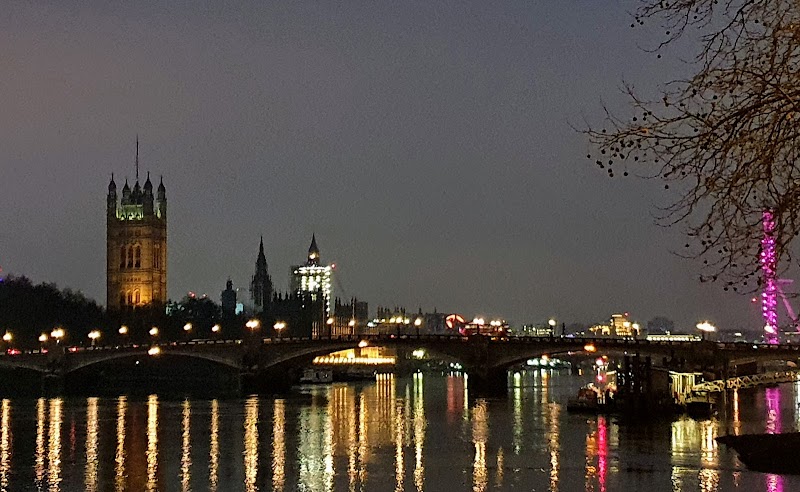
Photo: Google
Who designed the dolphin lamp posts along the Albert Embankment in London?
Stand here on the Albert Embankment and look across the water toward the Palace of Westminster. Quite a view, isn't it? Now here's the thing... what if I told you that this embankment exists largely because Members of Parliament didn't like what they saw when they looked back at you? The decision to build an embankment on this south bank was driven by several factors, but among them, M.P.s wished to improve the view from the windows and terrace of the newly completed Palace of Westminster. You see, before the eighteen sixties, where you're standing now was a chaotic tangle of mudflats, crumbling wharves, and a riverside lane called Fore Street. Lower Fore Street in Lambeth was home to wretched lives in damp, cheaply built houses. It was along this river strip between Saint Mary's Church and Vauxhall that the population and industries of Lambeth were concentrated — clay, charcoal, and materials for the potteries and glassworks were brought by water, and finished products shipped out the same way. The smell was... extraordinary. Malodorous mud accumulated in the wider places along the uneven riverfront. And when the Thames flooded at high tide, the whole area went under. So in eighteen sixty-six, construction began. The work was directed not by the famous Sir Joseph Bazalgette, as is commonly supposed, but by his assistant engineer, John grant. The contractor was William Webster, and it cost over one million pounds — enormous for the time. Sadly, the demolition saw the centre of what was once the village of Lambeth removed to make way for the new promenade and roadway. But something remarkable rose from the rubble. Look at those lamp posts. Two stylised dolphins — or possibly sturgeons — writhe around the base of each standard, supporting a fluted column bearing lights in an opaque white globe, topped by a metal crown. They were designed by George John Vulliamy and inspired by the dolphin sculptures on the Fontana del Nettuno in Rome's Piazza del Popolo. If you look closely at the base, you'll find the date eighteen seventy, the inscription "Vic Reg," the foundry name Masfield and Company, and the architect's mark — C. Vulliamy. And there's one more hidden detail. Facing the river, you'll spot bronze lion heads with rings clenched in their mouths. These were mooring rings for boats... and according to an old London legend, when the river rises high enough to reach the lions' mouths, London will flood. One last thing. In eighteen forty-six, Henry Doulton built a pipe factory right here on what would become the Albert Embankment — manufacturing the very glazed sewer pipes that helped defeat London's cholera epidemics. So this stretch of riverbank is a place where beauty and sanitation walked hand in hand... all because a few politicians wanted a prettier view from their terrace.
Unlocked for everyone by someone who walked here