London's Big Kid Adventure
Legends, mysteries & jaw-dropping sights for curious 11-year-olds
London · 16 stops · 11.7 km · ~3.4 h · 44 min audio · Generated
-
1. Tower of London
Tower of London, Tower Hill, London EC3N 4AB
Photo: Google
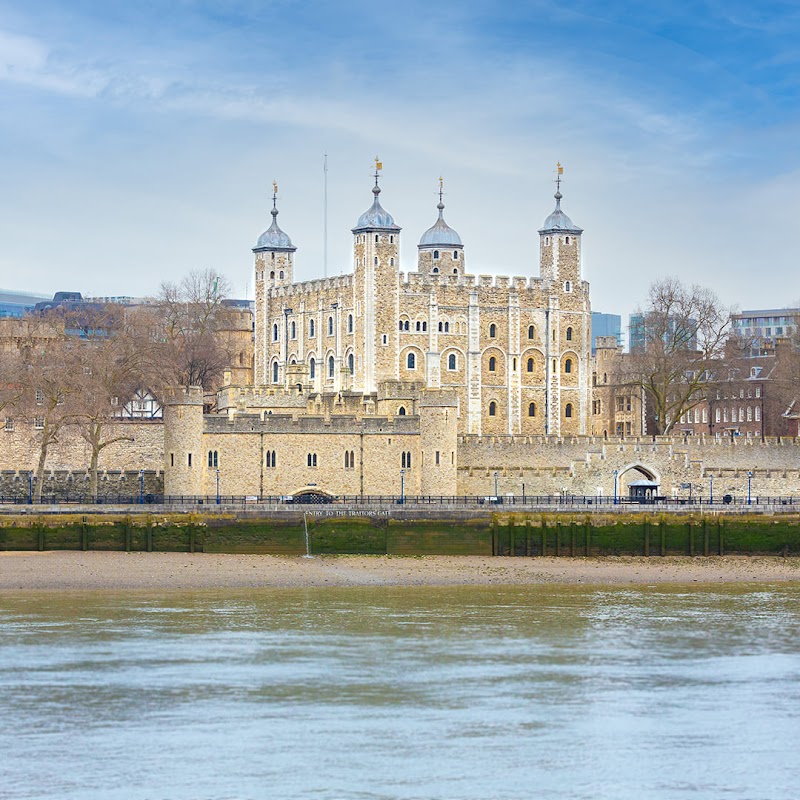
Okay, look at this place. Can you see those huge stone walls and towers rising up ahead of you? That's the Tower of London... and it is almost a thousand years old. But here's the thing... it's not actually one tower. It has twenty three named towers in total, plus loads of smaller turrets! The whole thing covers eighteen acres... that's bigger than nine football pitches!
So who built it? Back in ten sixty six, William the Conqueror invaded England, and one of the first things he did was start building a fortress right here in London. It was designed to intimidate the city... and back in medieval times, the White Tower would have soared over everything around it, like a skyscraper in a village. Imagine seeing that for the first time!
Now, here's where it gets really wild. This place wasn't just a castle and a prison. It was also a Zoo. And not just any zoo... there were lions walking around the grounds, and get this... a polar bear that went fishing in the River Thames! That really happened! In twelve fifty two, King Haakon the Fourth of Norway gave King Henry the Third a polar bear as a gift. But Henry was shocked by how expensive it was to feed, so he had an idea... he had the bear muzzled and chained on a long rope, then let it dive into the Thames to catch its own fish! Medieval Londoners came running to watch. Can you imagine walking along the river and seeing a polar bear splashing around?
Now, see if you can spot some big black birds hopping around the grounds. Those are ravens, and they're here for a very important reason. Legend has it that if the ravens ever leave the Tower of London, the kingdom will fall. Nobody takes chances with that legend. Seven ravens are kept here at all times... six to fulfil the legend, plus one backup, just in case. But some have escaped! A raven called Grog was last spotted outside an East End pub called the Rose and Punchbowl in nineteen eighty one... after living at the Tower for twenty one years, he obviously fancied a change of scene!
And one more mystery for you. In fourteen eighty three, two young princes... Edward, aged twelve, and Richard, aged nine... were locked inside this very fortress by their uncle. They were never seen again. Then... almost two hundred years later... in sixteen seventy four, workers digging near the White Tower found two small skeletons. Were they the missing princes? To this day, nobody knows for certain. The bones now rest in Westminster Abbey, and the Crown has never allowed modern DNA testing. It remains one of the greatest unsolved mysteries in British history.
-
2. Tower Bridge Glass Floor
Tower Bridge, London SE1 2UP
Okay, are you ready for something amazing? Look up... way, way up. You're standing beneath one of the most famous bridges on the entire Planet... Tower Bridge!
Now here's a question for you. Can you guess how many years it took to build this incredible bridge? Eight whole years! Construction started on April twenty-second, eighteen eighty-six, and it took eight years to complete. On average, four hundred and thirty-two workers showed up every single day to put it together... and here's what blows my mind. They used over thirteen million rivets just to hold the steel together!
But wait... the bridge has a secret. It looks like it's made of stone, like a medieval castle, right? That's actually a disguise! Underneath all that fancy stonework, it's really a massive steel frame. They dressed it up in granite and stone so it would match the Tower of London next door. Pretty sneaky, huh?
Now, if you're brave enough, let's talk about the Glass Floor up in those walkways. It was installed in twenty fourteen, and each glass panel weighs a whopping five hundred and thirty kilograms and is seventy millimeters thick! And get this... the glass is SO strong it could hold the weight of six elephants! So yeah... you're totally safe up there.
You'll be standing about forty-two meters above the Thames, watching red double-decker buses and black cabs zoom around beneath your feet like tiny toys. Some kids lie right down on the glass to get the closest view possible... while some grown-ups won't even put one foot on it!
And here's the wildest story. On December thirtieth, nineteen fifty-two, a Number seventy-eight bus actually Jumped across Tower Bridge while it was opening! The driver, Albert Gunter, saw the road ahead starting to rise... and instead of slamming the brakes, he hit the gas! A watchman had failed to ring the warning bell. Gunter's quick thinking saved all the passengers, and he was later awarded for his bravery. Imagine being on that bus!
Oh, and one more thing... the walkways up top were actually closed from nineteen ten all the way until nineteen eighty-two because they'd become a hangout for pickpockets. Real Oliver Twist territory! So when you walk up there today, remember... you're walking in a space that was locked away and hidden from the world for over seventy years.
-
3. HMS Belfast
HMS Belfast, The Queen's Walk, London SE1 2JH
Look at that enormous grey warship floating on the Thames right in front of you. That's HMS Belfast... and she's SO big you could almost lay Big Ben across her deck twice! Can you guess how many people lived on this ship? Go on, take a guess... nine hundred and fifty people called this floating city home!
Now here's something cool. This ship was built at the famous Harland and Wolff shipyard in Belfast... the same shipyard that built the Titanic! And she was launched on Saint Patrick's Day, nineteen thirty eight. Talk about an Irish connection!
But the real adventure began during World War Two. Just two months after joining the navy, HMS Belfast hit a German magnetic mine. Boom! The explosion was so powerful that the ship's keel was bent inward, turbines were ripped from their foundations... and yet, she survived. The welders had done such a brilliant job building her that the hull held together. She spent three years being patched up, and came back Stronger than ever.
And here's my favourite bit. On D-Day... June sixth, nineteen forty four... HMS Belfast anchored off Normandy and opened fire at five twenty seven in the morning. Her shells cut the telephone line to a German gun battery, and since those guns couldn't see the sea directly, without orders they couldn't fire accurately. The German gunners were so stunned they never fired again! And get this... the vibration from her own guns firing was so intense that it cracked all the toilets on board! Imagine that situation for the crew!
But did she fire the first shots of D-Day? Many people think so, but actually... HMS Belfast is sometimes mis-reported to have fired the first shots. In fact, another ship stole her thunder by about a minute.
Before D-Day, this ship had another incredible mission. Belfast spent a tough eighteen months escorting convoys across the freezing Arctic, where daylight hours were short and the crew endured brutal cold for the entire voyage. Then on Boxing Day nineteen forty three... HMS Belfast and other Allied ships destroyed the German battlecruiser Scharnhorst. Over nineteen hundred German sailors were killed. Only thirty six were rescued from the icy waters.
One last secret. When this ship was launched, the people of Belfast gave her a beautiful solid silver bell as a gift... but it was never used on the ship, because they were afraid she'd be sunk and that precious silver would be lost forever. She wasn't sunk, of course. And when she was finally saved as a museum, she became only the Second Royal Navy warship preserved for the public... after Lord Nelson's HMS victory. Not bad for a ship that nearly got sent to the scrapyard!
-
4. The Golden Hinde
Golden Hinde, St Mary Overie Dock, Cathedral Street, London SE1 9DE
Alright... see that ship tucked between the buildings over there? The one with the bright red and yellow hull and a golden deer on the front? That's the Golden Hinde... and it has one of the Coolest stories in all of London.
This is a full-size replica of the actual ship that Sir Francis Drake sailed all the way around the world — back in fifteen seventy-seven! And here's the thing... both this tiny vessel — just a hundred and two feet long — and the original Golden Hinde successfully circumnavigated the globe. That's right. This ship isn't just a model sitting in the water. She's travelled more than a hundred and forty thousand miles — a distance equal to more than five times around the Earth!
Now picture this. When Drake set sail from England with five ships and a hundred and sixty-four men... his sailors thought they were bound for Egypt! Instead, Drake took them around Cape Horn and into the Pacific Ocean. Sneaky, right?
And can you guess what the ship was originally called? Not the Golden Hinde... She was originally known as the Pelican! But Drake renamed her mid-voyage to honour his patron, Sir Christopher Hatton, whose family crest was a golden hind — which is just a fancy word for a female red deer. So basically... he renamed his ship to butter up his sponsor. Smart move, Drake.
Now here's the part that'll blow your mind. Off the coast of Ecuador in March fifteen seventy-nine, Drake captured a Spanish ship stuffed with treasure — including twenty-six tons of silver and eighty pounds of gold. It took his crew six days just to move all the loot onto the Golden Hinde.
Only fifty-six men made it home with Drake, three years after setting sail and thirty-six thousand miles later. And when he finally pulled into Plymouth harbour... the people of Plymouth were amazed — they had long given him up for dead!
And here's a secret... Only Queen Elizabeth the First and Drake himself knew the exact amount he had looted. The Queen declared that all written accounts of Drake's voyage were "Queen's secrets" — and everyone involved was sworn to secrecy, even facing death if they spoke.
Now look around the deck if you get a chance to climb aboard. The gun deck is sandwiched between the hold and the main deck, and the ceiling is barely high enough for a small child to stand up straight! Imagine being a grown sailor, crouching down there for months at sea. Not exactly a luxury cruise, was it?
This replica even appeared in the famous TV miniseries Shōgun! So next time you see a pirate ship in a movie... remember, it might just be this one.
-
5. Clink Prison Museum
Clink Prison Museum, 1 Clink Street, London SE1 9DG
Alright, here's a question for you. Have you ever heard someone say "thrown in the clink"... meaning thrown in jail? Well, guess what — you're standing right where that expression was born!
The Clink was a prison in Southwark, England, which operated from the twelfth century all the way until seventeen eighty. That's over six hundred years of locking people up! It was possibly the oldest men's prison, and probably the oldest women's prison in all of England.
But here's the really wild part. This prison didn't belong to the King or Queen... it belonged to the Bishop of Winchester! That's right — a church leader ran this place. As the owner of the local area, the Bishop kept all the money from the land, and could throw people in prison just for not paying him. Not exactly what you'd expect from a man of God, right?
Now, where did the name "The Clink" actually come from? One popular idea is that it came from the sound of the blacksmith's hammer closing iron chains around the wrists or ankles of prisoners. Clink... clink... clink. Imagine hearing that echo down a dark stone corridor. Whatever the real reason, the prison gave its name to all prisons after it — that's why people still say "in the clink" today!
And the conditions inside? Absolutely horrible. The lower cellars of the prison would regularly flood during high tides, and prisoners would have to stand waist-high in sewage. The guards were so poorly paid that they found sneaky ways to make extra money — prisoners with cash could actually pay the guards for better treatment. Food and drink were charged at twice the normal price. No money? No food. Simple as that.
But here's a story you won't forget. A prisoner named Henry Bronker, locked up around sixteen seventy, came up with the most disgusting survival trick ever — he would fatten up the prison rats on scraps of leather and parchment... and then eat them when they were nice and plump! Gross? Absolutely. But clever enough to keep him alive!
Oh, and one more thing. There was actually a secret chapel hidden inside the Clink, where two imprisoned priests named Father John Gerard and Father William Weston would hold secret services for other Catholic prisoners. They would buy oranges from the guards and use the orange juice as invisible ink to send secret messages to the outside world! How cool is that — real-life spy stuff, hundreds of years ago!
The Clink finally met its end in seventeen eighty, when rioters during the Gordon Riots broke in, freed all the prisoners, and burned the whole building to the ground. And here's the best twist — the Clink was never rebuilt, and none of those escaped prisoners were ever recaptured. Every single one of them vanished into the streets of London... free at last.
-
6. Monument to the Great Fire of London
The Monument, Monument Street, London EC3R 8AH
Okay, here's a riddle for you. What's two hundred and two feet tall... and if you tipped it over like a giant domino, it would land exactly on the spot where London's biggest-ever fire started? That's right — it's this incredible column right in front of us... the monument to the Great Fire of London!
The fire began in a baker's house on Pudding Lane on Sunday the second of September, sixteen sixty-six, and wasn't put out until Wednesday the fifth. And can you guess what "Pudding" Lane was named after? Not dessert! Pudding Lane actually refers to blood sausage that was made in the area. Gross, right?
Now picture this. That fire destroyed over thirteen thousand tightly packed wooden houses, eighty-seven churches, and even Saint Paul's Cathedral. Remarkably, fewer than ten people were recorded to have died, but the four-day-long blaze made around one hundred thousand people homeless. Almost the entire city... gone.
So after all that destruction, they decided to build this column to remember what happened. It was constructed between sixteen seventy-one and sixteen seventy-seven, and it's considered to be the tallest isolated stone column in the World. It was designed by Robert Hooke together with his friend Christopher Wren.
But here's the part most people don't know. This column has a secret. The monument was built with a second purpose — to be the site for scientific experiments. Hidden beneath it is a tiny laboratory where the column was once used as a giant telescope! That's right — Hooke built this telescope-monument to try to prove that the Earth orbits the Sun. He was looking for observational evidence of Copernicus's theory! The whole column is hollow, and scientists would peer up through it at the stars from an underground room. How cool is that — a monument that Doubles as a space telescope!
Sadly, vibrations from heavy traffic on Fish Street Hill made the experimental conditions unsuitable. Too many horses and carts rumbling past! But Hooke didn't give up. In sixteen seventy-eight, he finally conducted a successful experiment at the monument, using a barometer to confirm that air pressure decreases with altitude.
One more thing before you start climbing. Wren originally wanted a statue of a phoenix with outstretched wings on top — a bird rising from the ashes. King Charles the Second wanted a simple copper ball with flames. But it was actually Hooke's idea for the flaming golden urn that won out. And that's what you'll see glowing up there at the very top.
Now... three hundred and eleven spiral steps are waiting for you. And here's the best part — everyone who makes the climb is awarded a certificate to mark the occasion. So you'll have proof that you conquered the tallest stone column in the world. Ready? Let's go!
-
7. London Mithraeum
London Mithraeum, 12 Walbrook, London EC4N 8AA
-
8. Guildhall & Roman Amphitheatre
Guildhall Art Gallery, Guildhall Yard, London EC2V 5AE
Okay, here's a secret that most people walking through London have absolutely NO idea about. Right beneath your feet... there is a real Roman gladiator arena. Seriously!
Almost two thousand years ago, around seventy AD, the Romans built a massive wooden amphitheatre right here. Can you guess how big it was? It was one hundred metres long, eighty-five metres wide, and large enough to seat seven thousand people! That's like filling a huge concert hall... except the entertainment was way more intense.
People flocked here to watch gladiator contests, animal fighting, boxing, athletics, and even music and religious events. There was even a small room on the east side of the arena where there may have been a trapdoor... so wild animals like wolves or bears could be released straight into the arena! Imagine sitting in the front row for that.
The amphitheatre was built at a time when London was being rebuilt bigger and better after a warrior queen named Boudica practically destroyed the city ten years before. So the Romans thought... you know what this town needs? A giant stadium!
Now here's the really cool detective story. After the Romans left in the early fifth century, the amphitheatre lay forgotten for hundreds of years. Little by little, people stole its stones for other building projects. Then medieval houses were built on top. Then the Guildhall. And everyone just... forgot it was there.
For centuries, archaeologists knew London must have had an amphitheatre, but they couldn't find it anywhere. What made it especially tricky was that this amphitheatre was built inside the old Roman city walls, while most ancient amphitheatres were located on the outside. Nobody thought to look here!
Then in nineteen eighty-eight... builders were getting ready to rebuild the art gallery above us, which had been destroyed by German bombs during the Blitz. Against all expectations, a section of Roman stone wall appeared during the dig, amazing the archaeologists. They went on to find more sections of wall and parts of a wooden drainage system.
The remains were immediately declared a national monument and could not be moved. So the builders had a real problem... they had to build an entire art gallery around these ancient ruins! In two thousand and two, the doors to the amphitheatre finally opened for the first time in nearly two thousand years.
Now look down at the ground in Guildhall Yard. Can you spot it? The original shape of the outer wall is marked by a circle of black paving stones. You're standing right inside what used to be a gladiator arena. And if you go inside the gallery — it's totally free — you can see the original walls, the drainage system, and even the sand that was once used to soak up the blood from wounded gladiators.
Those ruins are sitting six metres below your feet... right now.
-
9. Millennium Bridge
Millennium Bridge, London EC4V 3QH
-
10. Shakespeare's Globe Theatre
Shakespeare's Globe, 21 New Globe Walk, London SE1 9DT
Alright, look at this building right in front of you. Can you guess how old it is? It might look like it's from the fifteen hundreds... but it's actually younger than your parents! The Globe Theatre officially opened in nineteen ninety-seven.
But here's where the story gets wild. This is actually the Third Globe Theatre. The first one was built way back in fifteen ninety-nine by Shakespeare's own gang of actors, called the Lord Chamberlain's Men. And how they got it built is basically a heist movie.
See, the actors were performing at another theatre up in Shoreditch. But their landlord, a grumpy guy named Giles Alleyn, wanted to cancel their lease and tear the whole place down. So what did Shakespeare's crew do? On the twenty-eighth of December, fifteen ninety-eight... they snuck in, took the entire building apart timber by timber, loaded it onto boats, and floated it across the River Thames! Can you imagine? Moving a whole Theatre across a river... at Christmas!
They named it the Globe because, like Hercules carrying the world on his back, the actors had carried the theatre's framework on their backs across the Thames.
Now, here's a question. What do you think destroyed the original Globe? An earthquake? A flood? Nope... it was a cannon! In sixteen thirteen, during a play about Henry the Eighth, a prop cannon misfired and set the thatched roof on fire. The fire spread so fast that the entire theatre burned to the ground in less than two hours! And here's the funniest part... according to one of the few surviving records, nobody was hurt... except for one man whose trousers caught fire. Someone put them out with a bottle of beer!
Now look up at the roof here. See that golden straw? This is the only thatched-roof building in all of London. They had to fight for special permission to build it, because thatched roofs have been banned in London since the Great Fire of sixteen sixty-six!
And check out those two massive pillars holding up the stage roof. Each one is made from a single oak tree. The builders had to measure more than a thousand oak trees to build this place!
One last mind-blowing fact. People who stand right here as groundlings sometimes actually faint during performances. The record? Fifteen people passed out during one showing of Titus Andronicus... one of Shakespeare's goriest plays! So if you ever come back to see a show... maybe pick a comedy.
-
11. Tate Modern Turbine Hall
Tate Modern, Bankside, London SE1 9TG
-
12. Leake Street Graffiti Tunnel
Leake Street, London SE1 7NN
Okay, take a look around. Every wall, every inch of ceiling, every surface you can see... is covered in spray paint. Welcome to Leake Street, London's most Epic legal graffiti tunnel!
Now here's the cool part — this is one of the only places in all of London where graffiti is totally, completely, one hundred percent... legal. That's right. Artists can come here and show their work without getting arrested, calmly spraying the walls and even the ceiling with vivid colors and wild designs.
But this tunnel wasn't always so awesome. It used to be a road that ran beneath Waterloo Station, where taxis would pick up passengers from the Eurostar train. But when the Eurostar moved to Saint Pancras station in two thousand seven, the tunnel was just... abandoned. Dark. Grimy. Empty. Locals even called it "Piss Alley." Lovely, right?
So who turned this creepy forgotten tunnel into the rainbow explosion you see today? Can you guess? It was Banksy — the world's most mysterious street artist, whose real identity still nobody knows for sure. In May two thousand eight, Banksy got permission from Network Rail and launched something called "The Cans Festival." Over just three days, more than thirty thousand people came to see it!
And here's a fun detail — the name "Cans Festival" is actually a cheeky play on words... a joke about the famous Cannes Film Festival in France! Except instead of movie stars, it was spray cans!
Artists created incredible things — not just paintings, but whole installations, like smashed-up cars, living room furniture, and even a tree weighed down with security cameras. About forty street artists from around the world were invited to participate.
Now here's the thing that makes this place SO different from a regular museum. The life span of each piece of art here can be incredibly short. Sometimes it's a case of here today and gone tomorrow — someone spends an entire day creating a masterpiece, and then a few days later, another artist comes along and paints right over it. Nothing here is permanent. The walls you see right now? They'll look completely different next week.
Oh, and one more thing — this street is actually named after Doctor John Leake, who founded a maternity hospital on this very spot way back in the seventeen hundreds. At a time when childbirth was really dangerous, he built the Westminster Lying-In Hospital in seventeen sixty-seven specifically to help mothers from poor families. Pretty amazing that a place named after a doctor who saved lives is now a place where art comes alive every single day.
So keep your eyes wide open... and if you see someone with a spray can working on a new piece, feel free to stop and watch. You might just be witnessing something that'll be gone by tomorrow!
-
13. Covent Garden Street Performers
Covent Garden Piazza, London WC2E 8BE
Okay, take a look around you. See those cobblestones? See that crowd gathering in a circle over there? Welcome to one of the Coolest outdoor stages in the entire world... and there isn't even a stage!
The very first record of street entertainment right here in Covent Garden goes all the way back to sixteen sixty-two, when a man named Samuel Pepys wrote in his diary that he watched a marionette show featuring a puppet character named Punch... right on this piazza. That's right... the very first Punch and Judy show ever recorded in England happened right where you're standing! That was over three hundred and sixty years ago!
There's even a pub nearby called the Punch and Judy, built in seventeen eighty-seven and named after those puppet shows that used to entertain the flower sellers' children.
Now here's something wild. In nineteen seventy-five, a year after Covent Garden's famous fruit and vegetable market wheeled out its last barrows of violets and carrots, a totally different kind of professional showed up... showbiz people! Acrobats, jugglers, mimes, and musicians rolled in and basically took over the empty piazza. And they've been here ever since.
But can you just walk up and start performing here? Nope! Performers go through a strict audition process before they're granted a permit, and only those judged to meet a really high standard get permission to perform. Those auditions are held four times a year. So every person you see performing here has earned their spot.
Each morning, there's a draw where time slots are allocated to each performer, and a paper schedule gets taped to the wall of the West piazza. It's like a secret lottery that happens before most of us have even had breakfast!
And guess who got their start performing right on these cobblestones? Famous comedian Eddie Izzard, the street magician Dynamo, and the incredible percussion group Stomp all trod these very cobbles. There's even a sword swallower called Mighty Gareth who wowed crowds here in the nineteen nineties, and now his son performs here too... as a chainsaw juggler!
So keep your eyes wide open. The person performing here today... might just be the next big star.
-
14. National Gallery (free!)
National Gallery, Trafalgar Square, London WC2N 5DN
-
15. Trafalgar Square Lions
Trafalgar Square, London WC2N 5DN
-
16. MinaLima Harry Potter Design Gallery
MinaLima, 26 Wardour Street, London W1D 6QQ
Okay, here's something pretty cool. Right in front of you is a building that looks completely ordinary from the outside... but step through that door and you're basically entering the Wizarding World. This is the House of Minalima — and it's completely free to visit!
So who are Minalima? Mirafora Mina met Eduardo Lima in two thousand and one on the set of Harry Potter and the Chamber of Secrets. Together, they started working to imagine and create the graphic universe of the Harry Potter film series, crafting the entire graphic style of all the Harry Potter movies. Every single piece of paper you see in those films — every newspaper, every letter, every sweet wrapper, every textbook, every poster — these two designed it all.
And here's the really amazing part. You know Harry's Hogwarts Acceptance Letter? The one addressed in green ink to Mister H. Potter, The Cupboard under the Stairs? That was handwritten by Mirafora Mina in emerald green ink — she tried to embody the character of Professor Minerva Mcgonagall when creating it. There were probably around twenty to thirty handwritten letters used in the film — the rest were all printed. And get this — you can actually Order a bespoke replica of the letter, handwritten by Mirafora herself, with the option to personalise it with your name!
Now, let's talk about the Marauder's Map — probably their most famous creation ever. It was hand-made by Minalima with ink and paper. They thought about who would have created this map, and looked at seventeenth and eighteenth century illustrations that were completely made out of words. The entire map was drawn by hand — the illustration of the Whomping Willow on the cover, for instance, is made up of tiny text saying "Whomping Willow" shaped to look like a trunk and branches. And here's a secret most people don't know... in the original design, Mirafora accidentally misspelled "Whomping" as "Womping"! If you have a copy of the map at home, check the Whomping Willow on the front cover — most copies still read "Womping" because they were produced from the misspelled original.
When you go inside, head downstairs — it's almost like a mini museum where you can explore original pieces used during the filmmaking process. Look carefully at everything on the walls. You'll see piles of Daily Prophet Newspapers, Hogwarts Acceptance Letters bursting out of a fireplace, and framed book covers from Rita Skeeter, Butterbeer bottle designs, and items from Weasley's Wizard Wheezes.
Oh — and one more thing for all you future wizards out there. You're eleven years old, right? That's exactly the age Harry received his Hogwarts letter. So keep your eyes on the sky for owls... you never know!