Clerkenwell Uncovered: From the World's First Tube to London's Radical Heart
A short walk through 900 years of monks, revolutionaries, plague pits, and watchmakers
London · 11 stops · 3.1 km · ~1.4 h · Generated
-
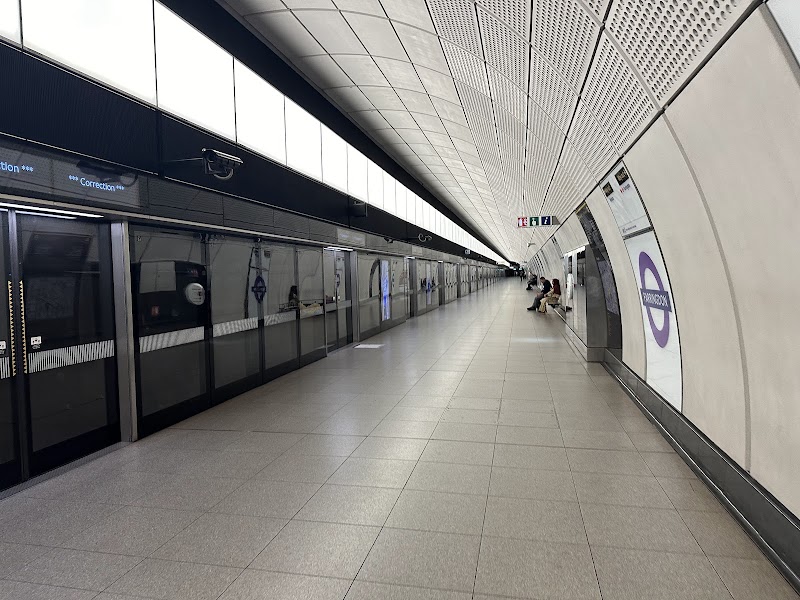
1. Farringdon Station – Where the Underground Began
Farringdon Station, Cowcross Street, London EC1A 7BN
You are standing at the birthplace of the world's underground railway revolution. This is Farringdon Station, Cowcross Street... and on the tenth of January, eighteen sixty-three, the very first underground passenger train arrived right here.
Think about that. Thirty-eight Thousand people rode the line on its opening day alone! Gas-lit wooden carriages, hauled by belching steam locomotives, rumbling through tunnels beneath the streets of London. The Times called it "the great engineering triumph of the day."
But here's what most people don't know. The man who made it all possible... never got to see it. Charles Pearson, Solicitor to the City of London, had been championing this wild idea since eighteen forty-five. He called it "trains in drains." For nearly Twenty years, he fought sceptics, raised funds, and navigated parliament. He even brokered a clever deal where the City bought one hundred seventy-nine thousand pounds worth of land for the railway, while the railway company purchased two hundred thousand pounds in City shares. But Pearson died of dropsy on the fourteenth of September, eighteen sixty-two... just four months before his dream came to life.
The night before the public opening, the station was transformed into a nine-hundred-foot-long banquet hall, where some six hundred guests feasted in celebration. Prime Minister Lord Palmerston... declined his invitation. His excuse? At seventy-nine years old, he said he preferred to stay Above ground as long as he could.
Now, look up at the façade above you. You can still read the old name carved in stone: "Farringdon and High Holborn." That's from nineteen twenty-two, when the architect Charles Walter Clark rebuilt this entrance. The station has actually had Three different names. It started as Farringdon Street in eighteen sixty-three, became Farringdon and High Holborn in nineteen twenty-two, and finally just Farringdon in nineteen thirty-six.
And here's one more secret. This station wasn't just built for people. It was built in conjunction with a freight depot to deliver Livestock directly to the slaughterhouses supplying Smithfield Market, just to the south-east. Cattle were transported underground by rail and walked up ramps to meet their fate. You can still find remains of those cattle ramps on West Smithfield, if you know where to look.
From carrying cattle to carrying Crossrail passengers ninety feet underground... Farringdon has been reinventing itself for over a hundred and sixty years. And it all started right beneath your feet.
-
2. Cowcross Street & the Cattle Ramps
Cowcross Street, London EC1M 6BS
Take a deep breath. Look at the cobblestones beneath your feet. This is Cowcross Street... and its name holds a secret that most people get wrong. You might assume it was named for cows crossing the road. But no. There was once a large stone cross standing right where Saint John Street meets this road, a marker for the separate Smith field Cow Market. It was the cow market Cross that gave this street its name. The writer John Stow noted it in his Survey of London, published all the way back in fifteen ninety-eight.
Now close your eyes for a moment and imagine this street in the eighteen thirties. The smell would have hit you first. By the middle of the nineteenth century, two hundred and twenty thousand head of cattle and one and a half Million sheep were being violently forced through these narrow streets every single year. Charles Dickens walked right through here and described the ground as covered ankle-deep in filth and mire, with thick steam rising from the reeking bodies of cattle.
But here's a story most people never hear. A man named John Atcheler, born seventeen ninety-two, operated a slaughterhouse right here in Sharp's Alley, just off Cowcross Street, and Claimed to be "Horse Slaughterer to Her Majesty Queen Victoria." Was it true? To this day, it is disputed whether Atcheler had any official royal title at all. Before becoming London's most famous knacker, he had been a prize fighter, once winning a ninety-seven minute bout for ten Guineas near Walworth. By his death in eighteen sixty-seven, he was worth around thirty-five thousand pounds... the equivalent of nearly Four million today. His grave at Highgate Cemetery is topped with a statue of a Suffolk Punch horse with a drooping head. A Grade Two listed monument... to a knacker.
And the trades that surrounded him here were extraordinary. Beside Atcheler laboured carcase-butchers, a bladder-dealer, and several catgut workers making strings for violins. Those guts weren't just for music! Gut bands powered machinery in an age before rubber, they ran clocks, and without the gut makers of Smithfield... there would have been no tennis rackets.
Everything changed in eighteen fifty-five. The Smithfield Market Removal Act relocated the live cattle market to Copenhagen Fields in Islington, and in eighteen sixty, an Act of Parliament authorized the new buildings you see nearby. The most revolutionary part? The new market was built directly Over the world's first underground railway line. Metropolitan Line freight trains delivered meat into a huge basement of brick arches, and it was brought up to ground level via hydraulic lift... or the spiral ramp outside.
Those iron cattle ramps near here... they are the last physical whisper of a trade that shaped this entire neighborhood for over Eight hundred years. Stand still, listen... and beneath the hum of modern London, you might just hear the echo of hooves on cobblestone.
-
3. Smithfield Market – Blood, Stone & Victorian Grandeur
Smithfield Market, West Smithfield, London EC1A 9PS
Look around you. This grand Victorian building with its ornate iron arches, domed towers, and bronze dragons... is built on a foundation of Bone.
The Romans were here first. This was an expanse of grassy high ground just outside the city walls of Londinium. Roman law banned burials within city walls, so they used this location, which they called "Smooth Field," as a cemetery. Stone coffins and cremations from that era have been excavated during building works. Two Roman stone coffins were discovered during construction at Saint Bartholomew's Hospital in eighteen seventy nine... and a hundred years later, third and fourth century burials turned up during another dig on the same street.
But the Romans were only the beginning. The Scottish nobleman Sir William Wallace was executed here in thirteen oh five. He was dragged naked by a horse from Westminster Hall to the place of his execution... hanged, drawn, and quartered on the eve of Saint Bartholomew's Fair. His head was dipped in tar and set on a pike atop London Bridge.
This was also the meeting place of the Peasants' Revolt, where the revolt's leader, Wat Tyler, was slain by Sir William Walworth, Lord Mayor of London, on the fifteenth of June, thirteen eighty one. And then came the fires. About fifty Protestants, known as the Marian martyrs, were burned at the stake right here during the reign of Mary the First. Richard Roose was boiled alive in an oily broth at Smith field in fifteen thirty one after allegedly poisoning the soup of a local bishop.
Now look UP at this building. The man commissioned to design it was Horace Jones, the City of London's Architect and Surveyor. He would also go on to design the old Billingsgate Market, Leadenhall Market, and then, most notably, Tower Bridge! Work on the Central Market began in eighteen sixty six and was completed in November eighteen sixty eight, at a cost of nearly a million pounds. At the two ends of the arcade, four prominent statues represent London, Edinburgh, Liverpool, and Dublin.
But the Real genius is hidden beneath your feet. All the buildings were constructed over railway goods yards. For the first time Ever, meat was delivered by underground railway direct to a wholesale market in the centre of a city. This was possible because, in eighteen sixty three, the world's first underground railway, the Metropolitan Railway, had opened at Farringdon. Hydraulic lifts raised the meat from railway wagons straight up to the market floor.
And here is a detail that will astonish you. During construction for the new London Museum, workers found huge boarding on a basement wall. When the crew finally decided to see what was behind it... they discovered a massive network of Victorian brick lined vaults, stretched over eight hundred square metres, likely sealed off for several Decades.
This place has witnessed tournaments commanded by kings, fairs that ran for seven hundred years, and executions that stained the earth red. It is London's oldest wholesale market, tracing its roots back over eight hundred years and still operating from the same site. Stand here in the Grand Avenue and remember... there is more history beneath your shoes than most cities hold in their Entire boundaries.
-
4. Charterhouse Square – Plague Pit, Tudor Mansion, Black Death
Charterhouse Square, London EC1M 6AH
Look around you. This peaceful little square, with its iron railings and shady trees... you are standing on top of one of London's largest mass graves.
In thirteen forty eight, the Black Death arrived in London. The city's churchyards filled so quickly that the Bishop of London purchased a patch of wasteland here, known simply as "No Man's Land." A knight named Sir Walter Manny rented thirteen acres from Saint Bartholomew's Hospital to create an emergency burial ground. Up to fifty thousand people may have been buried in fewer than three years.
And here's what's remarkable. When archaeologists finally dug into these graves, they found narrow trenches with bodies laid carefully in rows. This was not the chaotic dumping ground you might imagine... it was an organized official response, with individual, ordered graves authorized by religious and monastic authorities. Even in the depths of catastrophe, someone cared about dignity.
The dead lay undisturbed for nearly seven hundred years... until March twenty thirteen, when Crossrail workers sank a shaft right here. Twenty five skeletons were uncovered, providing the first physical evidence of London's first Black Death emergency burial ground. From the skeletons' teeth, scientists extracted Dna of the Yersinia Pestis bacterium, confirming these people died of the plague. They even discovered three separate waves of burial, from thirteen forty eight, thirteen sixty one, and the early fifteenth century, as outbreaks kept returning.
But what grew on top of all that death? Life... in extraordinary forms. In thirteen seventy one, the burial ground gave rise to a Carthusian monastery, officially called "The House of the Salutation of the Mother of God." The monks lived in silence and solitude, speaking only on Sundays, and even then, only about prayers.
Then came Henry the Eighth. The monks refused to sign his Oath of Supremacy. The price was horrifying. Prior John Houghton was hanged, drawn, and quartered at Tyburn, and his severed hand was nailed to the Charterhouse door as a warning. Incredibly, the majority of monks Still refused, and the last group were sent to Newgate Prison and starved to death.
After dissolution, the monastery became a grand Tudor mansion. Some of its first occupants were the Bassano family, Henry the Eighth's Venetian instrument makers, and a recorder they crafted Here was found centuries later in the wreck of the Mary Rose! Even Katherine Parr, Henry's sixth wife, lived on this very square with her second husband, Baron Latimer, roughly where Number Ten stands today. Queen Elizabeth the First herself stayed at the Charterhouse before her coronation in fifteen fifty eight.
So take a moment. Beneath your feet... tens of thousands of medieval Londoners. Above them... monks, martyrs, queens, and musicians. All layered into one quiet square.
-
5. The London Charterhouse – From Monks to Thomas More to Almshouse
The Charterhouse, Charterhouse Square, London EC1M 6AN
You are standing on one of the most layered pieces of ground in all of London. Beneath the peaceful green of Charterhouse Square... lie the bones of thousands who perished in the Black Death. The story begins in thirteen forty-eight, when plague ravaged the city, claiming an estimated sixty percent of London's population. Sir Walter Manny, a knight of King Edward the Third's court, leased this land as an emergency burial ground for the dead. And recent research from Oxford University suggests this was no haphazard dumping ground. The site contained individual, ordered graves... a deliberate effort to contain the spread of disease.
In twenty thirteen, Crossrail workers tunneling beneath this very square unearthed twenty-five skeletons. They were surrounded by fourteenth century pottery, and testing confirmed the presence of Yersinia Pestis... the bacterium responsible for the Black Death.
Then, in thirteen seventy-one, a monastery rose from this ground of death. The land was granted for the foundation of a Carthusian monastery called "The House of the Salutation of the Mother of God." The monks lived in silence, never speaking to one another, dwelling in solitary cells, meeting only for meals on important feast days. And here is something remarkable. For the first thirty-four years, the monastery had NO boundary wall! Inspectors from other Carthusian houses were horrified to discover that women were freely entering the monastery and using the chapel! A wall went up rather quickly after that.
Sir Thomas More spent four years living here, though he never became a monk. Years later, when Henry the Eighth demanded the monks accept him as head of the Church... they refused. Prior John Houghton became the first English religious figure executed for denying the King's supremacy. His severed head was impaled on a spike over the gates of this very Charterhouse as a warning. Ten more monks were arrested and imprisoned without food. Nine of them starved to death.
But now the story takes an extraordinary turn. After the dissolution, the monks' cells were used as living quarters by the Bassano family, Venetian instrument makers who served as court musicians to Henry the Eighth. A recorder made right here at the Charterhouse by the Bassanos was recovered from the wreck of the Mary Rose, which sank in fifteen forty-five! And one of the Bassano daughters, Emilia, is widely believed to be Shakespeare's mysterious "Dark Lady."
The site became a Tudor mansion. Elizabeth the First stayed for five days in fifteen fifty-eight and held her first Privy Council in the Great Chamber. Later, the Duke of Norfolk's involvement in the Ridolfi plot was exposed after a ciphered letter from Mary Queen of Scots was discovered... under a Doormat in this house. He lost his head for that.
Finally, in sixteen eleven, the property was bought by Thomas Sutton, described as "the wealthiest commoner in England." He had made his fortune through the discovery of coal near Newcastle. Rather than leave his wealth to his illegitimate son Roger, he chose to make the Charterhouse his heir... and the eighty poor men and forty poor scholars became his beneficiaries. Today, the Charterhouse remains home to around forty residents, a community that now includes both men and women. Plague pit, monastery, palace of intrigue, and a home for those in need... all on one extraordinary patch of London earth.
-
6. Hat & Feathers – The Oldest Building on Clerkenwell Road
Hat and Feathers, 2 Clerkenwell Road, London EC1M 5PP
Look up at this extraordinary building on the corner. This is the Hat and Feathers... and it is a survivor.
There has been a pub on this spot at the junction with Goswell Road since the seventeen eighties. But what you see today dates from eighteen sixty. The present building, replacing an old tavern of the same name, was erected in eighteen sixty for the publican, James Leask.
Now here is what makes this place truly unusual. The Hat and Feathers and three nearby houses predate the creation of Clerkenwell Road... if only by a few years. You see, Clerkenwell Road was constructed by the Metropolitan Board of Works between eighteen seventy-four and eighteen seventy-eight, as part of an intended cross-capital arterial road linking the West End and East End. That road Sliced right through the old neighborhood. Clerkenwell Road smashed through from one side of historic Saint John's Square to the other. But this pub? It was already here... standing on what was then called Goswell Street. Its address was one hundred and sixty-four Goswell Street in eighteen fifty-six and earlier. The road changed around it.
And who designed such an extravagant facade for a corner pub? Leask's architect was William Finch Hill of the pub and music-hall specialists Finch Hill and Paraire. These were Not ordinary architects. Between eighteen fifty-six and eighteen seventy, Hill and Paraire designed many of London's most famous music halls and theatres... including Weston's Music Hall, the Islington Philharmonic, the Oxford Music Hall, and the Britannia Theatre in Hoxton. That Britannia Theatre seated nearly Four Thousand people, and Charles Dickens himself was a regular visitor!
So look again at this facade with fresh eyes. Its festive combination of two-storey Corinthian pilasters supporting statues and one-storey Ionic columns supporting urns... this is music-hall Showmanship applied to a pub! The same architects who built theatres to dazzle the working classes of East London brought that same theatrical flair right here.
As the architectural historian Mark Girouard noted, the survival rate of Hill and Paraire's pubs has been almost as high as that of their music halls... which is to say, almost none survived. Only the Museum Tavern of eighteen fifty-five, opposite the British Museum, and This pub remain.
And there is one more quiet detail worth knowing. Before Clerkenwell Road existed, the stretch of road from Goswell Street to Saint John Street was called Wilderness Row... a name borrowed from the old grounds of the Charterhouse nearby. Many of the buildings along Wilderness Row were connected to the clock and watch trades, well established here by the early nineteenth century. So this pub once served the watchmakers and craftsmen of a vanished street, in a neighborhood that was already ancient when Victoria sat on the throne.
-
7. The 'Central Bath' Building – A Swimming Pool That Became a Bicycle Factory
2 Clerkenwell Road, London EC1M 5PP
Take a look at this distinctive curved building on the corner of Clerkenwell Road and Saint John Street. It might look like just another London office building today... but behind those white brick walls lies one of Clerkenwell's strangest transformations.
What would you say this building was originally built for? A factory? A warehouse? How about... a swimming pool?
This is the former Central Bath, and it has quite a story. The south-eastern corner here was developed in eighteen seventy-seven to seventy-eight as a speculative venture incorporating baths for swimming and bathing, along with houses and shops. It was designed by Robert Walker, district surveyor for Saint Martin-in-the-Fields, and built by J. J. Bennett and Company. The principal developer was a gentleman named Alfred Bompas of Barnsbury, who applied for the site from the Metropolitan Board of Works in eighteen seventy-six.
Now, imagine this... a glass-roofed swimming pool right here on this busy corner. The curved building had a glass roof, and was called the Central Bath. But there was a problem. Victorians, it turned out, did Not fancy swimming in the cold winter months. So during the darker season, the pool was boarded over and the space was used for public meetings instead. This was actually a common practice across London. Many pools in the city were regularly covered in winter to host boxing matches and other events.
But the Central Bath didn't last long. The establishment was short-lived. And here's where it gets wonderfully weird. The baths closed in eighteen ninety-six, and from then until the nineteen seventies, the building was occupied by E. C. Furby and Sons, electroplaters and enamellers of bicycle parts. That's right... the old slipper baths, where Victorians once soaked in private tubs, were converted into plating baths for dipping bicycle handlebars and frames into gleaming nickel and chrome!
And the timing was no coincidence. The eighteen nineties saw one of the biggest bicycle crazes of all, driven by the invention of the safety bicycle and the pneumatic tire. Between eighteen ninety-five and ninety-seven, nearly seven Hundred cycle companies were floated on the stock exchange. Clerkenwell was already the heart of London's precision trades... watchmakers, jewellers, engravers. The electroplating and bicycle themes continued all along Clerkenwell Road.
So Furby and Sons rode that wave for nearly Eighty years, turning a failed swimming pool into a thriving bicycle parts workshop. A building that started in water... ended up making metal shine.
-
8. Goswell Road & the Pickwick Papers – Dickens Was Here
Goswell Road, London EC1V 7ER
Look around you. This ordinary London street... was once the most Famous address in English literature.
You are standing on Goswell Road. Until eighteen sixty-four, it was known simply as Goswell Street, and it was Here, on this very stretch of pavement, that Charles Dickens set the opening scene of his very first novel.
The Pickwick Papers was first published in serial form from March eighteen thirty-six to November eighteen thirty-seven. Dickens was just twenty-four years old. And the story begins right where you're standing... with the loveable Mister Samuel Pickwick throwing open his chamber window on a May morning and gazing out at the world. Goswell Street to his left! Goswell Street to his right! Goswell Street as far as the eye could see!
Now here's what most people don't know. The initial reception was Modest. Sales for the opening numbers hovered around just four hundred copies each. A disaster, really. But then... the introduction of the character Sam Weller in chapter ten marked a dramatic turnaround, and suddenly all of London went mad for Pickwick. Sales surged to twenty thousand by the tenth number and Forty thousand by the twentieth. The book became a publishing phenomenon, with bootleg copies, theatrical performances, Sam Weller joke books, and other merchandise.
And the fictional drama that started it all? It happened right Here on Goswell Street. When Pickwick discussed taking on a servant, telling his landlady Missus Bardell that three could live as cheaply as two... she mistook this for a marriage Proposal. She fainted into his arms just as his friends walked through the door. The resulting breach of promise trial... Bardell versus Pickwick... became one of the most famous fictional legal cases in English literature.
But Dickens wasn't the Only one to make history here. Did you know that nearly seventy years before Dickens was even born, this road may have witnessed the world's first four-minute mile? On the ninth of May, seventeen seventy, a costermonger named James Parrott — a common street seller of fruit and vegetables — started at the Charterhouse Wall right here on Goswell Road, crossed the road, turned right, and ran the length of Old Street finishing at the gates of Saint Leonard's church in Shoreditch. Men with whips and poles had been positioned to keep his way clear, and reportedly he covered the measured mile in exactly four minutes... almost two Hundred years before Roger Bannister's famous run in nineteen fifty-four. We have no primary source for the feat. The first record comes from Sporting Magazine in seventeen ninety-four — a full generation later. So take it with a pinch of salt... but what a story.
From fictional landlady scandals to impossible athletic feats, Goswell Road has always been a place where extraordinary things happen... even when nobody's looking.
-
9. Penny Bank Chambers – The Power of the Penny
Penny Bank Chambers, 33 St John's Square, London EC1M 4AA
Look up at this corner building and let the story sink in... because what you're standing in front of is not just bricks and terracotta. It's a monument to one of the most radical ideas in Victorian London... that even the poorest worker's single penny was worth saving.
This corner block was erected in eighteen seventy-nine to eighty by the National Penny Bank Company Limited, and it provided shops and artisans' dwellings, as well as a branch for the bank. It was designed by the architects Charles Henman and William Harrison, and built by Aitchison and Walker of Saint John's Wood.
But the man behind it all had one of the most wonderfully Victorian names you'll ever hear... Sir George Christopher Trout Bartley. Yes, Trout. Born in eighteen forty-two in Hackney, he entered the Science and Art Department at South Kensington as a young examiner. But his real passion was fighting poverty. In eighteen seventy-five, he established the National Penny Bank, so called because the minimum deposit was just one penny. Collectors took deposits from account owners at places convenient to them, like their workplaces or nearby schools, and bank branches were often open in the evenings to allow working class customers to deposit after work.
Now look up at the facade. The building is faced in stock and red brick, and ornamented with terracotta friezes incorporating the bank's penny-piece emblem. Each one stamped with the bank's name... a row of giant pennies gazing down at you from the eighteen eighties!
And the grand opening? The foundation stone was laid in May eighteen seventy-nine by Her Royal Highness Princess Christian of Schles-wig Hol-stein, who received a commemorative trowel inlaid with silver pennies and the figure of a workman with a bank book. That princess was none other than Princess Helena, the third daughter and fifth child of Queen Victoria and Prince Albert. She was the most active member of the royal family, carrying out an extensive programme of royal engagements, and lending her name to a penny bank... well, that was entirely in character.
But here's what most people miss. The upper floors were planned for artisans' dwellings... two sets of two rooms and two sets of three rooms on each floor. Families of up to ten would occupy a living space of up to three rooms, and the expectation was that they would deposit any spare cash with the bank downstairs. Live upstairs... save downstairs. The building itself was a machine for creating thrift.
The Clerkenwell branch, one of more than a dozen across London, closed in the late eighteen eighties, barely ten years after it opened. The lower floors continued in business use, mostly in connection with the jewellery and clock trades... perfectly fitting for Clerkenwell, the watchmaking heart of London. The National Penny Bank itself was wound up in nineteen fourteen, but this building endures... still wearing its crown of terracotta pennies, still reminding us of a time when someone believed that one copper coin could change a working person's life.
-
10. St John's Gate – Knights, Shakespeare & Hogarth's Father
St John's Gate, St John's Lane, London EC1M 4DA
Look at this stone archway straddling the lane ahead of you. ST John'S Gate... over five hundred years old, and still standing. It was built in fifteen oh four by Prior Thomas Docwra as the south entrance to the inner precinct of Clerkenwell Priory, the English headquarters of the Knights of the Order of Saint John.
But here's the thing. This is actually the Second gate on this spot. The original gatehouse was erected around eleven forty eight... and was burnt down by Wat Tyler in thirteen eighty one. And the reason? The Prior at the time was Sir Robert Hales, also Lord High Treasurer of England, and the man responsible for collecting the hated Poll Tax. The rebels nicknamed him "Hob the Robber." They crossed the Fleet into Clerkenwell and set fire to the Priory of the Order of Saint John. It burned for several days, the mob preventing all attempts to put out the flames.
It took over a century to fully rebuild. And then, barely thirty six years later, Henry the Eighth dissolved the monasteries and seized the lot. The Gate remained... but it led nowhere.
So what happens to a grand medieval entrance with no priory behind it? It reinvents itself. Again, and again.
Step inside the room above the archway in the sixteenth century, and you'd find the office of the Master of the Revels. This was the man who had the power to grant licences for plays to be performed in public. William Shakespeare came here for licences for thirty of his plays.
Then came perhaps the most wonderfully doomed chapter. From seventeen oh one to seventeen oh nine, this was the childhood home of the painter William Hogarth, whose father Richard Hogarth in seventeen oh three opened a coffee house here. But what made it special? This curious and short-lived establishment apparently required its customers to converse exclusively in Latin. A Latin-only coffee house! Imagine ordering your brew in the tongue of Cicero. Unsurprisingly, business was not brisk. Hogarth took out a great many loans until the coffee house shut its doors in seventeen oh seven. Poor Richard was given no choice but to go to debtor's prison.
And then, in seventeen thirty one, another visionary moved in. Edward Cave coined the term "magazine" for a periodical, founding The Gentleman's Magazine right here. Samuel Johnson's first regular employment as a writer was with this very magazine. And Cave had a brilliantly subversive trick. He regularly sent employees to the Strangers Gallery at the House of Commons to take skeletal notes during debates, which were then embellished by Samuel Johnson... during a period when it was illegal to publish any information pertaining to parliamentary debates.
The magazine's long-running motto, E Pluribus Unum, is thought to have inspired the use of the phrase as an unofficial motto of the United States. So this modest Tudor archway played a small part in shaping American identity itself.
Knights, rebels, Shakespeare, a Latin coffee house, the birth of the magazine, and the motto of a future nation. Five centuries of history, all flowing through one stone arch.
-
11. St Peter's Italian Church – London's Little Italy Basilica
St Peter's Italian Church, 136 Clerkenwell Road, London EC1R 5DL
Look at this elegant façade before you... those colourful mosaics, the statues of saints gazing down from their alcoves. This is Saint Peter's Italian Church, the spiritual heart of London's forgotten Little Italy.
Did you know that these very streets... Clerkenwell Road, Saffron Hill, Hatton Garden... were once home to over twelve thousand Italians? In eighteen ninety-five, the Italian consul estimated the area to have around twelve thousand Italians. They called the neighbourhood simply "the Hill," after Back Hill, the lane just behind this church.
The first wave arrived in the early eighteen hundreds... skilled craftsmen from the northern Italian regions of Piedmont and Lombardy. They were makers of mirrors, picture frames, and precision instruments like barometers and thermometers. Later, families from southern Italy swelled the community, and with them came ice cream, barrel organs, and all types of pasta.
Now, this church was the brainchild of a remarkable man... Saint Vincent Pallotti, a Roman priest who in eighteen forty-five dreamed of building a church for London's Italian emigrants. The Irish architect John Miller Bryson worked from plans drawn by Francesco Gualandi of Bologna, modelled on the Basilica of San Crisogono in Rome. The original design was meant to hold three thousand four hundred people, but funds ran short and it was greatly reduced. Even so... on the reduced scale finally built in eighteen sixty-two to sixty-three, it was Still the largest Catholic church in Great Britain.
And here is a detail most visitors walk right past. Above the façade sits a thirty-three metre high bell tower, built in eighteen ninety-one, housing a bell known as "The Steel Monster." That great bell was cast in eighteen sixty-two by Naylor Vickers of Sheffield and was exhibited at the International Exhibition that same year.
But look into the loggia... the entrance porch. There you will find one of the most moving memorials in all of London. A plaque installed in nineteen sixty commemorates four hundred and forty-six Italians who lost their lives on the SS Arandora Star in nineteen forty. When Mussolini entered the war, Italians living in Britain were rounded up as enemy aliens and faced deportation to Canada. Many were simply waiters, shopkeepers, and restaurant owners who had lived in London for years. The ship was sunk by a German torpedo. The artist Eduardo Paolozzi lost his father, grandfather, and uncle in that tragedy.
And one more story to carry with you. Saint Peter's has always been famous for the excellence of its music, and visiting soloists have included Enrico Caruso, "The Great Caruso," who sang on the steps outside this very church.
It is believed that the annual procession held here each July was the First outdoor Roman Catholic religious event held in England since the Reformation in the sixteenth century. It has been running since the eighteen eighties... a tradition that has survived everything... two World Wars, a pandemic, and the slow dispersal of the Italian community across London. Every July, they come back. They always come back... to the Hill.