Radlett Railway Station
Radlett Railway Station in Radlett, Hertfordshire, was opened in 1868 to serve local quarries, ultimately transforming a tiny hamlet into one of Britain's earliest and wealthiest commuter towns. Built by the Midland Railway, the station initially relied on freight from Shenley Hill. In 1979, the original Victorian structure was completely rebuilt for £500,000 during an electrification scheme, enabling fast 21-minute train journeys into London St Pancras.
Radlett, Hertfordshire · from the walk “Radlett Revealed: Romans, Murder & Millionaires” · audio ~3 min · Generated
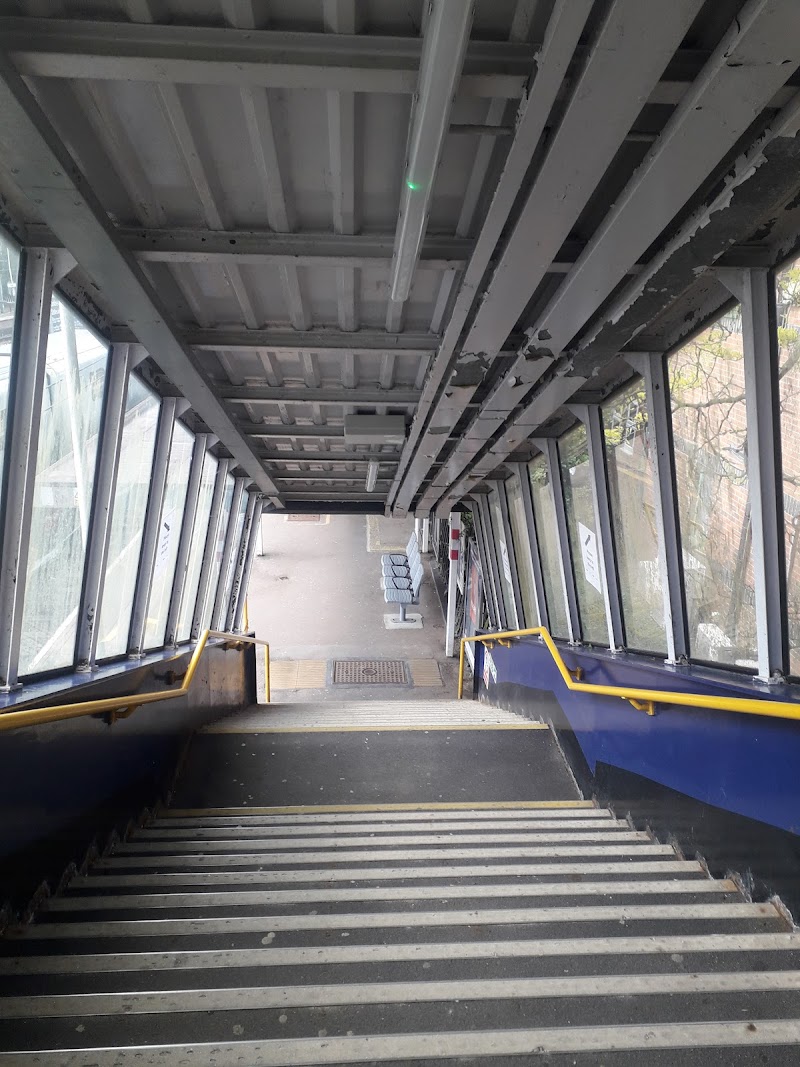
Radlett Railway Station, Station Approach, Watling Street, Radlett WD7 7AP
- First recorded as Radelet in 1453, the area remained a small cluster of farm buildings until the nineteenth century.
- John Thurtell murdered solicitor William Weare nearby in 1823, creating a national sensation that inspired author Sir Walter Scott.
- Midland Railway built Radlett Railway Station in 1868 to transport minerals from service tramlines at Shenley Hill.
- Landowner Walter Phillimore developed housing around Radlett Railway Station in the early twentieth century to create a commuter village.
- Local MP Cecil Parkinson officially opened the rebuilt Radlett Railway Station following a £500,000 upgrade in 1979.
Why was Radlett Railway Station originally built in 1868?
Take a look around you. You're standing at Radlett Railway Station... and this unassuming stop on the Thameslink line holds one of the most remarkable stories of transformation in all of British suburban history.......... The very name of this village comes from the Old English "rad-Gelaete," meaning a junction of roads. The first recorded reference to "Radelet" dates all the way back to fourteen fifty-three. But for centuries, this spot was practically Nothing. A painting from seventeen ninety-six shows just a tiny cluster of farm buildings and an inn at a crossroads. That's it. That was Radlett.......... Then, in eighteen sixty-eight, the Midland Railway built this station as part of its grand extension to Saint Pancras. And here's a curious detail... the railway company originally intended to name it Aldenham Station, after the ancient parish. Had that name stuck, the entire identity of this village might have been different.......... But what really made this station necessary in the first place? Not passengers... there were hardly any! It was the mineral workings on Shenley Hill. A network of service tramlines ran from those quarries right into the station's marshalling yards. Industry, not commuters, justified building a fully equipped station in the middle of farmland.......... Now, before the railway put Radlett on the map for progress, it was actually Infamous for something far darker. In eighteen twenty-three, a man named John Thurtell lured solicitor William Weare out from London on a supposed gambling weekend. On a dark lane near Watling Street, Thurtell shot Weare in the face... and when the gun failed to kill him, finished him off with a knife. The crime became a national Sensation, inspiring books, plays, and even a visit from Sir Walter Scott. The lane where it happened became known simply as Murder Lane.......... But the railway erased that grim reputation. In the early twentieth century, Walter Phillimore, who owned much of the land, began building houses, transforming Radlett into one of Britain's First true commuter villages. The station you see today, though, is not the Victorian original. In nineteen seventy-nine, it was completely rebuilt at a cost of five hundred thousand pounds as part of the Midland Suburban Electrification scheme... and was formally opened by the local MP, Cecil Parkinson.......... Today, a train from this platform reaches Saint Pancras in just twenty-one minutes! Radlett has become one of the wealthiest places in Britain and the second most expensive town to buy a house outside London. All because someone decided to put a station... right here... in the middle of a handful of farms.