Batu Bolong Beach — Beginner Surf Zone
Why is it significant?
Batu Bolong Beach in Canggu, Bali, is a beginner-friendly longboard surf spot famous for its dark volcanic sand and a hollow rock formation topped by a 16th-century sea temple. Built by the priest Dang Hyang Nirartha, Pura Batu Bolong sits above a sea tunnel containing a holy freshwater spring called Tirtha Pakuluh. Local tourism took off after an international surfing competition was held at the beach in 1990.
Key Facts
| Place | Batu Bolong Beach — Beginner Surf Zone |
|---|---|
| Address | Pantai Batu Bolong, Canggu, Bali |
| Geo Coordinates | -8.65948, 115.13014 |
| Audio Duration | ~3 min |
| Part of Walk | Canggu Unlocked: Surf, Murals & Island Vibes |
| Generated | Generated |
What to look for?
- Legendary priest Dang Hyang Nirartha constructed Pura Batu Bolong on the rock formation in the sixteenth century.
- An international surfing competition held in 1990 marked the beginning of modern tourism at Batu Bolong Beach.
- A sacred freshwater spring named Tirtha Pakuluh is hidden inside the hollow rock beneath Pura Batu Bolong.
- The dark sand at Batu Bolong Beach formed over thousands of years from eroded volcanic basalt and lava.
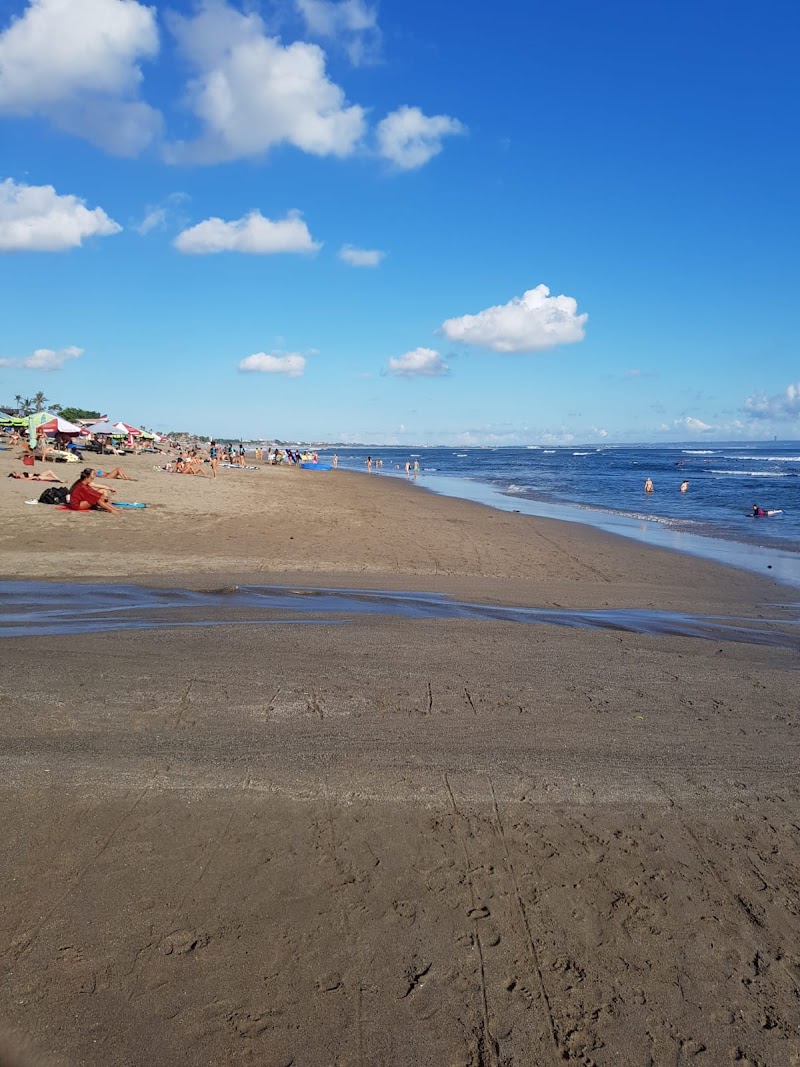
Photo: Google
What does the name of Batu Bolong Beach in Canggu mean?
Okay, look down at the sand beneath your feet. Notice how it's dark — almost black, with little glittery sparkles? This isn't your typical tropical beach. Black sand beaches in Bali come from eroded volcanic material — lava, basalt rocks, and other dark minerals — crushed down over thousands of years by the island's volcanoes. That also means the sand gets Super hot in the afternoon sun, so seriously — keep your flip-flops on! Welcome to Batu Bolong Beach — the heart of Changgu's surf scene and one of the most beginner-friendly breaks in all of Bali! But before you grab a board... let me tell you why this beach has the name it does. "Batu" means stone or rock, and "Bolong" means hollow. So Batu Bolong literally means "the hollow stone." And if you look toward the end of the beach, you'll see it — a natural rock formation, pierced by a tunnel that has been sculpted by the relentless waves of the sea. Right on top of that incredible rock sits a temple — Pura Batu Bolong. Now here's where it gets wild. This temple was constructed by a famous Hindu traveller named Dang Hyang Nirartha back in the sixteenth century. This guy was basically Bali's most legendary priest. Some myths state that he made the journey from Java to Bali... on top of a pumpkin. Yeah, a pumpkin! And supposedly, that's why some Balinese Brahmin priests still won't eat pumpkin to this day. The temple was built to honor Ida Batara Segara, the lord of peace, purification, and harmony. And the village name itself? Changgu? It comes from its connection with the Majapahit kingdom of East Java. During that era, Changgu was the name of a port. A governor named Kyai Petandakan was given a sacred keris dagger. When he waved it in the air, the keris magically returned to its sheath on its own! He was officially granted that keris near Batu Bolong Beach — and that place became known as Changgu Village. Now — the surfing. Tourism in Changgu actually started when the local surf community hosted an international surfing competition right here in nineteen ninety. Back then, it was all paddy fields and coconut groves. Changgu has since gained popularity as a longboard-friendly surf spot — one of the few on the entire island. And this beach, Batu Bolong, is the best spot for your first ever wave. The break here is forgiving, the waves are consistent, and there are surf instructors everywhere ready to get you standing up. One more thing... Hidden inside the hollow rock is something called Tirtha Pakuluh — a freshwater spring. This water is considered holy and used in religious ceremonies at the temple. Fresh water... inside a sea rock. Pretty mind-blowing, right? So take it all in — the dark volcanic sand, the ancient temple on its pierced rock, the sound of waves. This spot has been sacred ground for five hundred years... and now it's your turn to paddle out.