Porta Marina
Porta Marina in Pompeii is a grand city gate constructed around 80 BC featuring two distinct barrel-vaulted arches that once welcomed travelers arriving from the sea. Originally known as the Gate of Neptune or Forum Gate, it was excavated in 1861. The larger arch accommodated pack animals and heavy trade carts, while the smaller side arch served pedestrians climbing the steep hill toward Pompeii's central Forum.
Pompeii · from the walk “A Day Frozen in Time: The Complete Pompeii Experience” · audio ~2 min · Generated
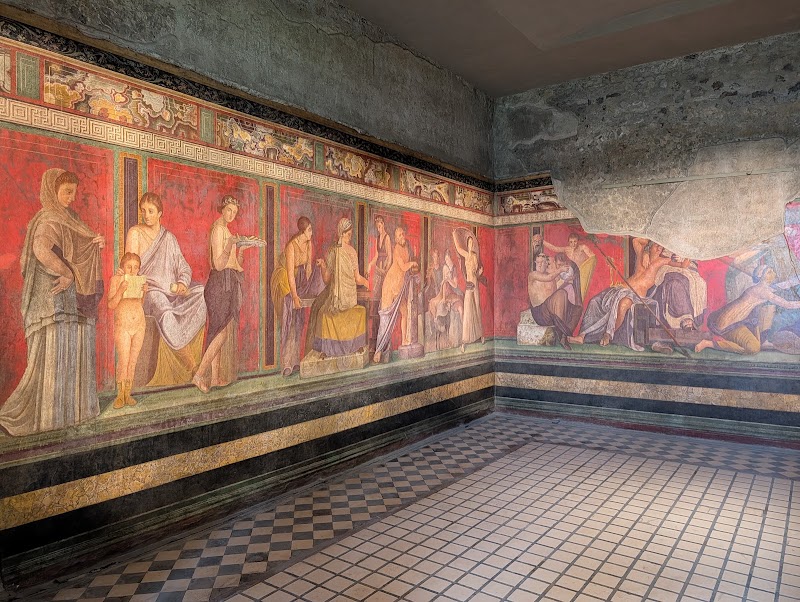
Via Villa dei Misteri, 2, 80045 Pompei NA, Italy
- Built around 80 BC, Porta Marina in Pompeii originally stood much closer to the Mediterranean coastline.
- Porta Marina features two barrel-vaulted arches, using the larger passage for pack animals and heavy carts.
- Excavators working at Porta Marina in 1861 discovered a niche containing a shattered statue of Minerva.
- Volcanic ash and land movement eventually pushed the Mediterranean Sea nearly two kilometers away from Porta Marina.
Why does Porta Marina in Pompeii have two different archways?
Before you stands the grand Porta Marina, or the Marine Gate. Two thousand years ago, the sparkling blue waves of the Mediterranean splashed much closer to where you stand right now. Volcanic ash and land movement pushed the sea nearly two kilometers away, but when this gate was built around eighty BC, salt air greeted every traveler climbing up this steep hill. Look closely at the architecture. Notice how it features two separate barrel-vaulted arches carved into the stone walls. The larger arch was built for pack animals, horses, and heavy carts loaded with olive oil and wine. The smaller arch to the side was reserved strictly for pedestrians. Because the slope leading up to the Forum was so steep, carts struggled with the climb, making this gate a bustling bottleneck of shouting merchants and braying mules. Did you know that ancient Romans did not call it Porta Marina? Archaeologists believe they called it the Gate of Neptune, or the Forum Gate. When workers excavated this spot in eighteen sixty-one, they discovered a tiny niche holding the shattered statue of Minerva, guardian goddess of wisdom, set there to protect visitors as they entered. Imagine stepping through these dark concrete vaults on a warm summer afternoon in seventy-nine AD. You would hear the echoing footsteps, inhale the sharp smell of salted fish and wine, and catch your very first glimpse of Pompeii's magnificent Forum lying just ahead.