Cromwell Tower: Bowie's Vampire Finale
Why is it significant?
Completed in 1973 as Europe's tallest residential building, Cromwell Tower is a 123-metre brutalist residential skyscraper in London's Barbican estate that inspired J.G. Ballard's novel High-Rise and hosted the finale of the 1983 vampire film The Hunger. The 42-storey tower was named after Oliver Cromwell, who married nearby in 1620. Labour Party leader John Smith also lived in the tower until his death in 1994.
Key Facts
| Place | Cromwell Tower: Bowie's Vampire Finale |
|---|---|
| Address | Cromwell Tower, Barbican Estate, London EC2Y 8DD |
| Geo Coordinates | 51.52058, -0.09282 |
| Audio Duration | ~3 min |
| Part of Walk | Secrets and Surprises of Barbican |
| Generated | Generated |
What to look for?
- Completed in 1973, Cromwell Tower in London stands 123 metres tall with 42 storeys.
- Oliver Cromwell married at Saint Giles Cripplegate church near Cromwell Tower in 1620.
- Director Tony Scott filmed the climax of his 1983 movie The Hunger at Cromwell Tower.
- Labour Party leader John Smith died in his Cromwell Tower flat on May 12, 1994.
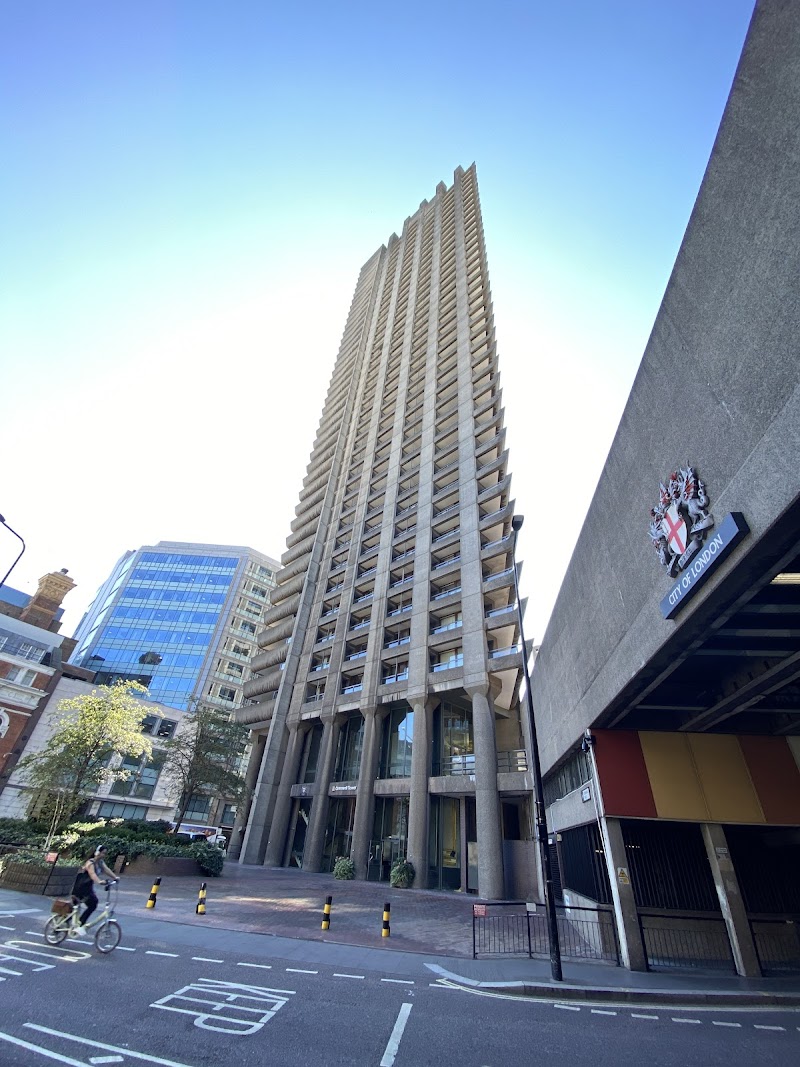
Photo: Google
Which 1983 movie starring David Bowie filmed its final scene at Cromwell Tower in London?
Look up at this concrete colossus. Cromwell Tower... one hundred and twenty-three metres of brutalist ambition, rising forty-two storeys into the London sky. Completed in nineteen seventy-three and named after Oliver Cromwell, it wasn't just another tower block. At the time, it was the tallest residential building in Europe. Let that sink in. The tallest place anyone called home... on the entire continent. And the naming? It's not random. Oliver Cromwell's wedding took place right here at the Barbican's own church, Saint Giles Cripplegate, back in sixteen twenty. So the tower stands on ground where England's most controversial ruler once walked as a young groom. Now here's where things get deliciously dark. In nineteen eighty-three, director Tony Scott chose this very building for the final scene of his cult vampire film, The Hunger. It was his directorial debut, starring Catherine Deneuve, David Bowie, and Susan Sarandon. In the film's closing moments, Sarandon's character stands on a balcony right here in Cromwell Tower, gazing out over London as dusk falls... a newly made vampire, with two fresh companions at her side. Below her, a coffin in a storage room. Inside it, the ancient vampire Miriam, crying out a name that will never be answered. Why did Scott pick this building? Think about it. Budget limitations forced him to shoot most of the film in London rather than New York, and the Barbican's raw concrete geometry gave him something no Manhattan penthouse could... a sense of beautiful, modern alienation. The perfect lair for an immortal starting over. But the building's real-life drama runs just as deep. Leader of the Labour Party John Smith lived right here in Cromwell Tower with his family. On the evening of May eleventh, nineteen ninety-four, Smith gave a rousing speech at a fundraising dinner, declaring that the opportunity to serve the country was all he asked. At five past eight the following morning, in his Barbican flat, he suffered a fatal heart attack. He was just fifty-five. His passing changed the course of British history... he was called Labour's lost leader, the man who made the party electable again. His successor? Tony Blair. And there's one more literary secret. The titular skyscraper in J. G. Ballard's dystopian novel High Rise was largely inspired by these very Barbican towers... a story of civilised professionals descending into savagery inside a luxury concrete fortress. Ballard published it in nineteen seventy-five, just as these towers were being completed. Fiction and reality, rising in parallel. Vampires, prime ministers who never were, and dystopian nightmares... all woven into the concrete of one extraordinary building.