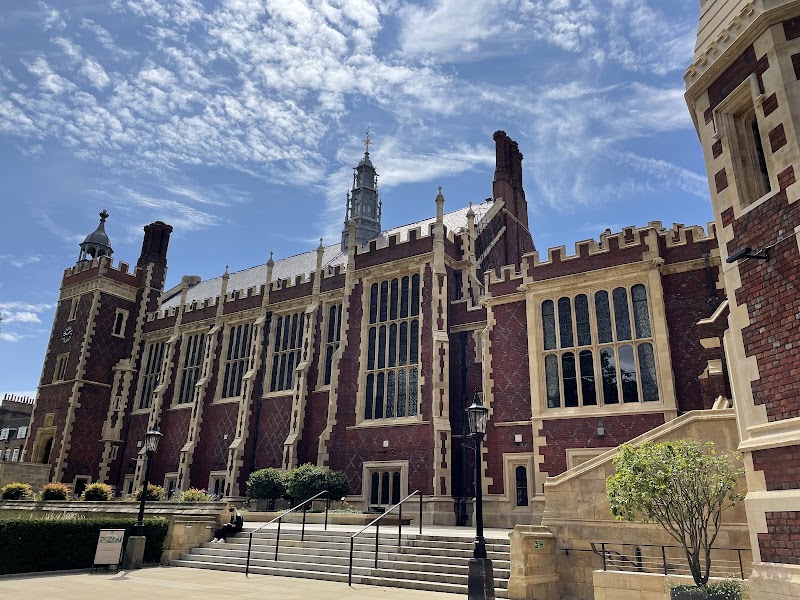
Beneath the Bar: Lincoln's Inn & Legal London
Six centuries of law, architecture, and hidden stories in Holborn
London · 12 stops · 1.8 km · ~1.1 h · 39 min audio · Generated
-
1. Lincoln's Inn Gatehouse
Chancery Lane, Lincoln's Inn Gatehouse, London WC2A 1LT
Photo: Google
Look at this grand Tudor doorway on Chancery Lane. You're standing before the oldest surviving structure in all of Lincoln's Inn... and one of only a handful of ancient gatehouses still standing anywhere in London.
This gatehouse is the oldest existing part of the Inn, built between fifteen eighteen and fifteen twenty-one. But the story of who built it... is far more dramatic than the brickwork suggests.
The gatehouse was mainly built thanks to the efforts of Sir Thomas Lovell, the Treasurer at the time, who provided at least a third of the funds and oversaw the construction himself. Now, Lovell was no ordinary benefactor. A Lincoln's Inn trained lawyer, he was strongly Lancastrian in sympathy... so Lancastrian, in fact, that he'd had to flee to Brittany to join Henry Tudor during the reign of Richard the Third. He returned with Henry, fought at Bosworth Field, and rose to become Speaker of the House of Commons, and Chancellor of the Exchequer. This gatehouse was built by a man who helped put the Tudors on the throne!
Look up. Lovell incorporated his own family coat of arms above the entrance arch, alongside the arms of Henry the Eighth and the Earl of Lincoln. The date, fifteen eighteen, can still be read below the arms.
The gatehouse was constructed with bricks dug and made on the site itself. And here's a wonderful legend. One story, which may well be true, says that playwright Ben Jonson worked as a bricklayer during the building works, and also worked on the brick wall separating Lincoln's Inn from Chancery Lane.
The gatehouse is a large tower, four stories high, featuring diagonal rows of darker bricks, along with a set of oak gates that date from fifteen sixty-four. And those rooms above the gateway arch? These rooms are thought to be those occupied by Oliver Cromwell when he was a young law student here in sixteen seventeen. Though historians remain divided on this point. Early biographers claim that Cromwell attended Lincoln's Inn, but the Inn's archives retain no record of him. A tantalizing mystery.
Seventeen former Prime Ministers have been members of Lincoln's Inn, including Tony Blair and Margaret Thatcher. And in nineteen twenty, the Inn added its first female member... Marjorie Powell. Five hundred years of history, and this gatehouse has witnessed every single one of them pass through its doors.
-
2. Old Hall
Old Hall, Lincoln's Inn, London WC2A 3TL
You're standing before one of Lincoln's Inn's best kept secrets... the Old Hall. Built around fourteen ninety, this is the Inn's oldest surviving building, and one of the finest Tudor halls left in all of London.
Now here's a detail most visitors never hear. The construction of this hall was partly funded by a sharp increase in the fine for... fornicating with a woman in chambers. That's right. The lawyers of Lincoln's Inn helped pay for their grand new hall with penalty fees for misbehaving behind closed doors.
Step inside, and you'd find a space seventy one feet long and thirty two feet wide, with original roof timbers still overhead. Look up... and you can spot a covered hole in the centre of the ceiling. That's where smoke once escaped from a central fire that heated the hall. No chimney. Just an open vent. Medieval heating at its finest!
In sixteen seventy two, King Charles the Second dined here with his brother James, Duke of York. The occasion was recorded in the Inn's Golden Book, and by all accounts, it was a Rambunctious affair. The diners were reportedly so drunk they could not stand to say the loyal toast... so the King gave special permission for them to remain seated!
At the south end stands a magnificent wooden screen, often attributed to Inigo Jones but actually constructed by Robert Lynton, a Warden of the London Joiners' Company, in sixteen twenty four. Until eighteen eighteen, this screen stood in the Middle of the room, dividing the hall into high and low sections... important members on one side, everyone else on the other.
At the opposite wall hangs William Hogarth's painting, Paul Before Felix, commissioned in seventeen forty eight. Why a biblical courtroom scene for a lawyers' hall? Because from seventeen thirty seven onward, this very room served as the Court of Chancery. And it was this gloomy, fog filled court that inspired Charles Dickens to write the opening of Bleak House... the Lord Chancellor sitting in Lincoln's Inn Hall.
By the nineteen twenties, the hall was literally falling apart. A plaster ceiling added around seventeen twenty had put such enormous strain on the old timbers that the whole structure threatened to collapse. Sir John Simpson carefully dismantled the entire building, straightened warped timbers, stripped away the plaster, and put it all back together. It was reopened on the twenty second of November, nineteen twenty eight, by Queen Mary. Some of the replacement panelling was even carved from sixteenth and seventeenth century oak sourced especially for the project.
Five centuries of feasting, law, scandal, and literature... all within these ancient walls.
-
3. Lincoln's Inn Chapel
Lincoln's Inn Chapel, London WC2A 3TN
You are standing in one of London's best-kept secrets... a chapel hidden behind the walls of Lincoln's Inn, where barristers have trained for over six hundred years. Most Londoners walk right past it. But step inside, and you will find stained glass that survived bombs, wars, and nearly four centuries of history.
Who built this place? The foundation stone was laid in sixteen twenty by none other than John Donne... yes, that John Donne. The poet famous for writing scandalous erotic verse before converting to Anglicanism and rising to become Dean of Saint Paul's. He recorded the laying of this very stone in his diary. And three years later, on Ascension Day, sixteen twenty-three, Donne returned to preach the consecration sermon.
Now here's where it gets extraordinary. Donne was such a celebrity preacher that the crowd trying to hear him packed this tiny chapel to the Rafters. The London diarist John Chamberlain recorded that there was such a crush of noblemen and gentlemen that two or three were, quote, "taken up dead for the time with extreme press and thronging." One man, Sir Francis Lee, a Member of Parliament, collapsed and had to be carried out! And there is no record of Donne stopping his sermon. He likely just... kept preaching.
Now, look at the windows. These are not ordinary stained glass. They are painted glass, created by the Flemish brothers Bernard and Abraham van Linge, who fled France in sixteen twenty-one during religious persecution. They painted vitreous enamels onto clear glass and then fired it... a rare technique. You can see their work in several Oxford colleges too.
But only two of the original seventeenth-century panels survive in this chapel. On the thirteenth of October, nineteen fifteen, at nine twenty-five in the evening, a German Zeppelin dropped bombs right into Old Square outside. The explosion shattered the chapel windows and left shrapnel scars you can still see pockmarking the chapel walls today. If you step outside, look for a small round bronze disc in the tarmac... that marks the exact spot where the bomb struck.
And here is an incredible twist. Having learned from the First World War, when the Second World War began, the Inn removed all the remaining glass and hid it away for safekeeping. That decision saved these four-hundred-year-old masterpieces from the Blitz.
One more thing before you move on. Beneath your feet is a vaulted Undercroft, where in the eighteenth century, desperate mothers would leave abandoned babies... hoping the lawyers of the Inn would care for them, or deliver them to the nearby Foundling Hospital. Every child discovered here was given the same surname... Lincoln.
-
4. The Ashworth Centre
Ashworth Centre, Lincoln's Inn, London WC2A 3TL
Look around you. Do you see a grand new building? A modern glass tower? No. And that's exactly the point. You are standing above one of London's most ingenious architectural secrets... nearly two thousand square metres of twenty-first century teaching space, hidden entirely beneath your feet.
This is the Ashworth Centre, and most of the new construction lies below ground in what is a fairly tightly packed historic setting, where some buildings date back to the sixteenth century. How do you build a major education facility in the heart of one of England's most ancient legal estates... without disturbing a single roofline?
You dig down.
The underground education suite sits beneath the existing east terrace, adjacent to the Great Hall, housing advocacy training rooms, seminar facilities, and a one hundred and fifty eight seat lecture theatre. Large rooflights and double height spaces bring natural light into the heart of the building, providing a visual connection to the surrounding historic buildings. Users regularly say they do not feel they are in a basement space at all.
But here's the story that makes this place truly special. The Centre is named after Mercy Ashworth. Mercy was the daughter of a hat manufacturer. She studied at Girton College, then spent years in India as a schools inspector. On the twenty sixth of January, nineteen twenty three, she and Mithan Tata became the first women called to the Bar at Lincoln's Inn. Mercy was called to the bar at the age of fifty four.
But it very nearly could have been someone else. A woman named Gwyneth Bebb had fought her way here first... bringing a test case in nineteen thirteen, seeking a declaration that she was a "person" within the meaning of the Solicitors Act. The judge ruled against her. Women, he said, could not be solicitors because... no woman had ever been a solicitor. Had Gwyneth not died shortly after childbirth in October nineteen twenty one, she may well have been the first woman called to the bar.
So when Mercy Ashworth finally stood in the Great Hall next door in nineteen twenty three, she carried the weight of that unfinished dream. Interviewed at the time, she said, "None of us knows yet what the future of women barristers is likely to be."
Now, a century later, a portrait of Mercy hangs in this very centre... composed by multimedia artist Rocco Fazza-ri using photographs of Lincoln's Inn members who identify as women. Hundreds of faces, forming the image of the one who opened the door. This scheme is the most significant development since Victor-ian times on the inner London estate of Lincoln's Inn. And yet... you can barely see it. Just the way they planned it.
-
5. Lincoln's Inn Library
Lincoln's Inn Library, London WC2A 3TN
You are standing before the oldest working library in Lincoln... and quite possibly in all of London. This is Lincoln's Inn Library... a place where law, architecture, and six centuries of human drama are woven into every shelf.
How old, exactly? Well, the library was first mentioned in the Inn's records in fourteen seventy one... more than five hundred and fifty years ago. Back then it occupied a small room beside the Old Hall. It later moved to a set of chambers in Stone Buildings, before finally landing here, in this grand neo-Tudor building designed by Philip Hardwick. Queen Victoria herself opened it on the thirtieth of October, eighteen forty five. She recorded it in her diary, calling it "a very handsome room" where she was placed on a throne and received an address.
But the library outgrew itself. In eighteen seventy one and seventy two, Sir George Gilbert Scott... the same architect behind the Albert Memorial and the Midland Grand Hotel at Saint Pancras... extended the building three bays eastward, nearly Doubling its size. At that point it stood eighty feet long, forty feet wide, and forty four feet high. Three tiers of iron shelving, spiral staircases connecting the floors... a cathedral of legal knowledge.
And what knowledge! The collection holds approximately one hundred and fifty thousand volumes, including over one thousand rare manuscripts. The jewel is the Hale Manuscripts... the personal collection of Sir Matthew Hale, Chief Justice of the King's Bench, who bequeathed his library to the Inn upon his death in sixteen seventy six. Among those treasures are sixty three medieval manuscripts.
Now, look for the modern glazed link to the north. That connects to the Ashworth Centre, and it carries a powerful story. It is named after Mercy Ashworth, who on the twenty sixth of January, nineteen twenty three... alongside Mithan Tata... became one of the first two women ever called to the Bar at Lincoln's Inn. She was fifty four years old and had waited a very long time. The glazed link did something else remarkable... it allowed wheelchair access between the main library floor and the basement stacks for the first time in the building's history.
One more secret. Nearby, beneath the Inn's chapel, there is an open undercroft where, in the eighteenth century, desperate mothers would leave newborn babies they could not care for. The Inn's account books record payments as early as seventeen thirty two for caring for these foundlings. And every abandoned child discovered here was given the same surname... Lincoln.
-
6. Lincoln's Inn Fields
Lincoln's Inn Fields, London WC2A 3PL
Take a deep breath. You're standing in Lincoln's Inn Fields... London's largest public square. It looks peaceful now, doesn't it? Office workers eating their lunch on the benches. People playing tennis on those courts over there. But beneath these manicured lawns lies a history soaked in blood and betrayal.
What were these grounds before they became a grand square? Just two muddy fields... called Cup Field and Purse Field... used as rough cattle pasture since the Middle Ages. Turnstiles were placed around the area to let pedestrians pass through without the animals escaping, and remarkably, some of those old pathways survive today as the lanes called Great and Little Turnstile.
In fifteen eighty-six, this open ground witnessed its first recorded horror. It was chosen as the site for the execution of Anthony Babington and his fellow conspirators, Catholic plotters who had schemed to assassinate Queen Elizabeth the First and free Mary Queen of Scots. Because there were so many of them, the executions took place over two days... and because the conspirators had been known to meet in the area, it was decided this would be an appropriate place for them to die. The crowd numbered in the thousands.
But the event that truly haunts this square happened almost a century later. Lord William Russell was beheaded by Jack Ketch on the twenty-first of July, sixteen eighty-three, right here in Lincoln's Inn Fields. Russell was a leading Whig politician, executed for allegedly plotting to murder King Charles the Second and his Catholic brother James.
Now here's where it gets truly grim. Russell was said to have paid Ketch a generous sum of money beforehand for a quick and painless end. But Ketch was notorious for his incompetence. He was so inept that he took four axe blows to separate the head from the body. According to a famous pamphlet of the time, after the first botched strike, Russell reportedly looked up at his executioner and said... "You dog, did I give you ten guineas to use me so inhumanely?"
The outrage was so great that Ketch published a pamphlet apologising for it! He blamed Russell himself, claiming the lord had not positioned his head properly on the block. Because of his botched executions, the name Jack Ketch became a proverbial term for death, Satan, and executioners across England.
But history had the final word. The Whig-aligned William and Mary reversed Lord Russell's attainder in sixteen eighty-nine, declaring him a martyr for English liberty. In eighteen ninety-seven, the London County Council placed a brass tablet in the floor of the shelter in the Fields, claiming to mark the exact spot where Lord Russell suffered... though historians believe it was probably placed in the wrong location.
Look around you once more. At number sixty-six, the charter of the Bank of England was sealed in sixteen ninety-four. The square hosted a theatre from sixteen sixty-one to eighteen forty-eight, where John gay's The Beggar's Opera first performed. From cattle pasture to execution ground to the birthplace of English banking... Lincoln's Inn Fields has quietly shaped the story of this city for over six hundred years.
-
7. Sir John Soane's Museum
Sir John Soane's Museum, 13 Lincoln's Inn Fields, London WC2A 3BP
You are standing before number thirteen, Lincoln's Inn Fields... the home of a man who rose from nothing, built one of the most important buildings in British history, and then declared War on his own son.
Sir John Soane was born in seventeen fifty-three, the son of a bricklayer. Through sheer talent and determination, he won the Royal Academy's Gold Medal for Architecture, earned a bursary from King George the Third, and set off on a Grand Tour of Italy. The ruins of ancient Rome and Pompeii changed him forever.
He became architect of the Bank of England, a post he held for forty-five years. But his true obsession was this place. He bought number twelve in seventeen ninety-two, then number thirteen, then number fourteen... knocking through walls, adding skylights and mirrors, filling every surface with antiquities until the three houses became one glorious, bewildering labyrinth.
And his greatest treasure? A three-thousand-year-old alabaster sarcophagus of the Pharaoh Seti the First! The British Museum had refused to pay the two thousand pound asking price. So Soane snapped it up... and threw a three-day party to celebrate, inviting the cream of London society to view it by lamplight, the translucent stone glowing from candles placed inside.
But behind this brilliance lay a family tragedy. His son George, a reckless spender who'd been imprisoned for debt, anonymously published vicious articles in The Champion newspaper in eighteen fifteen, attacking his own father's architecture. When Soane's beloved wife Eliza read them, she reportedly said... "He has given me my death blow. I shall never hold up my head again." She died weeks later. Heartbroken, Soane framed those newspaper cuttings and hung them on the wall with the label: "Death blows given by George Soane."
His revenge was extraordinary. In eighteen thirty-three, he pushed a private Act of Parliament through the House of Commons to leave everything... the houses, the sarcophagus, the thirty thousand drawings, the Hogarth paintings... to the nation. His son George even petitioned Parliament to stop it, enlisting the radical MP William Cobbett, but failed.
And here is a final eccentric touch. Before he died, Soane sealed his personal bathtub with instructions that it should not be opened for decades. When the great day finally came... they lifted the lid and found nothing but old paperwork and lottery tickets. A last joke from beyond the grave.
One more thing. The tomb Soane designed for Eliza in Old Saint Pancras churchyard, with its distinctive domed canopy... is said to have inspired Sir Giles Gilbert Scott's design for the iconic red telephone box. So every time you see one of those K-two kiosks across London, you are looking at a monument born from an architect's grief.
-
8. The Hunterian Museum
Hunterian Museum, Royal College of Surgeons, 35-43 Lincoln's Inn Fields, London WC2A 3PE
Welcome to Lincoln's Inn Fields... and the Hunterian Museum. Behind these grand walls lies a collection born not just from science... but from obsession. And theft.
This museum carries the name of John Hunter, a Scottish-born surgeon who arrived in London in seventeen forty eight to work at his brother William's anatomy school in Covent Garden. Over twelve years, Hunter was present at the dissection of more than two thousand bodies. He became the most celebrated surgeon of the Georgian age, treating the likes of Prime Minister William Pitt and the economist Adam Smith. But Hunter had a dark side. He was a regular customer of the so-called resurrection men... grave robbers who delivered stolen corpses to his back door under cover of night.
And here is where it gets truly chilling. In seventeen eighty two, a young Irishman named Charles Byrne arrived in London. Born in Littlebridge in the north of Ireland in seventeen sixty one, Byrne stood over seven feet seven inches tall, a condition caused by an undiagnosed pituitary tumor. He became a celebrity, billing himself as the Irish Giant and charging half a crown for people to gaze at him. But his health was failing... and the anatomists were circling. One newspaper wrote that "the whole tribe of surgeons put in a claim for the poor departed Irish Giant" like whalers surrounding an enormous catch.
Byrne knew what awaited him. On his deathbed in June seventeen eighty three, at just twenty two years old, he begged his friends to seal his body in a lead coffin and bury it at sea. But Hunter... Hunter had other plans. He bribed the undertaker who accompanied Byrne's companions. When the group stopped at a tavern along the route, the undertaker switched Byrne's body for paving stones. The coffin sank into the sea. The body went to Hunter. He then boiled it in a copper vat and pieced together the skeleton. For five years Hunter kept his trophy secret, only hinting to his friend, the naturalist Joseph banks, that he had "lately got a tall man."
And here is a detail most people never hear. Hunter's own house in Leicester Square is thought to have inspired Robert Louis Stevenson's Doctor Jekyll and Mister Hyde! The building was actually two houses joined together. The elegant front on Leicester Square received wealthy patients by day. The shabby rear entrance on Castle Street received stolen corpses by night. Respectability on one side... horror on the other. The perfect model for fiction's most famous dual personality.
Today, after more than two hundred years on public display, Byrne's skeleton has finally been removed from view. The museum acknowledged in twenty twenty three that the manner in which it was acquired was unethical and against his wishes. But his bones remain here, in storage, and the debate over whether to grant Charles Byrne the sea burial he desperately wanted... continues to this day.
-
9. Carey Street
Carey Street, London WC2A 2JB
You're standing on one of the most quietly devastating streets in all of London. It looks harmless... a narrow lane tucked behind the Royal Courts of Justice. But for well over a century, this little road carried a meaning that made grown men Tremble.
"He's gone to Carey Street."
That's all you had to say. Everyone knew what it meant. You were ruined. Bankrupt. Finished.
The street takes its name from Sir George Carey, second cousin to Queen Elizabeth the First, a man who was patron of Shakespeare's own acting company, the Lord Chamberlain's Men. Quite the colourful character. But the street's fame has nothing to do with him.
In the eighteen forties, the Bankruptcy Court moved here from Westminster. And by eighteen ninety two, an enormous new Bankruptcy Building was unveiled, designed by architect Sir John Taylor. A contemporary account described its long, broad corridors "crowded daily with learned expounders of our bankruptcy laws." The place was packed with the desperate and the indebted.
And what happened to that grand building? The Blitz. It took extensive damage during the Second World War and was eventually demolished, replaced by the rather less impressive Thomas More Building in the nineteen sixties.
But here's a detail most people miss. Before the bankruptcy courts dominated this street, King's College Hospital stood right here on Carey Street. Established in eighteen thirty nine for the sick poor, it served an area surrounded by overcrowded slums, with two patients sometimes sharing a single bed! The hospital eventually moved to Denmark Hill in nineteen thirteen.
Now, look across the road. At number fifty three, there's a tiny pub called the Seven Stars. Its sign proudly declares the date sixteen oh two... which would make it older than the Great Fire of London! Its original name was the League of Seven Stars, a nod to the seven provinces of the Netherlands, meant to lure Dutch sailors from the nearby Fleet River when it was still navigable. Shakespeare himself may have tipped back a pint here.
So one small street... a royal cousin, a hospital for the desperately poor, a court for the desperately broke, and a pub that has seen it all. Carey Street. Where London's stories of fortune and misfortune have always lived side by side.
-
10. New Square, Lincoln's Inn
New Square, Lincoln's Inn, London WC2A 3RJ
Step into New Square... and step back over three hundred years. You are standing in one of the most complete late seventeenth century squares in all of London. These elegant brick buildings look almost exactly as they did when they were first raised in the sixteen eighties and nineties.
But the story of how this square came to be... is a tale of rivalry, land disputes, and one of the most notorious property developers in English history.
It began with a man named Henry Serle, a member of Lincoln's Inn, who struck a deal with the Inn in sixteen eighty two to build on this patch of ground. Back then, this land was known as little Lincoln's Inn Fields, or Fickett's Fields, and it sat outside the Inn's original boundaries. Serle got to work, raising eleven sets of brick chambers on three sides of the square. But boundary disputes dragged on... and Serle died in sixteen ninety before finishing the job.
So who stepped in to complete it? None other than Nicholas Barbon... a man whose original baptismal name was, believe it or not, "If Jesus Christ Had Not Died For Thee Thou Hadst Been Damned" Barbon. He was the son of Praise God Barebone, namesake of Barebone's Parliament. Nicholas was a physician turned property developer, a pioneer of fire insurance, and one of the most aggressive builders London had ever seen. He tore down buildings without permission, dodged creditors by getting himself elected to Parliament, and even got indicted in sixteen ninety three for blocking ancient rights of way right here during construction.
Now, picture the square when it was brand new. No gardens, no lawns. The centre was laid with gravel, and in the middle stood a handsome column of the Corinthian order, designed after Inigo Jones, topped with a sundial and surrounded by stone lions spouting water from shells! That column was the brainchild of Cavendish Weedon, said to be the first inhabitant of New Square, who raised subscriptions from fellow members to beautify the place.
And the ownership here is still tangled. Because of those original disputes, some parts of this square remain freehold to this day... with individual people owning single floors or even sections of floors within these buildings. It was so complicated that Parliament had to pass a special law, the Lincoln's Inn Act of eighteen sixty, just to let the Inn charge the various freeholders fees.
And if you look closely at the entrances, you may spot small triangular plaques above doorways... each marked with a "T" for Treasurer, a date, and two initials recording who oversaw building works. They are like a secret signature, hiding in plain sight for over three centuries.
-
11. Royal Courts of Justice
Royal Courts of Justice, Strand, London WC2A 2LL
Look at this magnificent building before you... the Royal Courts of Justice. It looks like a cathedral, doesn't it? With its soaring arches and stained glass windows, you could easily mistake it for a place of worship. And that's no accident. The man who designed it, George Edmund Street, was a devout Christian who spent most of his career building and restoring churches. He poured his soul into this place... and it may have cost him his life.
Here's where the story gets dark. In eighteen sixty-six, a competition was launched to find an architect. Eleven of London's finest competed, and here's a remarkable detail... every single one submitted a Gothic design, even those who normally preferred the classical style. Street won, but the judges couldn't agree. They wanted him for the exterior and Charles Barry for the interior. The two couldn't cooperate, and Street was finally made sole architect in eighteen sixty-eight.
Now, where this building stands... was once a slum. Around four hundred and fifty houses, home to more than four thousand people, were demolished to clear the site. And how was it all paid for? With dead people's money. The building was funded by seven hundred thousand pounds accumulated from the estates of people who died without a will and without known heirs. The unclaimed fortunes of the forgotten... built into every stone.
Construction began in eighteen seventy-three, but trouble came fast. The stonemasons went on Strike. So what did the authorities do? They shipped in German workers to replace them. The fury of the English masons was so intense that the Germans had to be housed and fed inside the building itself, and supplies were smuggled in through a secret underground tunnel!
Street made over three thousand drawings for this project by hand. But the strain was devastating. His first wife died during construction. He remarried, threw himself deeper into the work, and on December the eighteenth, eighteen eighty-one... he suffered a fatal stroke. He was just fifty-seven. He was buried in Westminster Abbey, next to his old master George Gilbert Scott.
One year later, Queen Victoria opened the building he never saw completed. And today, if you step inside the Great Hall, you'll find a monument to Street by Henry Hugh Armstead... depicting him seated, gazing down, forever absorbed in his work. As he was in life.
Oh, and one more thing. Room six six six? Professional stone cleaners have never been able to remove its original painted numbers, despite many efforts. It remains the coldest room in the building... and is rarely used today.
-
12. Middle Temple Hall
Middle Temple Hall, Middle Temple Lane, London EC4Y 9BT
You're standing before one of London's best-kept secrets... a building most people walk right past without ever knowing it exists. This is Middle Temple Hall, and behind these walls lies one of the finest Elizabethan halls to survive in the entire city.
Construction began in fifteen sixty-two, under the direction of a remarkable man named Edmund Plowden, who was Treasurer of the Inn. Plowden was a devout Roman Catholic in Protestant England... and here's where it gets interesting. Queen Elizabeth herself reportedly offered him the Lord Chancellorship, the highest legal office in the land, on one condition: that he renounce his Catholic faith. He refused. His famous reply reminded the Queen that they had both been raised Catholic. Despite this defiance, he was never persecuted, and his legal brilliance gave us a proverb still known today: "The case is altered, quoth Plowden."
Now, step inside in your imagination. The hall is one hundred feet long, spanned by a magnificent double hammerbeam roof. At the far end sits the High Table, made from three twenty-nine foot long planks of a single oak from Windsor Park, allegedly a gift from Queen Elizabeth the First, floated down the Thames and hauled in through a window before the building was even finished!
And beside that great table sits a smaller one, known as the cupboard. What's so special about a small table? It is reputedly made from the hatch cover of Sir Francis Drake's ship, the Golden Hind, the very vessel that circumnavigated the globe between fifteen seventy-seven and fifteen eighty. Drake himself dined here, though he was never actually a member of the Inn.
But the Hall's most celebrated night came on the second of February, sixteen oh two... Candlemas. The Lord Chamberlain's Men crossed the river from the original Globe Playhouse to perform a brand new comedy right here. That play was Shakespeare's Twelfth Night! We know this because a young law student named John Manningham recorded it in his diary. Shakespeare himself may well have been among the actors that evening.
And the Hall's story doesn't end with the Tudors. On the fifteenth of October, nineteen forty, a Luftwaffe bomb blew a hole in the east end, shattering the carved Tudor screen into hundreds of pieces. Later raids with incendiaries nearly finished the job entirely. Yet the great roof held... and the screen was painstakingly reassembled, fragment by fragment, after the war.
Today, new barristers still sign their names at Drake's cupboard when they are called to the Bar. Four and a half centuries on, this hall remains exactly what Plowden built it to be... the beating heart of English law.